Africa's largest refinery dominates Nigeria’s downstream supply as fuel imports continue to decline
Nigeria’s downstream petroleum market is becoming increasingly dependent on the Dangote Refinery as the privately owned facility ramps up production and reduces the country’s reliance on imported fuel, according to new data released by the Nigerian Midstream and Downstream Petroleum Regulatory Authority (NMDPRA).
 Black News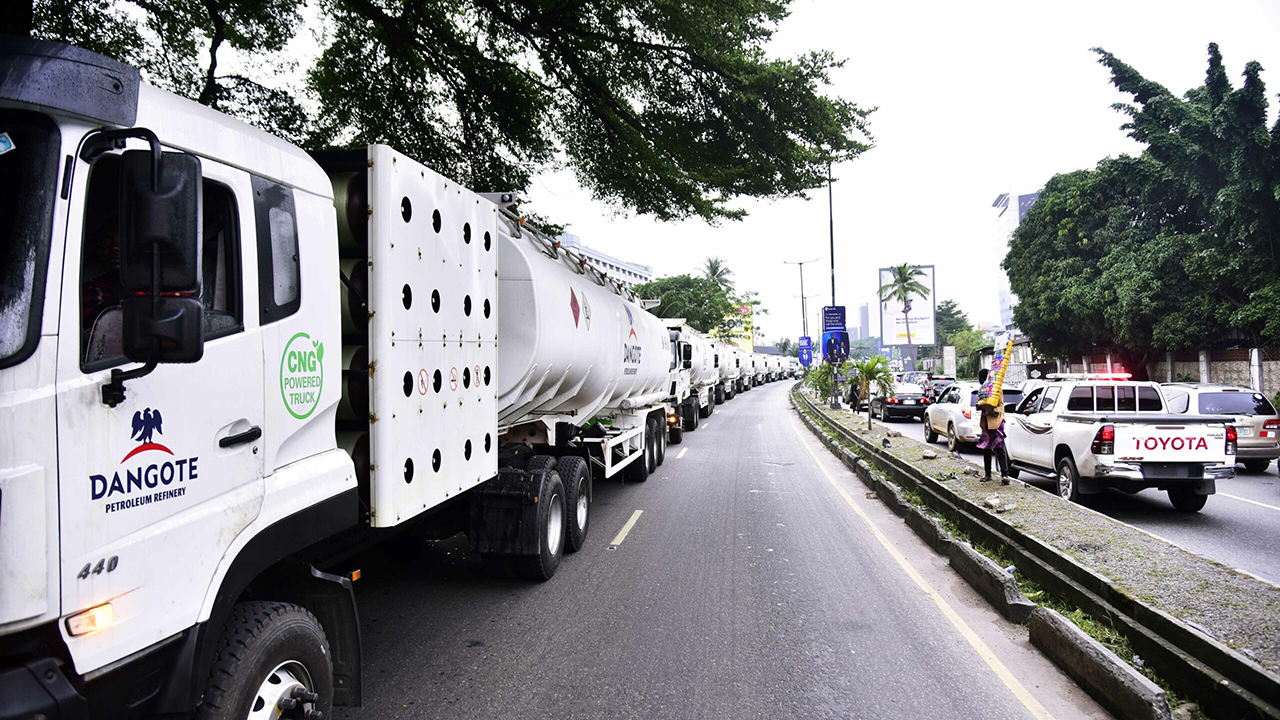
![Dangote Petroleum Refinery secures daily distribution of up to 65 million litres of petrol, strengthening Nigeria’s fuel self-sufficiency. [Guardian]](https://ocdn.eu/pulscms/MDA_/94af08824e5d03611081be6a18c9b011.jpg)
Nigeria’s downstream petroleum market is becoming increasingly dependent on the Dangote Refinery as the privately owned facility ramps up production and reduces the country’s reliance on imported fuel, according to new data released by the Nigerian Midstream and Downstream Petroleum Regulatory Authority (NMDPRA).
- Nigeria’s Dangote Refinery operated at more than 99% capacity in April 2026, according to NMDPRA data.
- The refinery’s rising output helped reduce Nigeria’s dependence on imported petrol and diesel.
- State-owned refineries in Port Harcourt, Warri, and Kaduna remained shut down during the period.
- The shift signals a major restructuring of the downstream fuel market of Africa’s largest oil producer.
The regulator’s April 2026 fact sheet, obtained by Business Insider Africa on Tuesday, May 12, 2026, showed the refinery operated at an average capacity utilisation of 99.12% during the month and achieved full utilisation on most days in April.
The report said the refinery produced 53.6 million litres of petrol daily, alongside 23.6 million litres of diesel and 22.9 million litres of aviation fuel. Domestic petrol supply from the refinery reached 40.7 million litres per day, while exports stood at 17.1 million litres daily for petrol, 17.8 million litres for diesel, and 20.5 million litres for aviation fuel.
The increased output coincided with a further decline in fuel imports into Nigeria. PMS imports fell from 5.9 million litres per day in March to 3.7 million litres per day in April, while diesel imports dropped sharply from 6.4 million litres to 1.7 million litres over the same period.
Domestic petrol supply also increased from 34.2 million litres per day in March to 40.7 million litres in April.
The figures point to a significant shift in Nigeria’s fuel supply structure, with local refining increasingly replacing imports in Africa’s largest oil producer. For decades, Nigeria relied heavily on imported refined petroleum products despite being one of the continent’s largest crude exporters.
![A petrol nozzle in Lagos, Nigeria, as pump prices face potential increases following Dangote Refinery’s latest petrol price adjustment. [Photo by PIUS UTOMI EKPEI/AFP via Getty Images]](https://ocdn.eu/pulscms/MDA_/8f3669b1bec5122f974b00bea13b1308.jpg)
However, the report also highlighted the continued inactivity of state-owned refineries. The Port Harcourt Refinery remained shut down in April, while Warri and Kaduna refineries were also listed as non-operational. AGO evacuation from Port Harcourt dropped from 0.048 million litres per day in March to zero in April.
The latest data suggests Nigeria’s refining sector is increasingly being driven by private investment rather than public infrastructure.
The report further showed that average daily petrol consumption rose from 47.3 million litres in March to 51.1 million litres in April.
At the same time, fuel prices remained elevated across major cities. Average petrol pump prices ranged from ₦1,271.50 per litre in Lagos, equivalent to about $0.93 using Forbes Advisor’s exchange rate of ₦1,360.54/$1, to ₦1,371.50 per litre in Maiduguri, equivalent to roughly $1.01 per litre.
The NMDPRA report also showed that Nigeria’s petrol stock sufficiency declined from 21.2 days in March to 17.7 days in April, while diesel sufficiency fell from 55.4 days to 39 days.
Analysts say the growing role of domestic refining could reduce pressure on Nigeria’s foreign exchange reserves over time by cutting import bills, although concerns remain over supply concentration in a single large refinery and the long-term viability of state-owned facilities.
According to the regulator, crude oil prices averaged $120.55 per barrel during the reporting period, while gasoline costs stood at $1,074.97 per metric tonne.