Africa's largest refinery reduces the amount of clean fuel being imported into West Africa
According to recent industry data quoted by S&P Global, the Dangote Oil Refinery's rapid production is drastically altering fuel trade patterns throughout West Africa, causing a sharp decline in imported clean refined fuel.
 Black News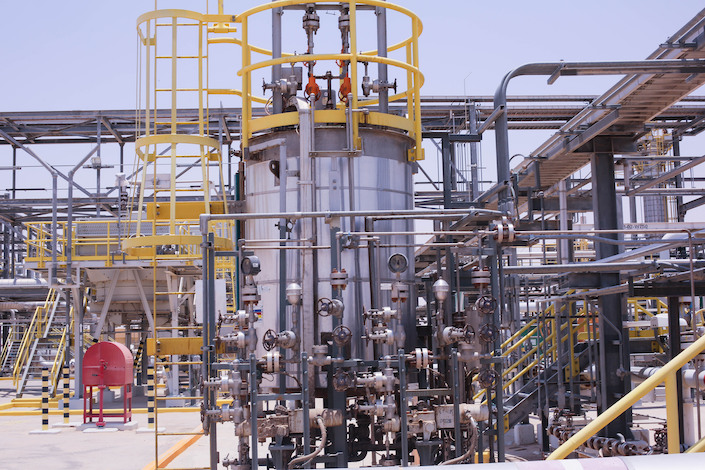

According to recent industry data quoted by S&P Global, the Dangote Oil Refinery's rapid production is drastically altering fuel trade patterns throughout West Africa, causing a sharp decline in imported clean refined fuel.
- The Dangote Oil Refinery in Nigeria has rapidly increased production, significantly reducing West Africa's need for imported refined petroleum products.
- West Africa's imports of refined fuel fell by nearly 23% from April to May, dropping to 765,000 barrels per day.
- MR (medium-range) tankers saw only a minor decline in activity, largely offset by increased exports from the Americas.
- Market analysts predict a 39% year-on-year drop in Nigerian fuel imports by mid-2025, further lowering demand for imported fuel and shipping routes from Europe.
West Africa's imports of clean refined petroleum products dropped dramatically to 765,000 barrels per day in May from approximately 997,000 barrels per day in April, according to data from S&P Global's Commodities at Sea platform.
This shows how rapidly regional supply dynamics are changing, with a month-over-month decline of almost 23%.
BIMCO, a shipping data firm, also noticed that the slump was directly tied to increased output from Nigeria's refinery, which has a capacity of 650,000 barrels per day.
As local production rises, fewer imported volumes are required in Nigeria and neighboring markets, resulting in a more comprehensive reorganization of tanker activity in the Atlantic basin.
According to BIMCO estimates, overall imports into West Africa fell even more sharply, by up to 44% during the same period, resulting in a significant fall in shipping demand measured in tonne-miles.
“LR1 and LR2 product tankers recorded the largest declines, down 88 per cent and 78 per cent respectively, and together accounted for 55 per cent of the total tonne-mile loss,” S&P quoted BIMCO as saying.
“MR product tanker tonne-miles fell only 4 per cent year over year during April to May, despite a sharp drop in imports from all major loading regions. A 34-fold increase in volumes from the Americas largely offset the decline, limiting the overall loss,” BIMCO added.
Medium-range (MR) tankers, which normally dominate regional refined product commerce, also suffered a dip, albeit a minor one.
BIMCO reported that MR tanker tonne-miles fell by around 4% year on year between April and May.
This relative resilience was aided by an increase in exports from the Americas, which served to balance lower flows from typical supply centers.
Historically, lines from Rotterdam to Lagos served as an important corridor for MR tanker traffic, the Punch reported.
However, this trade route has decreased significantly as Nigeria's local refining capacity grows, lowering reliance on European imports.
Market researchers also predicted a 39% year-on-year reduction in Nigerian refined product imports by the middle of 2025.
“Data indicated a 39 per cent year-on-year drop in Nigerian clean petroleum product imports by mid-2025, essentially removing a massive source of employment for MR tankers in the Atlantic,” CAS analysts said.
This move has drastically lowered demand for Atlantic shipping capacity, particularly for MR boats, which formerly dominated the route.
DON'T MISS THIS: Africa’s richest man highlights a problem that affects both West and Central Africa
According to S&P Global Commodity Insights, freight prices on the UK/Continent-to-West Africa corridor have declined, suggesting lower demand for long-distance gasoline supplies into the area.
Due to recent delays in global supplies, the refinery has now become a major export participant. It allegedly exported a record 372,000 barrels of refined goods per day in April alone, highlighting its increasing impact on the world's petroleum flows.