Africa’s smallest landlocked nation receives 4th group of US deportees under Trump's $5.1 million deal
A fourth flight carrying non-citizen deportees from the United States arrived in Eswatini on Wednesday, marking the latest execution of Washington's controversial externalized immigration policy.
 Black News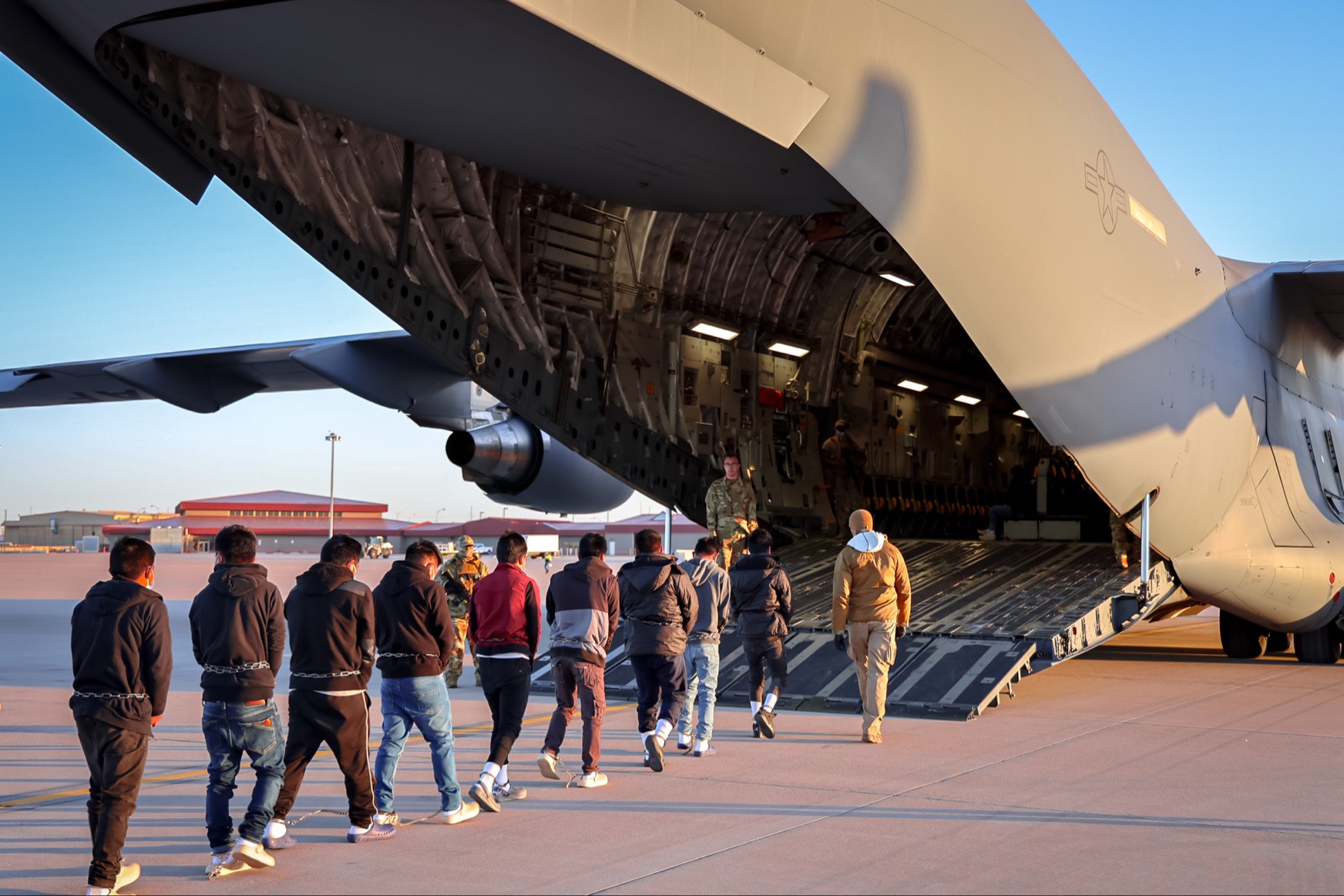

A fourth flight carrying non-citizen deportees from the United States arrived in Eswatini on Wednesday, marking the latest execution of Washington's controversial externalized immigration policy.
- The U.S. continues to deport non-citizen migrants to Eswatini under a controversial externalized immigration policy.
- The latest flight carried 11 individuals, including at least two with active legal protections that should have prevented deportation.
- Deportees are third-country nationals with no significant ties to Eswatini and come from diverse regions globally.
- The practice circumvents laws prohibiting direct deportation to dangerous home countries by sending migrants to a willing third-party nation like Eswatini.
The incoming group consisted of 11 individuals whose exact identities have not been officially disclosed.
According to legal advocates following the case, the flight includes at least two individuals who held active legal protections that should have shielded them from deportation.
The individuals sent to the southern African kingdom are third-country nationals and generally have no familial, cultural, or linguistic ties to the country.
Past deportees transferred under this policy have originated from diverse nations across the globe, including Cambodia, Jamaica, Cuba, Somalia, Tanzania, and Vietnam.
While American and international laws strictly prohibit the direct repatriation of asylum seekers and vulnerable migrants to their native countries where they face documented threats of torture or persecution, the administration sidesteps this restriction by outsourcing their custody to a remote third-party nation.
This strategy allows Washington to remove these individuals from U.S. soil while technically claiming it has not returned them directly to the dangers of their homelands.
DON'T MISS THIS: Ghana hit with a lawsuit for going along with a plan initiated by the United States
How the US changed the rules
In the past, the U.S. government followed standard international rules: if an individual faced real danger or persecution in their home country, Washington would not force the person back there.
Instead, these migrants were usually allowed to stay and work in the U.S. under special legal safety nets. The Trump administration completely flipped this approach.
They argue that the law only stops them from sending people back to their own countries.
By using this strict interpretation, the administration believes it can legally deport protected migrants to any other country willing to take them, passing the responsibility of housing and detaining them onto foreign nations.
The agreement between the US and Eswatini
The arrival of these flights is governed by a highly contentious bilateral agreement signed between Washington and Mbabane, the capital city of Eswatini.
Under the terms of the deal, Eswatini received a $5.1 million payout from the U.S. government, officially designated to enhance the kingdom's border control and migration management infrastructure.
In exchange, the absolute monarchy agreed to accept up to 160 third-country nationals, acting as a temporary holding facility while final repatriation details are supposedly worked out.
Geopolitical analysts note that landlocked Eswatini had very little leverage to reject the arrangement.
The U.S. government applied intense diplomatic and economic pressure across the region, leveraging aggressive tactics that included threats of sweeping visa bans, trade tariffs, and the withholding of vital foreign assistance.
Upon arrival, the deportees are immediately transferred to the high-security Matsapha Correctional Complex, where the vast majority continue to be held indefinitely without local charges.