After cement and oil, Africa's richest man takes on another industry Nigeria lost decades ago
For decades, the Peugeot 504 was Nigeria’s car. It ferried civil servants to work, served as the backbone of taxi fleets and became a fixture of family road trips across the country.
 Black News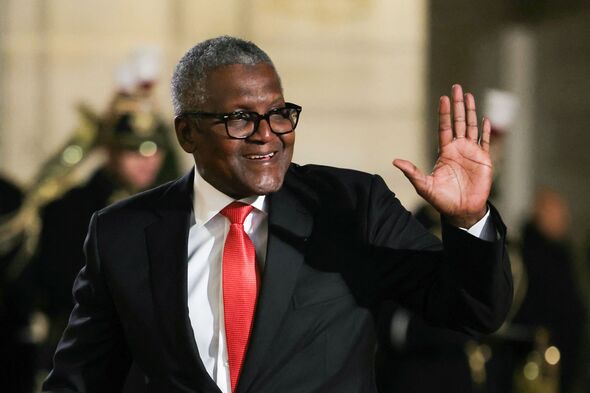

For decades, the Peugeot 504 was Nigeria’s car. It ferried civil servants to work, served as the backbone of taxi fleets and became a fixture of family road trips across the country.
- Peugeot once dominated Nigerian roads before debt and declining production pushed the company to the brink.
- After AMCON took over the struggling automaker, Aliko Dangote joined a consortium that acquired control of PAN Nigeria in 2016.
- Dangote later secured a new Peugeot assembly arrangement through DPAN and built a modern assembly plant in Kaduna.
- The billionaire is now attempting to revive local vehicle manufacturing in a country that imports most of the cars it uses.
At its peak, Peugeot was so dominant that the Kaduna factory assembling the vehicles stood as one of the clearest symbols of Nigeria’s industrial ambitions. Then it all fell apart.
The company behind the iconic brand, Peugeot Automobile Nigeria (PAN), struggled under years of declining sales, policy inconsistency, competition from imported used vehicles and mounting financial troubles.
By 2012, the company had accumulated debts estimated at about N30 billion and was taken over by the Asset Management Corporation of Nigeria (AMCON), the government agency established to acquire distressed assets from Nigerian banks.
What followed was a slow decline of a brand that once dominated Nigerian roads.
Today, however, Peugeot is back in production in Nigeria, thanks largely to a bet placed by Africa’s richest man, Aliko Dangote.
The collapse
When PAN was established in 1972 as a joint venture involving the Nigerian government and French automaker Peugeot, it represented something larger than a car assembly business.
It was part of Nigeria’s post-independence industrialisation strategy.
The Kaduna plant became one of the country’s most prominent manufacturing facilities, producing popular models such as the Peugeot 404, 504 and later the 505.
For years, locally assembled Peugeot vehicles dominated Nigeria’s passenger vehicle market. The brand developed a reputation for durability, affordability and suitability for local road conditions.
But economic crises, foreign exchange shortages, weak industrial policies and a flood of imported vehicles gradually eroded the company’s position.
By the late 2000s, the once-thriving operation was struggling to survive.
Production volumes collapsed. Capacity utilisation fell sharply. The factory that had once symbolised Nigeria’s manufacturing future became another example of the country’s deindustrialisation.
When AMCON assumed control of the company in 2012, many observers believed the Peugeot story in Nigeria had effectively ended.
Dangote saw the opportunity
Aliko Dangote saw something different. In 2016, Dangote Industries joined a consortium that acquired a controlling stake in PAN Nigeria from AMCON.
The acquisition came at a time when Nigeria’s automotive sector had been largely reduced to vehicle imports, despite repeated government efforts to revive local assembly.
For Dangote, the move aligned with a strategy he had already pursued successfully in cement, sugar, fertiliser and later petroleum refining: acquire or build domestic production capacity in sectors where Nigeria depended heavily on imports.
Rather than simply restarting the old Peugeot arrangement, however, Dangote pursued a bigger plan.
His team entered discussions with Peugeot’s parent company, then PSA Groupe, which ultimately resulted in the creation of a new entity known as Dangote Peugeot Automobiles Nigeria Limited (DPAN).
The arrangement gave the new company the rights to assemble and market Peugeot vehicles in Nigeria under a fresh licensing framework.
Following the formation of Stellantis through the merger of PSA Groupe and Fiat Chrysler Automobiles in 2021, the partnership continued under one of the world’s largest automotive groups.
DON'T MISS THIS: French automakers partner Dangote to reboot Nigeria's vehicle production with 44,000-unit goal
A new factory
Instead of relying solely on the original PAN infrastructure, DPAN developed a modern assembly facility along the Kaduna-Abuja Expressway.
The plant began operations in January 2022 with the assembly of the Peugeot 301 sedan.
Since then, production has expanded to include the Landtrek pickup truck, the Peugeot 508 saloon and the 3008 and 5008 SUV models.
In April 2026, Stellantis announced the start of local production of the new Peugeot 3008 and 5008 models at the Kaduna facility, marking another milestone in the company’s efforts to deepen local assembly operations in Nigeria.
The factory has a designed production capacity of up to 120 vehicles daily across two shifts, although actual output remains significantly below that level as the company gradually expands operations and market penetration.
A much bigger ambition
Dangote’s interest in Peugeot extends beyond automobile sales. The billionaire has repeatedly argued that Nigeria’s economic future depends on building domestic manufacturing capacity rather than relying on imports.
That philosophy underpins his investments across sectors ranging from cement and fertiliser to petrochemicals and oil refining.
The Peugeot investment fits squarely within that framework.
Nigeria remains one of Africa’s largest vehicle markets, yet most vehicles on its roads are imported, particularly used cars.
Industry analysts say the country’s long-term automotive potential remains significant due to its large population, growing urbanisation and relatively low vehicle ownership rates compared with global averages.
The challenge has always been translating that potential into sustainable local production.
For DPAN, success will depend on increasing local content, expanding supplier networks and convincing consumers that locally assembled vehicles can compete effectively against imported alternatives.
Can Peugeot succeed where others failed?
The revival of Peugeot comes at a time when Nigeria is once again trying to build a domestic automotive industry.
Several global brands have established assembly operations in the country over the past decade, encouraged by government policies designed to reduce dependence on imported vehicles.
Yet many of those initiatives have struggled with inconsistent policies, foreign exchange constraints, weak consumer financing and infrastructure challenges.
Those same obstacles remain. But Peugeot enjoys one advantage many competitors do not: Nigerians already know the brand.
For older generations, Peugeot evokes memories of a period when locally assembled vehicles were commonplace on Nigerian roads.
For Dangote, the challenge is turning that nostalgia into a commercially viable business.
The billionaire transformed Nigeria from a major importer of cement into one of Africa’s largest producers. He is attempting something similar in petroleum refining through the 650,000-barrel-per-day Dangote Refinery.
The Peugeot revival represents another test of the same idea: that large-scale local manufacturing can succeed in sectors where Nigeria has historically depended on imports.
Whether the strategy succeeds remains to be seen.
But more than a decade after debt and decline nearly erased Peugeot’s presence from Nigeria, vehicles bearing the famous lion badge are once again rolling off an assembly line in Kaduna.
And once again, one of the country’s most recognisable industrial brands is betting on a Nigerian comeback.