Algeria’s richest man Issad Rebrab’s Cevital launches $600 million sugar beet project
Billionaire Issad Rebrab's Cevital has unveiled a $600 million investment aimed at reviving large-scale sugar beet production in Algeria as the country seeks to cut its heavy dependence on imported sugar.
 Black News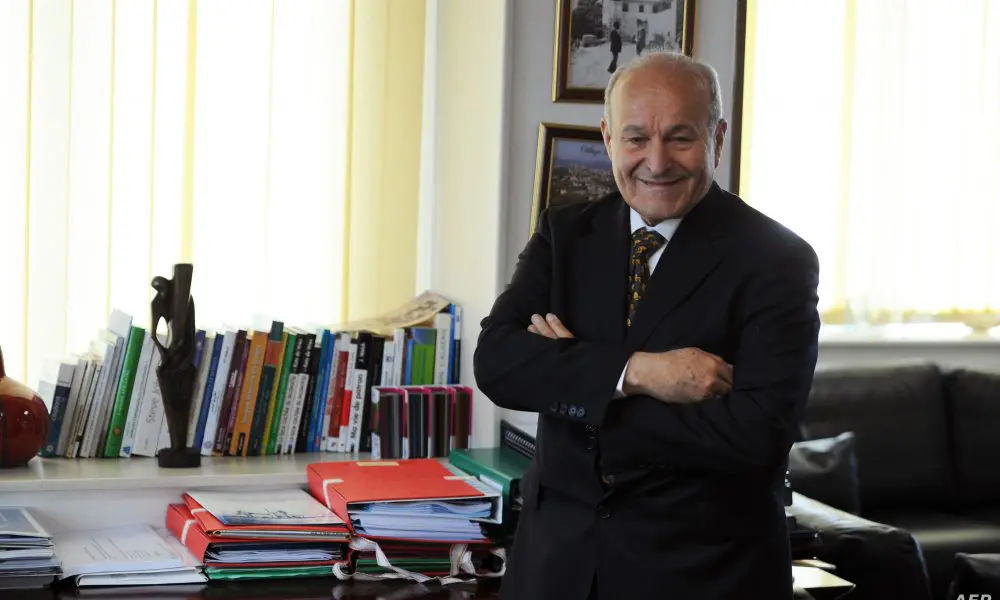

Billionaire Issad Rebrab's Cevital has unveiled a $600 million investment aimed at reviving large-scale sugar beet production in Algeria as the country seeks to cut its heavy dependence on imported sugar.
- Cevital is investing $600 million to restart large-scale sugar beet production in Algeria to reduce reliance on imported sugar.
- The project, located in Ghardaïa, will merge industrial farming with a new sugar processing and refining complex, creating 5,000 jobs.
- Initial pilot tests in 2024 showed promising sugar extraction rates between 18% and 20%.
- The refinery is expected to be operational by 2028, with its location chosen to prevent sugar loss from transport delays.
Billionaire Issad Rebrab's Cevital has unveiled a $600 million investment aimed at reviving large-scale sugar beet production in Algeria as the country seeks to cut its heavy dependence on imported sugar.
The project will combine industrial-scale farming with a new sugar processing and refining complex in the Saharan wilaya of Ghardaïa, and is expected to create 5,000 jobs at full capacity, according to an Ecofin Agency report.
Construction and preparatory work have already begun on the 1,200-hectare concession, including deep-water drilling operations reaching 385 metres below ground. Early pilot tests carried out in 2024 reportedly delivered sugar extraction rates between 18% and 20%, results considered commercially promising for large-scale production.
The refinery, expected to enter service by 2028, will be built close to the cultivation area to minimise transport delays after harvest. Sugar beet rapidly loses its sugar content if not processed quickly, a logistical problem that contributed to the collapse of Algeria’s sugar beet industry decades ago.
Reducing a billion-dollar import bill
Algeria remains Africa’s largest sugar importer, purchasing an estimated 2.3 million tonnes annually to meet domestic demand. Trade Map data shows the country spent more than $931 million on sugar imports in 2023 alone, highlighting the scale of its reliance on foreign supply.
Authorities and industry players see the Cevital investment as part of a broader effort to strengthen food security, reduce import costs, and expand local agro-industrial production.
Founded in 1998 by billionaire entrepreneur Issad Rebrab, Cevital has grown into Algeria’s largest privately owned business group, with operations spanning agribusiness, manufacturing, retail, transport, electronics, and steel.
Rebrab, whose fortune is estimated at $3.6 billion, handed over leadership of the group to his son Malik Rebrab in 2022 as the company accelerated its expansion into agro-industrial and food-processing ventures.