BBC to Cut Nearly 2,000 Roles, WSJ Launches New Sports Vertical & More: Media News Recap for April
Catch up on April's biggest media news headlines, including the latest updates in the Pentagon's press access policy.
 Black News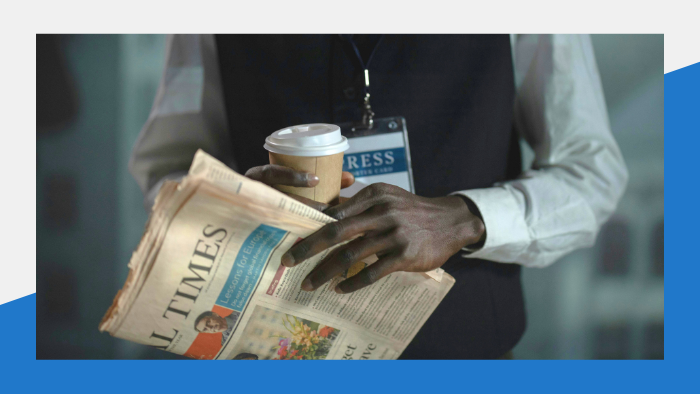
Welcome to Media Insider, PR Newswire’s roundup of the biggest media stories from the past month.

Photo by cottonbro studio on Pexels.
Our team has been following the major media industry headlines throughout April. From major layoffs to the latest lawsuits, launches and analyses, we’ve got you covered with our latest media news recap.
Keep reading to catch up.
BBC Plans Up To 2,000 Layoffs In “Devastating” Cost-Cutting Drive
Rhodri Talfan Davies, the BBC’s interim director general, announced that the company plans to cut between 1,800 and 2,000 roles over the next two years (roughly 1 in 10 members of the staff). The BBC will offer voluntary buyouts to avoid layoffs. One BBC presenter said the cuts are “a very difficult number to take in.”
Other “immediate cost control measures” have begun in recruitment (a quasi-hiring freeze), travel and consultancy spend, and costs associated with awards and events. More details on the cuts are expected in September. (Deadline)
It was a tough month for closures and layoffs, including:
- Condé Nast is shuttering Self magazine and rolling its health and wellness content into other titles like Glamour and Allure. (New York Times)
- Disney eliminated about 1,000 roles across various parts of the company. (Variety)
- The Associated Press began offering buyouts as part of a shift toward visual journalism. (NiemanLab)
- Us Weekly is cutting nearly half of its workforce and abandoning its New York headquarters to go fully remote. (New York Post)
- Sony Pictures Entertainment laid off hundreds of staffers. (Variety)
Judge Says Pentagon Must Restore Press Access
In a March ruling, U.S. District Judge Paul Friedman sided with The New York Times and its reporter Julian Barnes and struck down some of the Pentagon’s strict press access controls. In a lawsuit filed by the Times and Barnes last year, they argue the new press policy violated the First Amendment, Fifth Amendment and due process provision of the Constitution.
However, in early April, Friedman ruled that the Pentagon failed to comply with his March order. He said a revised press policy — which removed media office spaces from the building and required reporters to be accompanied by government escorts inside the Pentagon — was also unlawful.
“The Department cannot simply reinstate an unlawful policy under the guise of taking ‘new’ action and expect the Court to look the other way,” Friedman wrote. “The Constitution demands better. The American public demands better, too,” he continued in the April ruling. (CBS News)
Read next:
- This week, an appeals court ruled the Pentagon can continue requiring escorts for journalists in the building. (New York Times)
- Last week’s White House Correspondents’ Dinner ended when a man armed with guns and knives stormed the lobby and rushed toward the ballroom before Secret Service agents took him into custody. President Trump was uninjured. (AP)
- Senators Elizabeth Warren and Richard Blumenthal criticized new rules giving the Department of Defense more editorial control over Stars and Stripes. (Semafor)
- FBI director Kash Patel has filed a $250M defamation suit against The Atlantic and reporter Sarah Fitzpatrick. (CNN)
- Coverage of the Iran war has led to ratings surges for major cable news networks. (Mediaite)
- A judge dismissed President Trump’s defamation lawsuit against the Wall Street Journal’s publisher. (Wall Street Journal)
- After a lower court ordered the Trump administration to reinstate all full-time Voice of America reporters and support staff who were put on paid leave, a federal appeals court paused the reinstatements. (New York Times)
Dow Jones and WSJ Launch New Sports Vertical with Live Event
This summer, The Wall Street Journal and its parent, Dow Jones, are launching a new sports vertical. “Having spent the last couple of years in sports, and seeing how big the opportunities are becoming for investors and owners — It’s clear that sports has turned into this incredible asset class,” said Dow Jones chief growth officer M. Scott Havens.
It will debut in July alongside the inaugural “WSJ Sports: The Next Sports Economy” event, which will take place in New York City during the World Cup final. Topics will cover the business of sports, including media rights in the streaming era, the rise of betting/prediction markets and more.
The new vertical joins a growing list of sports business coverage at outlets like CNBC, Puck and Front Office Sports. (Axios)
Other launches announced in April include:
- Well-known food journalists and writers launched Ravenous, a worker-owned site.
- The Boston Globe debuted a twice-weekly subscriber newsletter, Power Play, covering the region’s business and power. (PR Newswire)
- The Onion announced its new plan to relaunch the Infowars site. (New York Times)
- American Public Media launched a digital audio ad network called Inform Media Network. (Inside Radio)
- Axios is expanding its local coverage in Colorado as part of its partnership with OpenAI.
- La Fronde, a new digital outlet covering women in media, went live on April 28.
MS NOW Strikes Partnership Deals to Boost Investigative, Local Reporting
On Local News Day, MS NOW (formerly MSNBC) announced a series of new and expanded partnerships, and a new grant program to increase its original reporting and strengthen local reporting across the country. The initiative includes collaborations with nonprofit journalism organizations the Pulitzer Center, The Marshall Project and States Newsroom.
The grant program, in partnership with the Pulitzer Center, will support local, nonprofit and independent journalists producing accountability reporting. Their reports will be featured on MS NOW’s programs and platforms. The collaboration with The Marshall Project will focus on investigative reporting about U.S. immigration enforcement and detention practices. Finally, the partnership with States Newsroom will focus on reporting tied to the 2026 midterm elections and the 2028 presidential election cycle. (TheWrap)
Other deal news from April includes:
- The New York Times struck a multiyear distribution partnership with Delta Air Lines. (Axios)
- Prediction market Kalshi made a deal to integrate its forecasts into Fox News properties. (The Hollywood Reporter)
- George Soros’ firm invested in left-leaning MeidasTouch Network. (Bloomberg)
- Warner Bros. Discovery shareholders “overwhelmingly” approved the proposed deal with Paramount Skydance. (Axios)
- A federal judge blocked Nexstar’s acquisition of rival TV station owner Tegna. Nexstar plans to appeal the decision. (CNN)
- In 2025, 21% of Americans followed local news very closely, down from 37% in 2016. (Pew Research Center)
Do links hurt news publishers on Twitter? Our analysis suggests yes
A new analysis by NiemanLab looked at thousands of tweets from 18 publishers, including CNN, The New York Times, AP, Fox News, Reuters, CBS News, BBC and others. One thing was made pretty clear: Links seem to hurt news publishers on X, formerly known as Twitter. In addition to driving little traffic to publishers’ sites, the analysis found that X is also bad for conversational and breaking news, something it used to excel at.
Most big publishers are still using X (with the exception of a few) and have millions of followers there. Many of them include external links in their tweets to drive readers to their sites. One outlier was Fox News, which includes links in just 9% of its tweets, usually opting for videos or graphics instead. That strategy works: Fox News had the third-highest median engagement in the analysis. The data shows that many big publishers have not changed the way they tweet, even though the platform has drastically changed. (NiemanLab)
Related:
- New research provides best practices for creating news content that resonates with TikTok users. (Reynolds Journalism Institute)
- Instagram users can now edit comments they leave on posts, as long as it’s within 15 minutes of posting. (Engadget)
- Nextdoor is opening early access to local journalist accounts to help them receive tips, connect with sources and boost distribution for their stories. (Axios)
- Instagram quietly launched “Instants,” a new stand-alone mobile app that mimics Snapchat’s disappearing photo-sharing model. (MediaPost)
ICYMI
Here are a few other stories that caught our eye in April:
- The World Press Photo of the Year was announced. (World Press Photo)
- Savannah Guthrie returned to the “TODAY” anchor desk more than two months after her mother disappeared. (NBC News)
- Coverage of the Artemis II moon mission boosted traffic for many publishers. (MediaPost)
- The Pittsburgh Post-Gazette, which had been set to shut down in May, was saved by a purchase by nonprofit journalism organization The Venetoulis Institute for Local Journalism. (New York Times)
- NPR announced it had received philanthropic gifts totaling more than $110 million — including the largest by a living donor in NPR’s history. (NPR)