China’s solar exports to Africa surge 83% as power crises deepen across the continent
Africa’s worsening electricity shortages and rising energy costs are driving a massive surge in demand for Chinese solar equipment, strengthening Beijing’s grip on one of the world’s fastest-growing renewable energy markets.
 Black News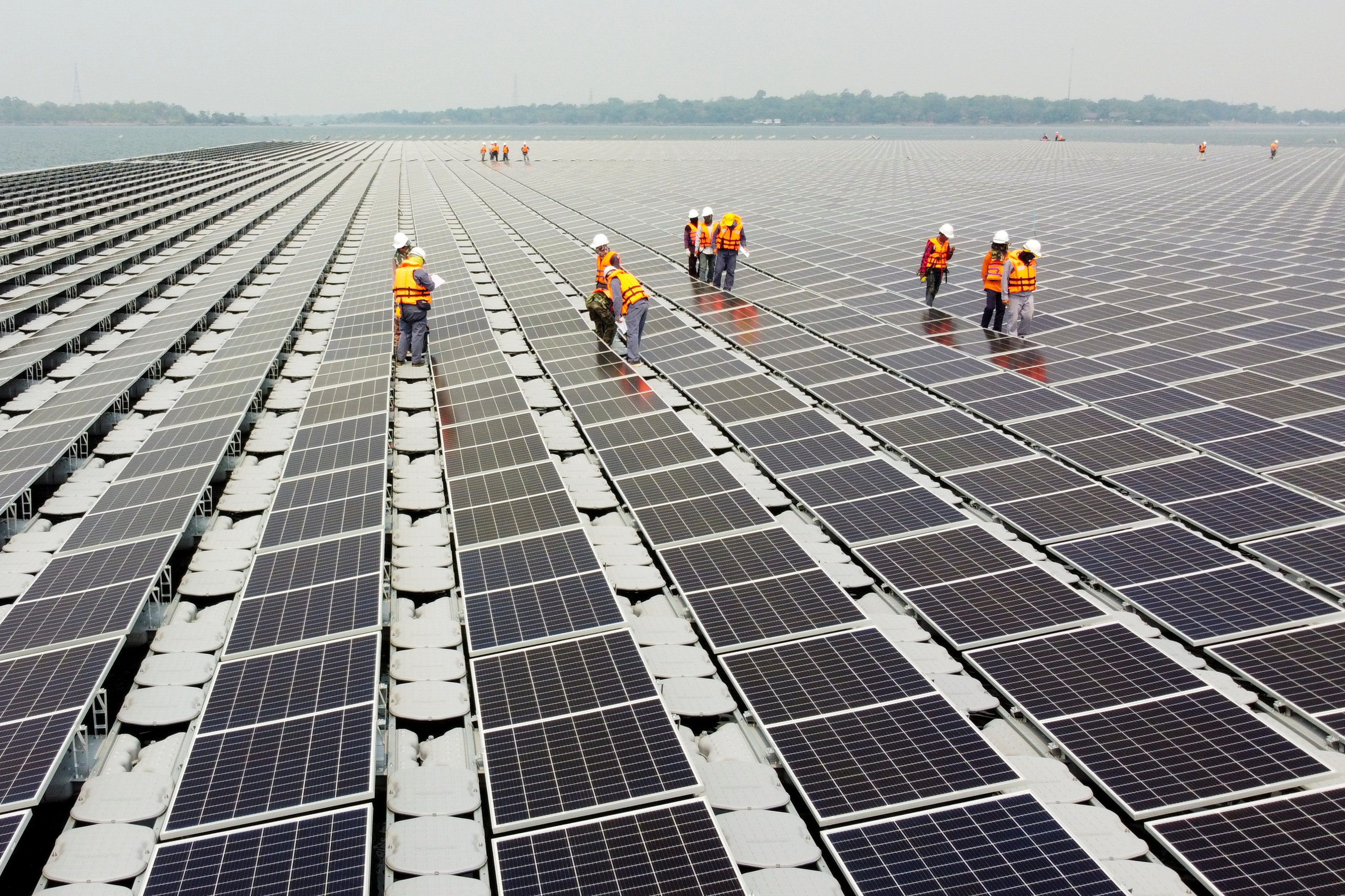

Africa’s worsening electricity shortages and rising energy costs are driving a massive surge in demand for Chinese solar equipment, strengthening Beijing’s grip on one of the world’s fastest-growing renewable energy markets.
- China’s solar exports to Africa jumped 83% in April as countries accelerated efforts to tackle electricity shortages and rising energy costs.
- South Africa and Congo led the buying surge despite fears of higher prices after Beijing changed export incentives.
- The trend highlights Africa’s growing dependence on Chinese renewable energy technology.
- It also strengthens China’s dominance in the global clean energy race.
New Chinese customs data released on Wednesday showed exports of solar cells and panels to African countries climbed 83% year-on-year in April to 123,787 metric tons, up from 67,552 tons in the same period last year.
The sharp increase comes as governments, businesses and households across Africa increasingly turn to solar power to reduce dependence on unreliable national grids, expensive diesel generators and volatile fuel prices.
While shipments slowed from March’s record 209,474 tons, analysts say demand remains unusually strong even after China ended its export tax refund policy on April 1, a move widely expected to increase global solar equipment prices.
The March rush was largely driven by buyers worldwide scrambling to secure supplies before the policy change took effect.
South Africa and Congo lead Africa’s solar push
South Africa remained one of Africa’s largest buyers of Chinese solar products in April, with imports rising 81.4% year-on-year as businesses and households continued investing heavily in alternative power sources after years of rolling blackouts and energy instability.
The Democratic Republic of Congo recorded one of the most dramatic jumps globally, with imports soaring 482% to 17,953 tons.
The increase is significant for a country that still has one of the world’s lowest electricity access rates despite holding vast reserves of minerals critical to the global energy transition, including cobalt and copper.
Across Africa, solar energy is increasingly becoming both an economic necessity and a strategic investment.
Several countries are facing mounting pressure from rapid urbanisation, industrial growth, weak grid infrastructure and rising fuel import costs, making renewable energy one of the few scalable long-term solutions.
China’s dominance in solar manufacturing has also made its products among the cheapest and most accessible for developing economies.
China’s clean energy influence keeps expanding
Beyond Africa, Chinese solar exports to Southeast Asia also surged 75% year-on-year in April to 170,733 tons, although shipments eased from March’s peak of 336,891 tons.
Overall exports of Chinese solar cells and panels rose 60% on a per-unit basis in April, though total shipment volumes increased by a more modest 4% due to weaker exports to South Asia and the Middle East.
The Netherlands remained the world’s top importer by volume, with shipments valued at $380.8 million. However, import volumes into the European transit hub fell 2.5% year-on-year to 177,391 tons.
The Philippines ranked as the second-largest importer globally, although volumes dropped sharply from March after buyers completed pre-policy purchases.
The latest figures underline China’s growing influence over the global energy transition at a time when countries are racing to expand renewable energy capacity, cut emissions and shield consumers from volatile fossil fuel prices.
For Africa, the trend also shows a bold geopolitical reality: while Western governments continue debating climate financing and energy transition commitments, China is rapidly cementing itself as the continent’s dominant supplier of renewable energy technology.