Controversial Chadian Law Risks Increased Rural Violence
A silent conflict between herders and farmers, competing for access to insufficient resources, has been plaguing Chad for decades. But the Chadian government’s recent plan to pass a pastoral law that is dangerously skewed towards the herders risks further amplifying this divide. Chad could draw lessons from other African countries to reduce the risk of violence. Access to water and land has long poisoned relations between communities in Chad. The population of southern Chad, which is mainly sedentary and Christian, practices farming, whereas the northern population, predominantly Muslim, are traditionally nomadic herders. The clash between these two ways of life […] The post Controversial Chadian Law Risks Increased Rural Violence appeared first on African Arguments.
 Black News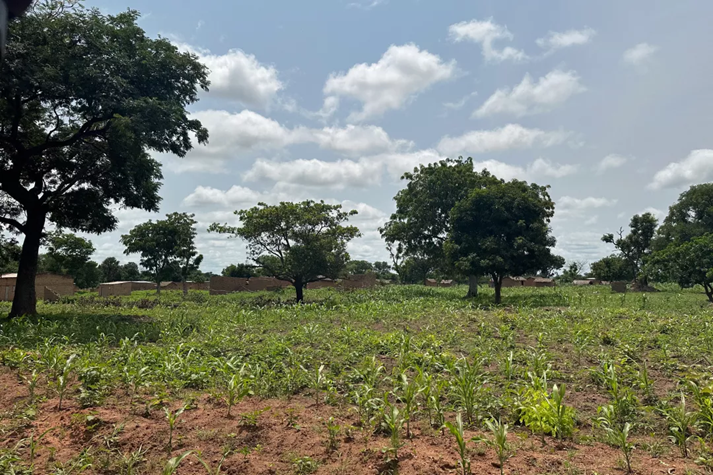
A silent conflict between herders and farmers, competing for access to insufficient resources, has been plaguing Chad for decades. But the Chadian government’s recent plan to pass a pastoral law that is dangerously skewed towards the herders risks further amplifying this divide. Chad could draw lessons from other African countries to reduce the risk of violence.
Access to water and land has long poisoned relations between communities in Chad. The population of southern Chad, which is mainly sedentary and Christian, practices farming, whereas the northern population, predominantly Muslim, are traditionally nomadic herders. The clash between these two ways of life has been exacerbated in recent years by population growth and climate change. Droughts have become much more frequent, driving northern herders southward in search of grazing and water for their livestock. This has caused competition between the two groups, with the state backing the herders.
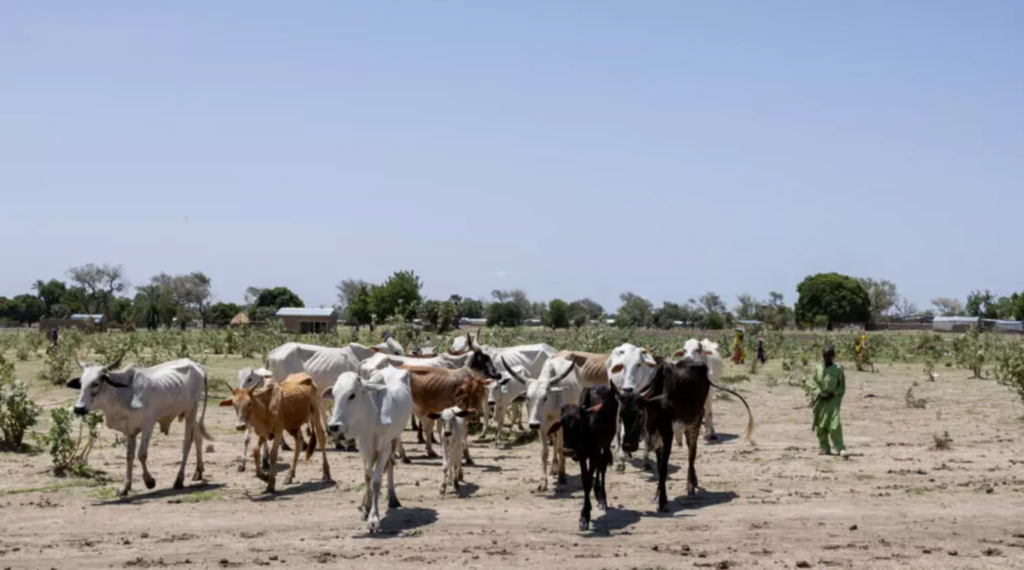
Herd crossing a field, Binder, Chad.
A Contested Law
The Chadian government is adding fuel to the fire. The pastoral law it put forward in September 2025 heavily favours the herders. Southern farmers point at several articles in the law to back up their accusations of bias. Article 11 promises herders compensation for the loss of pastoral rights to mining or oil operations, but not to farmers facing loss of their livelihoods. Article 26 states that, regardless of the region, transhumance corridors – routes pastoralists use to cross land – must be wide enough for their herds to travel through. Yet, this ignores that neither community has been respecting the corridors. Herders regularly trespass on privately owned agricultural land bordering the corridors due to the increased size of their herds and farmers have planted crops there to increase their output in the face of the population’s growing demand. Then, Article 46 states that farmers are responsible for erecting fences to prevent crop damage by livestock, meaning that the onus falls on them, rather than on the herders failing to control their cattle.
If passed, this legislation will destroy what’s left of the trust the southern population has in the government since, after the election of Hissene Habré in 1982, power was transferred from the mostly Christian south to the mostly Muslim north. Herders now enjoy almost complete impunity thanks to the protection of the ruling elite. This lack of trust could very likely cause farmers to take justice into their own hands. The scale and organisation of farmers’ retaliatory attacks against herders have already escalated due to the professionalisation of self-defence militias and use of automatic weapons; passing the law would only intensify this anti-herder sentiment. The absence of an agricultural law to balance the proposed legislation has created much discontent in the south.
Back in 2014, the government of President Idriss Déby Itno presented the law as a balanced reform to the pastoral sector. But strong internal opposition from the National Assembly, forced it to withdraw the law. Today, the government led by Déby’s son Mahamat asserts that the law is a necessary framework to regulate Chad’s livestock sector. The Catholic Church in Chad, firmly ensconced in the south, has been fulminating against the government’s plan, with the bishops of Doba, Goré, Koumra, Moundou and Sarh accusing the authorities of favouritism towards the herders and even ‘peasanticide’ (paysanicide). The government plans to seek the views of stakeholders throughout the country to reach consensus. Although the government’s stated intention is to carry out a needed reform, the likely outcome is to exacerbate herder-farmer violence as a result of the government’s favouritism towards herder populations.
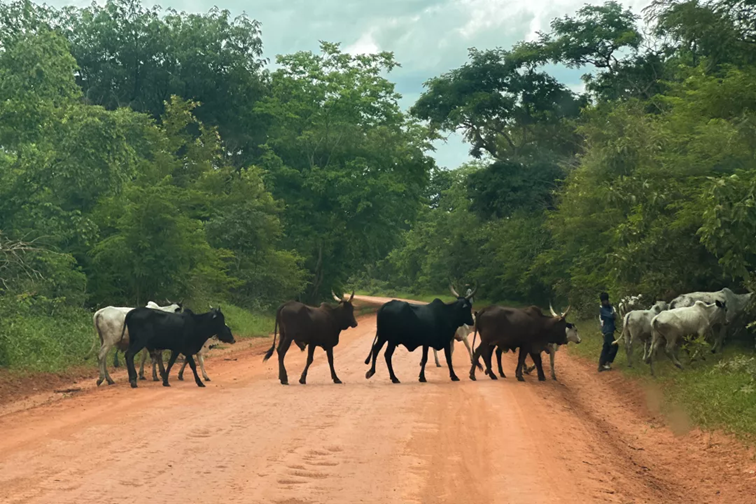
A herd on the road, Goré, Chad.
A History of Violence
Herder-farmer conflicts have generated deadly violence in the country. The International Crisis Group reported in 2024 that between 2021-2024, intercommunal fighting led to over 1,000 fatalities and injured more than 2,000. Tensions continued to rise in 2025 with the arrest of opposition leader Succès Masra on 16 May for allegedly inciting intercommunal violence in Mandakao (Logone-Occidental), which resulted in 42 deaths. The evidence presented by the court seems unconvincing; the unrest was probably used as a pretext for his arrest. The imprisonment of Masra, who is very popular in the south thanks to his fierce criticism of the herder-farmer clashes, continues to stir strong emotions and illustrates how herder-farmer violence can be instrumentalised by the government for political purposes. Nineteen people died in another outbreak of violence on 19 June after herders attacked the village of Oregomel (Mayo-Kebbi Ouest).
The Road Forward
To diminish the risk of violence, the Chadian government should launch a national consultation with representatives of the political opposition as well as civic and religious organisations such as the Catholic Church, along with herder and farmer communities to revise the proposed pastoral law and create a parallel agricultural law. This solution, promoted by the Church, has broad support in the south. To facilitate the consultation, the European Union, which is one of the largest foreign donors to Chad and has a development fund targeting agriculture, should consider financing a round table discussion on how to improve the parts of the pastoral law that have particularly offended the southern farmer community. With its more diplomatic role, the African Union could support and facilitate this endeavour.
A newly cultivated field, Goré, Chad.
Though resolving such conflicts can be complex, N’Djamena can draw from promising examples on the continent to inspire a solution. The government could take a cue from Kenya when working to minimise intercommunal turmoil. From 2016-2018 Kenya experienced violence between nomadic herders from Samburu and Pokot Counties and the sedentary farmers of Laikipia. The Kenyan government’s response helped to calm the situation down.
Unlike Chad, the majority of farmland in Kenya is fenced, paid for by farmers and sometimes foreign donors. Fences that also delineate clear routes for herders reduce the likelihood of conflict by making it easy to identify trespassers. Following Kenya’s example, the Chadian government should welcome an EU-funded fencing initiative. Fines for trespassing have proved successful deterrents to herders in the past, a practice Chad could implement easily. The government should also create mechanisms to respond more swiftly to incidents, based on the Kenyan example where politicians condemned the conflict and the army and police were deployed to stop the violence.
Without prompt government action, the death toll will continue to rise. With help from its partners, Chad must act now to prevent this worsening crisis from degenerating further.
The post Controversial Chadian Law Risks Increased Rural Violence appeared first on African Arguments.