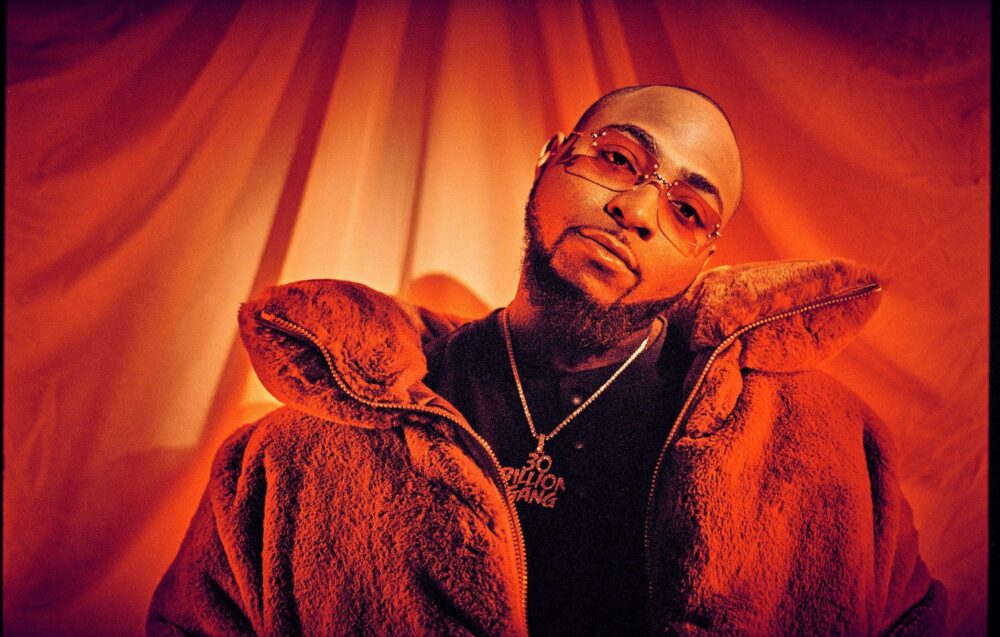
Eladio Carrión Talks ‘CORSA’, Bad Bunny’s Wrestling Skills & His Admiration for 50 Cent
For Entry 021 of Mic Drops & Elbow Drops, Carl Lamarre talks to Latin superstar Eladio Carrión about his new album CORSA and how the WWE can better serve the Latin community.
 Black News
Beyond the entrancing storylines, aerial assaults and groundshaking haymakers, wrestling has always been driven by its characters. If Latin Grammy winner Eladio Carrión ever crossed over to the squared circle, he’d probably be one of wrestling’s biggest celebrity names to enter step inside the ring.
“My wrestler name would have something with Dragon in it, or Don Cabron,” he says with a sly grin. “My finisher would probably be The People’s Elbow. That was my favorite one as a kid. I’m a big Rock fan. My nephews are half Puerto Rican and half Samoan. They’re big on wrestling and football. They’re crazy with it.”
Like the great wrestling heels and heroes before him, Carrión understands that charisma matters just as much as skill. A former competitive athlete, the “Coco Chanel” artist is an elite musician well-versed in sports psychology and the value of entertainment.
Whether he’s tag-teaming with rap heavyweights like Lil Wayne and 50 Cent, or lyrically sparring with his Puerto Rican brother-in-arms, Bad Bunny, Carrion is a scene-stealing showman looking to win listeners over one song at a time. His new album, CORSA, remains true to his DNA. A high-octane plunge into Latin trap and rap, Carrión flexes with the swagger and bravado that once made his late in-ring hero Eddie Guerrero one of wrestling’s most magnetic stars.
Songs like “Ricky Bobby” play into his affinity for sports, while “Body” is a fiery party-starter that will surely raise anyone’s pulse. Despite those impressive wins, it’s his latest single “Polaroid” that serves as the album’s crown jewel, sampling Michael Sembello’s 1983 Hot 100 chart-topper “Maniac.”
For Entry 021 of Mic Drops and Elbow Drops, Carrión speaks about his new album CORSA, his chemistry with Bad Bunny, how WWE can better serve the Latin community and more.
You’ve got records like “RKO,” “Kemba Walker” and “Mbappé.” How much of that comes from your own athletic background, and how does that competitive mindset show up when you’re making music?
I feel like music and sports have always gone hand-to-hand. Us as musicians or rappers, we get inspired by what these guys are doing and they get inspired by what we do. They use our songs as walk-up songs, or to get hyped in the locker room.
The saying I believe is “rappers wanna be athletes and athletes wanna be rappers.”
Exactly.
You’ve worked with names like 50 Cent, Future, and Lil Wayne. What do you think they hear in you that makes them want to tap in?
I manifested those features. Manifestation is really important to me. I had that 50 beat four years before he recorded [the song]. I saved that beat on my e-mail as “50 Cent” because for Wayne and 50, they’re two legends. They’re not gonna record [if they’re not ready]. It doesn’t matter if my manager calls, they won’t do it. I really tried to tailor the perfect beat and perfect song [for them]. I just really wanted them to see how much they’ve inspired me.
Were you in the studio for either recording?
No, I wasn’t. I just woke up one day and saw that I had a 50 verse. I said, “Whew.” With Wayne, I was supposed to meet up with him and Mack Maine at a restaurant and when I pulled up, he wasn’t there. Mack said, “He’s recording your verse.” But he did come to Puerto Rico and performed at the Sauce Boyz fest that we did. He pulled up, did some songs and showed love. It was one of the best days of my life.
Another day that was surely one of the best moments of your life was when you won a Latin Grammy for Best Rap/Hip-Hop Song with “Coco Chanel.”
Nah, four days before that was the best day of my life — I had my twins. I had twins on November 7th and I didn’t go to The Grammys because I wanted to be at home. Three days later, I forgot about The Grammys. I woke up and they said, “You won a Grammy.” I said, “Oh. For real? It’s today?” My mind wasn’t in music because of the twins. They came out premature, but everything was OK. It was the best week of my life.
Did that win feel like validation for you in the Latin rap space?
It was something very satisfying because it wasn’t on my bucket list or was something that I wanted to prove to myself, but, with all due respect to The Grammys, I’ll never let them make me think that my music isn’t enough. It’s a blessing, but I never really tried to base this on how I feel about my music or how long I’ve done this for merits. It’s subjective. Some people might like, some might not, but I’ll never base what I think of myself on a trophy.
Whether it’s “Kemba Walker” or “Coco Chanel,” you and Bad Bunny don’t miss together. What makes that chemistry work every time?
There’s a lot of times when we do music together he’s the one that calls it. For “Kemba Walker,” I posted a preview and he hopped right on it quick. When we did “Thunder and Lightning,” it was a weird beat, but he said we gotta do it like this. For “Coco Chanel,” I brought the beat to him. I worked with DVLP. He did “Blunt Blowin” with Wayne. He’s a legend. Mixtape Wayne, that’s all DVLP.
[For Bunny], I show him a lot of music and he’s like, “This is what we’re gonna do.” It’s cool because it’s a combination. I know what I have to bring to the table and he knows what he has to do. It’s like when I did music with Myke [Towers], we have that chemistry.
“Polaroid” flips “Maniac” in a really slick way. What’s your approach to taking a classic record and making it feel new without losing what made it special?
It’s crazy because the beat was made in 10 mins. I had the idea and [they] put the drums on it quick. It was just a fun idea I had. I be sampling some random stuff. I have a lot of sample stuff, but I don’t drop [them] because with it’s always hard to clear, but the label was asking for a song for the radio. When they ask me for commercial music, I’m not gonna do reggaetón. I barely do it. I rather do a happy medium and I feel like that song is for everybody. It was the perfect radio song.
Is there a song that you weren’t able to clear that you wished you did?
Nah, the label be doing their thing. They go hard for me, but I had a Demon Slayer joint that I haven’t done because that might be a freebie. I don’t know, but I’d definitely do more things if it wasn’t hard to clear.
Your brother Bad Bunny has stepped into the ring and really earned respect in WWE. As someone who understands performance at a high level, how would you grade him as a wrestler?
To be honest, just because of how busy he was at the time and how fit he got, I’d give him an A, man. It’s a whole other world. There’s more Americans — and there’s a lot of Latinos — but when he was doing it, it was something that took balls to do. You have to be athletic, do your stunts and really study it. I think he did a really good job.
If WWE tapped you to produce an entrance theme today, which superstar would you want to score and produce?
Probably Jey Uso. Overall, I would have loved to have done something for Eddie Guerrero. I’d do something with Peso Pluma or one of those Mexican bands. That would have been crazy.
With AAA’s growing relationship with WWE, there’s more visibility on Latin talent than ever. From your perspective, what’s one thing WWE still isn’t getting right when it comes to representing the culture?
Maybe the exposure? A lot of them probably don’t even know that it’s happening. Breaking into the mainstream is kind of hard when the mainstream thing is so fire. What do you think?
I’m glad the merger with Triple A and WWE happened because now the American audience gets to be introduced to the Latin wrestlers they wouldn’t have known about before. And they’re even elevating some of them too and bringing them over to WWE shows.
It’s all exposure, man.
You’ve built a lane where Latin rap, trap, and hip-hop all collide at a high level. When it’s all said and done, what do you want your impact on the culture to be?
I never really thought about impact culturally because there’s so many people who have done this before me who already put Puerto Rico on the map and have been to Japan and China. It’s nothing new what we’re doing. Being Puerto Rican with trap and rap, it’s amazing to be a part of it. It’s amazing to be recognized not just as an artist, but a lyricist. I have my ignorant music, I have my mosh-pit music and I’m really one of the few Latin artists that have mosh-pits. I have my songs for that and songs where I can really write. It’s amazing. I love being part of the culture and inspiring others.