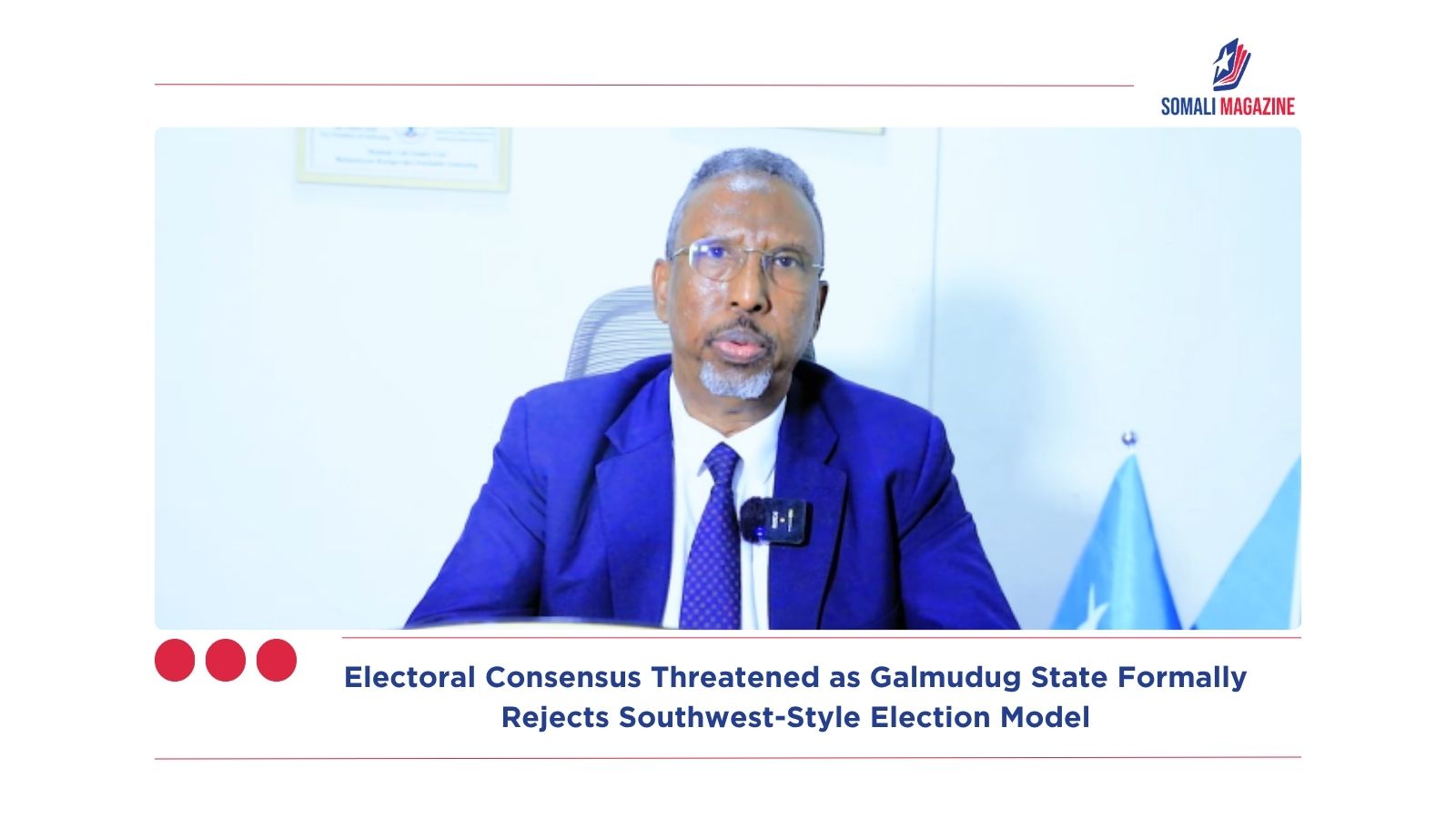
Galmudug State leadership has formally rejected the direct implementation of the Southwest-style election model for its upcoming regional leadership transitions, threatening to further stall the federal government’s ambitious national democratic timelines. In a comprehensive policy document issued from the regional capital of Dhusamareb, state administrators firmly declared that any future voting format must strictly adhere to an inclusive, consensus-based process that involves all regional stakeholders. The dynamic policy pushback occurs just days after a highly controversial parliamentary ballot took place in Baidoa, where former federal speaker Sheikh Aden Mohamed Nur “Madobe” secured a heavily contested victory amidst widespread opposition boycotts and serious allegations of aggressive federal interference.
The structural gridlock surrounding the federal electoral roadmap highlights a deepening constitutional crisis regarding central versus regional political autonomy across the nation. While President Hassan Sheikh Mohamud’s federal administration continues to aggressively champion a uniform, one-person, one-vote universal suffrage framework, multiple subnational units argue that the federal capital is using the system to centralize authority and handpick regional leaders. Galmudug officials emphasized that bypassing localized clan and political dynamics in favor of a top-down model lacks necessary public buy-in and could severely compromise hard-fought security gains. Reports suggest that several alternative regional state assemblies are closely monitoring Galmudug’s defiance, with senior political analysts warning that a rushed format could trigger widespread civil unrest.
Independent legal experts note that maintaining a fragile balance between democratic reform and tribal inclusivity remains the single largest challenge facing the current federal mandate. Critics of the recent Southwest State proceedings point out that forcing an accelerated election system without comprehensive consensus creates a dangerous constitutional vacuum rather than establishing genuine public representation. In response to the growing dissent, a federal ministry spokesperson reiterated that the central government remains deeply committed to moving away from the outdated, indirect clan-elder system, though officials conceded that supplementary round-table consultations with regional leaders may be necessary to resolve the current procedural deadlock.
The escalating political friction comes at an exceptionally delicate moment, as armed forces continue to engage in highly sensitive counterterrorism operations against insurgent cells in central and southern territories. Regional elders from the Mudug and Galgaduud zones have echoed the call for a consensus-based process, warning that political divisions in Dhusamareb directly benefit extremist groups looking to exploit governance fractures. As Turkish-backed mediation elements and United Nations assistance teams scramble to bring all sides back to the negotiating table, Galmudug’s firm stance ensures that the final parameters of the 2026 election cycle will remain a heavily contested battleground for months to come.

 Black News