Gambia makes history as first African nation to ratify AU Convention on Ending Violence against Women
The Convention, adopted by the African Union to combat violence, discrimination and harmful practices against women and girls across the continent, now becomes a binding legal instrument for The Gambia. Speaking shortly after the ratification, Hon. Kinteh described the development as a landmark achievement for the country and a significant step towards safeguarding the rights and dignity of women and girls. “The Gambia has ratified the African Union Convention on Ending Violence Against Women and Girls, cementing its commitment to protect women and girls from abuse and discrimination across all spheres of life,” she said. According to the minister, the ratification transforms The Gambia’s earlier signing of the Convention into binding legal obligations, requiring the country to align its laws, policies and programmes with the provisions of Africa’s first continent-wide framework dedicated to ending violence against women and girls. The convention seeks to address various forms of violence, including domestic abuse, sexual violence, harmful traditional practices, economic exploitation and discrimination, while promoting access to justice, protection services and empowerment opportunities for women and girls. The unanimous approval by lawmakers reflects growing national consensus on the need to strengthen legal and institutional mechanisms aimed at preventing gender-based violence and ensuring accountability for perpetrators. Hon. Kinteh praised members of the National Assembly for their support, noting that their decision has positioned The Gambia as a continental leader in advancing the rights of women and girls. “With this achievement, The Gambia has inscribed its name in history as the first African nation to ratify the convention,” she said while expressing gratitude to lawmakers for endorsing what she described as an important African instrument. The ratification is expected to enhance ongoing efforts by government and civil society organisations to combat gender-based violence, promote gender equality and create safer environments for women and girls throughout the country.
 Black News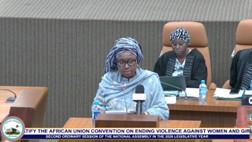
The Convention, adopted by the African Union to combat violence, discrimination and harmful practices against women and girls across the continent, now becomes a binding legal instrument for The Gambia.
Speaking shortly after the ratification, Hon. Kinteh described the development as a landmark achievement for the country and a significant step towards safeguarding the rights and dignity of women and girls.
“The Gambia has ratified the African Union Convention on Ending Violence Against Women and Girls, cementing its commitment to protect women and girls from abuse and discrimination across all spheres of life,” she said.
According to the minister, the ratification transforms The Gambia’s earlier signing of the Convention into binding legal obligations, requiring the country to align its laws, policies and programmes with the provisions of Africa’s first continent-wide framework dedicated to ending violence against women and girls.
The convention seeks to address various forms of violence, including domestic abuse, sexual violence, harmful traditional practices, economic exploitation and discrimination, while promoting access to justice, protection services and empowerment opportunities for women and girls.
The unanimous approval by lawmakers reflects growing national consensus on the need to strengthen legal and institutional mechanisms aimed at preventing gender-based violence and ensuring accountability for perpetrators.
Hon. Kinteh praised members of the National Assembly for their support, noting that their decision has positioned The Gambia as a continental leader in advancing the rights of women and girls.
“With this achievement, The Gambia has inscribed its name in history as the first African nation to ratify the convention,” she said while expressing gratitude to lawmakers for endorsing what she described as an important African instrument.
The ratification is expected to enhance ongoing efforts by government and civil society organisations to combat gender-based violence, promote gender equality and create safer environments for women and girls throughout the country.