Houston $7.5 billion budget faces trash fee backlash
Houston’s proposed budget sparks debate over sustainability, deficits, and a controversial new trash fee.
 Black News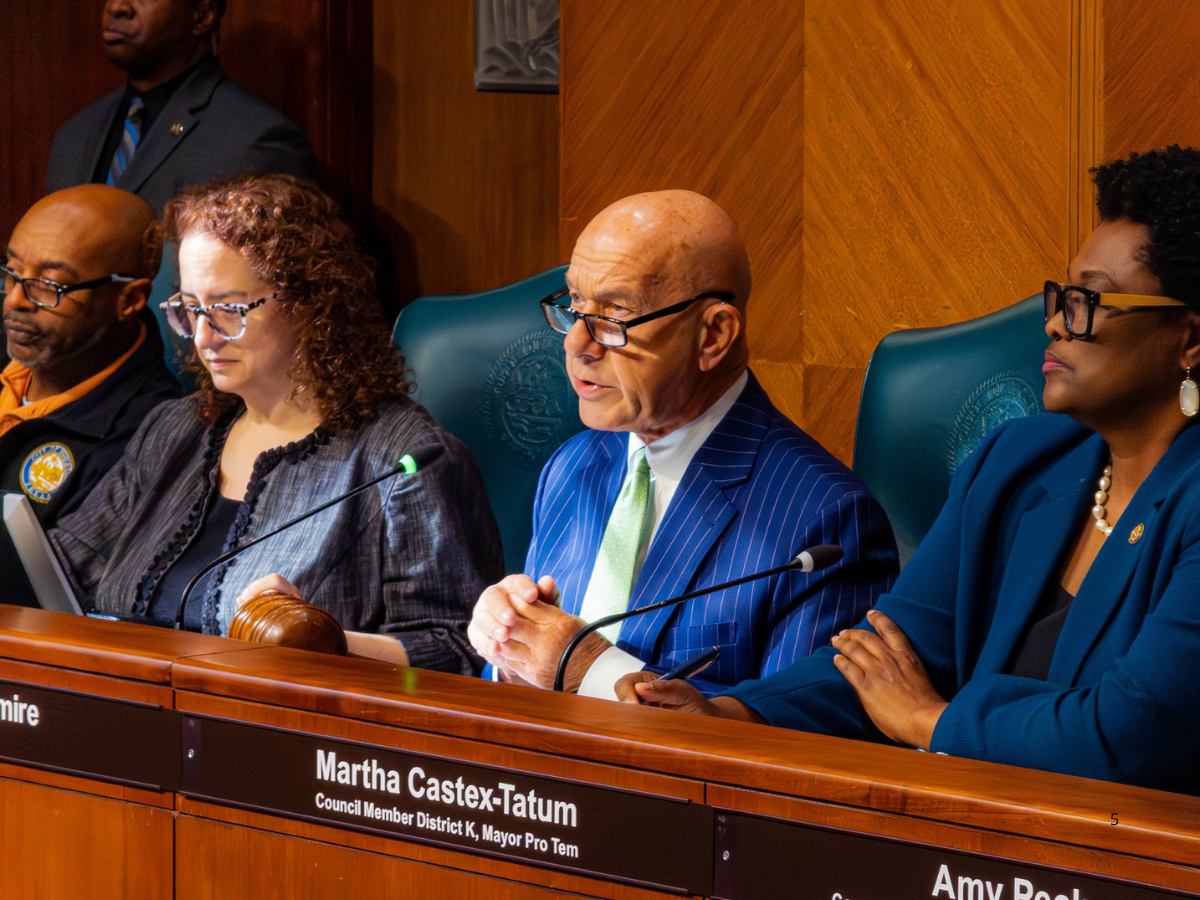

As the Houston City Council prepares to vote on the proposed operating budget for fiscal year 2027, a $7.5 billion spending plan, the city finds itself at a financial crossroads, balancing the needs of a growing metropolis against mounting deficits and Houstonians asking for an equitable way to tackle a new fee.
At the center of the discussion is a proposed $5 monthly trash fee, to be charged on utility bills, that would result from moving solid waste operations into Houston Public Works’ Combined Utility System. Some Houstonians say it is a burden for low-income families.
Second, the city would establish a new right-of-way rental fee equal to 5% of utility gross revenues. Together, the measures are projected to provide roughly $220 million in General Fund relief and reduce the projected deficit to approximately $25 million.
A budget built on borrowed time
The city’s fiscal picture does not appear sustainable, according to City Controller Chris Hollins.
A city budget hits home.
— Defender Network (@defendernetwork) May 19, 2026
Chris Hollins is raising concerns about Houston’s proposed budget and new fees. What city spending issue deserves more public attention?@CGHollinshttps://t.co/KBiK59kZwF pic.twitter.com/4mT4PHQN0G
A few council members agree with Hollins’ assessment. Edward Pollard says the city has a “spending problem.”
“Over the past two years, we’ve had the largest deficits in the city’s history,” Pollard told the Defender. “This current fiscal year is the largest deficit we’ve ever seen…$180 million over budget. Most companies stick to a budget. Here at the city of Houston, we don’t.”
While Pollard has not proposed any budget amendments, he says the root issue of “overspending” must be addressed first.
Council Member Fred Flickinger, who represents District E, said that the budget is a stopgap, not a fix.
“The budget that is currently proposed will essentially get us by for a few years,” Flickinger said. “It’s never been sustainable going further out.”
He traced the structural imbalance back decades, noting the city has not had a truly balanced budget since former Mayor Lee Brown’s tenure.
“Ever since that time, we’ve never had a structurally balanced budget.”
The proposed FY2027 budget shows total citywide revenues of approximately $7.14 billion across all city funds.
The budget also leans on the city’s Combined Utility System and intergovernmental funds to close gaps, with intergovernmental revenues projected to surge 65% over the prior year’s budget.
The trash fee fight

A contentious element of Mayor John Whitmire’s budget proposal is the new solid waste administrative fee, starting at $5 per month and anticipated to rise to $25 per month over five years.
Whitmire’s administration projects the fee will generate approximately $24 million in its first year.
Houstonians said the fee structure is fundamentally unfair.
Rain Eatmon, executive director of the Acres Homes Community Advocacy Group, echoed that sentiment with data.
Citing figures from the Bullard Center for Environmental and Climate Justice, Eatmon noted that Houston leads major U.S. cities in poverty, with 21.2% of residents living below the federal poverty threshold and a child poverty rate of 31.7%.
“This trash fee of $5 a month…that’s not going to do a lot to solve the trash problems that we have. It’s a starting point, but it’s not going to solve the problem. I don’t know what amount of money would solve the problem. This feels like a little bit of a tax raise. That’s my concern. There are still ways that we could cut out.”
Mary Nan Huffman, District G Council Member
“The reality of the matter is that Houstonians are struggling to make ends meet,” Eatmon said, suggesting the city introduce a property tax increase instead of a regressive fee. “And while the cost of groceries, rent, and water bills are already going up, the city is now proposing another fee. The trash fee is only a band-aid for our city’s fiscal crisis, while making the affordability crisis even worse.”
The Houston People’s Budget coalition called on the council to reduce the trash fee to just $1 per month and offset it with a small property tax increase, which they described as a “penny tax.”
Carolyn Rivera, a resident of northeast Houston living on a fixed income and a member of the Northeast Action Collective, offered a concrete picture of cumulative fee creep.
Rivera also argued that low-income homeowners would pay more under a flat fee than they would under a proportional tax.
“I don’t have the money for a $5 fee, but the rich man that’s got millions of dollars is going to pay $5 too,” she said. “That’s not fair.”
Alternative proposals
City budgets become family budgets.
— Defender Network (@defendernetwork) June 3, 2026
Houston’s proposed fees and spending plan raise big questions about today’s needs vs. tomorrow’s risks. What should leaders protect first when money gets tight?@whitmire_john@CGHollins@salliealcorn
https://t.co/wK6VFq1RiF pic.twitter.com/tggHWxkVtI
Council Member Alejandra Salinas, who represents At-Large Position 4, put forward three amendments in response to community pressure. One of them would redirect $3 million from the nearly $38 million budgeted for management consultants in Public Works toward combating illegal dumping. Another would allow residents to use the city’s existing WATER fund, a donation-based utility assistance program, to offset costs from the administrative fee.
“As the mayor said, this budget isn’t perfect, and I think it is a step in the right direction,” Salinas said. “But obviously more work needs to be done, and we as council need to be mindful and vigilant to ensure that we’re not growing the deficit more than we should.”
William Papadopoulos, speaking on behalf of the West Houston Association, acknowledged the budget’s limitations while defending it as a necessary bridge.
“Houston has tried to maintain poor city services and aging infrastructure without a financial structure fully matching the cost of delivering those services,” Papadopoulos said. “This budget is not a perfect or permanent solution. However, it is necessary to address a long-standing problem.”
The Greater Houston Builder Association similarly voiced support, calling the proposal “an incredibly important first step” toward fiscal stability.
What’s next?
Council member Mario Castillo, vice chair of the Budget and Fiscal Affairs Committee, said the decision to make solid waste a part of CUS and establish a right-of-way fee will put “the city on a stronger financial foundation.”
“Ultimately, what we need to do to make the long-term fiscal outlook of the city positive and put it on more sustainable grounds is to address our city’s revenue cap,” he said. “The affordability concerns are absolutely valid. One of the amendments I proposed was to establish a relief fund similar to what we do for water bills. I’ve signed on to a Proposition A that would establish that fund for relief for folks.”
The full council is expected to vote on the FY2027 budget, including amendments, in the coming days.