Megalomaniac Trump: The Man Seeking To Rule The World
By Dr. Lawrence Wittner Photos: Wikimedia Commons Although Donald Trump has never been modest about his abilities or reluctant to exercise personal power, during his second term in office he has shown clear signs of megalomania. One sign, of course, is his blatant demand for the territory of other nations. Since January 2025 alone, he has suggested annexing or seizing control of Greenland, Canada, Mexico, the Panama Canal, Gaza, Venezuela, and Cuba. In addition, he has proclaimed the “Donroe Doctrine,” declaring that “American dominance in the Western Hemisphere will never be questioned again.” Although the NATO alliance, a collective security pact, has been the cornerstone of U.S. defense policy for the past 77 years, Trump has become a bitter critic of NATO to such a degree that its other members, aghast at this turn of events, have begun exploring the reshaping of the Western alliance without the participation of the United States. Other actions, too, have underscored Trump’s decision to “go it alone” in world affairs. Like the foremost military conquerors of the past, Trump has been busy building up his nation’s armed forces and their weaponry. The United States is already the world’s biggest military spender, with about three times the military spending of the number two nation (China). Nevertheless, this April Trump proposed adoption of a record $1.5 trillion U.S. military budget, with the largest annual increase ever in Pentagon funding: 42 percent. This dramatic increase does not include an expected supplemental budget for the Iran war, which could cost an additional $200 billion. Trump’s 2027 fiscal year military budget calls for $98 billion in nuclear weapons spending, most of it to build a new generation of U.S. nuclear weapons. Having unilaterally withdrawn the United States from previous nuclear arms control and disarmament treaties with Russia and recently let the last of them lapse, he now has fewer treaty constraints on his nuclear ambitions. Accordingly, he recently announced that he has given orders for the resumption of U.S. nuclear testing, which has not been conducted since 1992. Furthermore, like past U.S. presidents, Trump has assumed the power to launch a nuclear war totally on his own. And he has publicly and repeatedly threatened to do so. Although the U.S. Constitution gives Congress―and not the President―the authority to declare war, Trump has shown no hesitation at sending U.S. armed forces into combat. In a little more than a year, without so much as consulting Congress, he ordered the obliteration bombing of Iran’s nuclear facilities, the destruction of dozens of suspect boats and their crews, the bombing of Venezuela and the kidnapping of its president, a naval blockade of Cuba, and―jointly with Israel―a devasting war upon Iran. The latter, which has already killed thousands and wounded tens of thousands of people, displaced 3.2 million Iranians, and thrown the global economy into turmoil, is widely unpopular and continues today. Queried in January 2026 about such international actions, Trump brushed aside international law and said that he relied solely on his own opinion, which was “the only thing that can stop me.” Not surprisingly, Trump has no use for the United Nations and most other international organizations, and has worked zealously to cripple them. Since his second term began, he has had the U.S. government withdraw from such key UN agencies as the World Health Organization, the UN Human Rights Council, the UN Relief and Works Agency, and UNESCO. In addition, the Trump administration has imposed severe sanctions on the International Criminal Court and its top officials. U.S. funding cuts for the United Nations have been severe. In July 2025, the Trump administration pushed rescissions legislation through the Republican-controlled Congress that pulled back $1 billion in funding previously allocated to the world organization, with devastating effects on a broad variety of programs, including UNICEF, the UN Environment Program, and the UN Fund for Victims of Torture. Furthermore, the administration refused to make its mandated dues payments to the United Nations, running up a debt to it―by far the world’s largest―of nearly $4 billion. As a result, UN Secretary-General Antonio Guterres warned in February 2026 that the world body faced “imminent financial collapse.” On September 23, 2025, Trump’s hostility toward the United Nations spilled over into what Le Monde called “a blistering speech” during his first UN General Assembly appearance since his re-election. In what the French newspaper termed a “full-frontal attack on the global organization,” Trump condemned it for “empty words,” failing to assist him in the seven wars that he claimed to have ended, and for “funding an assault” by refugees on Western nations. He also depicted climate change as “the greatest con job ever perpetrated on the world.” Although it’s tempting to r
 Black News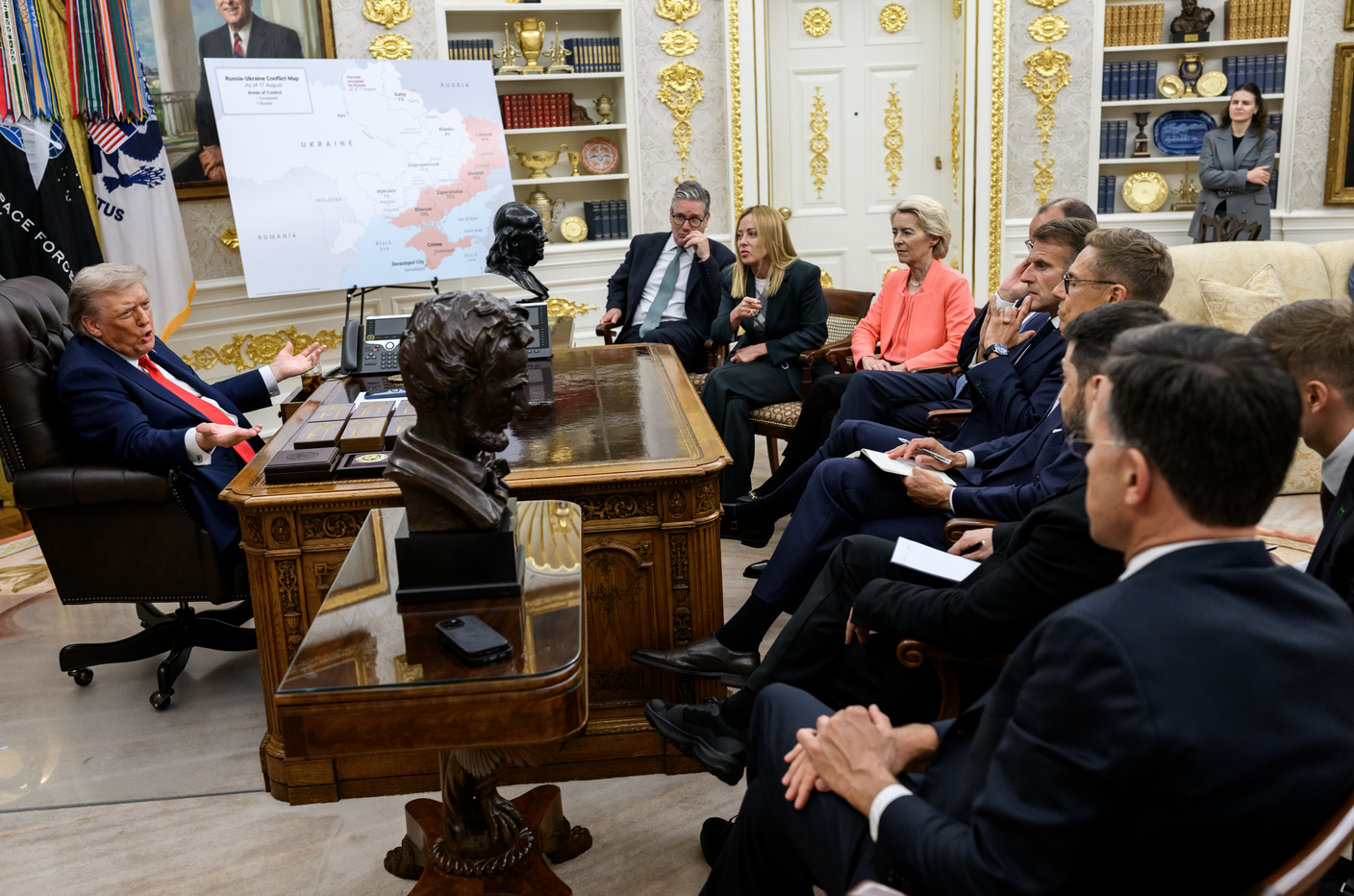
Photos: Wikimedia Commons
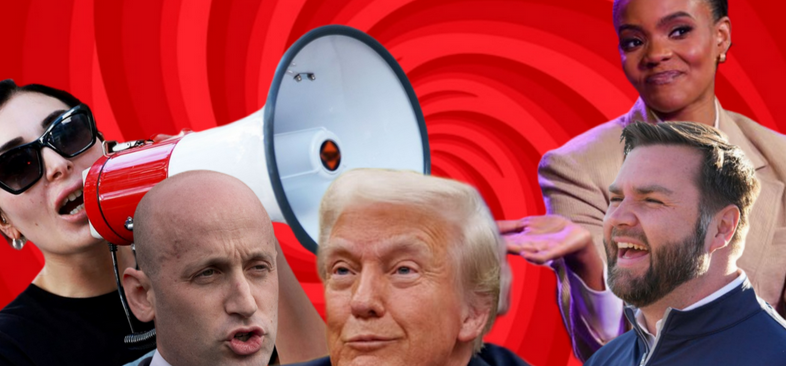
Although Donald Trump has never been modest about his abilities or reluctant to exercise personal power, during his second term in office he has shown clear signs of megalomania.

One sign, of course, is his blatant demand for the territory of other nations. Since January 2025 alone, he has suggested annexing or seizing control of Greenland, Canada, Mexico, the Panama Canal, Gaza, Venezuela, and Cuba. In addition, he has proclaimed the “Donroe Doctrine,” declaring that “American dominance in the Western Hemisphere will never be questioned again.”
Although the NATO alliance, a collective security pact, has been the cornerstone of U.S. defense policy for the past 77 years, Trump has become a bitter critic of NATO to such a degree that its other members, aghast at this turn of events, have begun exploring the reshaping of the Western alliance without the participation of the United States.
Other actions, too, have underscored Trump’s decision to “go it alone” in world affairs. Like the foremost military conquerors of the past, Trump has been busy building up his nation’s armed forces and their weaponry. The United States is already the world’s biggest military spender, with about three times the military spending of the number two nation (China). Nevertheless, this April Trump proposed adoption of a record $1.5 trillion U.S. military budget, with the largest annual increase ever in Pentagon funding: 42 percent. This dramatic increase does not include an expected supplemental budget for the Iran war, which could cost an additional $200 billion.
Trump’s 2027 fiscal year military budget calls for $98 billion in nuclear weapons spending, most of it to build a new generation of U.S. nuclear weapons. Having unilaterally withdrawn the United States from previous nuclear arms control and disarmament treaties with Russia and recently let the last of them lapse, he now has fewer treaty constraints on his nuclear ambitions. Accordingly, he recently announced that he has given orders for the resumption of U.S. nuclear testing, which has not been conducted since 1992. Furthermore, like past U.S. presidents, Trump has assumed the power to launch a nuclear war totally on his own. And he has publicly and repeatedly threatened to do so.
Although the U.S. Constitution gives Congress―and not the President―the authority to declare war, Trump has shown no hesitation at sending U.S. armed forces into combat. In a little more than a year, without so much as consulting Congress, he ordered the obliteration bombing of Iran’s nuclear facilities, the destruction of dozens of suspect boats and their crews, the bombing of Venezuela and the kidnapping of its president, a naval blockade of Cuba, and―jointly with Israel―a devasting war upon Iran. The latter, which has already killed thousands and wounded tens of thousands of people, displaced 3.2 million Iranians, and thrown the global economy into turmoil, is widely unpopular and continues today. Queried in January 2026 about such international actions, Trump brushed aside international law and said that he relied solely on his own opinion, which was “the only thing that can stop me.”
Not surprisingly, Trump has no use for the United Nations and most other international organizations, and has worked zealously to cripple them. Since his second term began, he has had the U.S. government withdraw from such key UN agencies as the World Health Organization, the UN Human Rights Council, the UN Relief and Works Agency, and UNESCO. In addition, the Trump administration has imposed severe sanctions on the International Criminal Court and its top officials.

U.S. funding cuts for the United Nations have been severe. In July 2025, the Trump administration pushed rescissions legislation through the Republican-controlled Congress that pulled back $1 billion in funding previously allocated to the world organization, with devastating effects on a broad variety of programs, including UNICEF, the UN Environment Program, and the UN Fund for Victims of Torture. Furthermore, the administration refused to make its mandated dues payments to the United Nations, running up a debt to it―by far the world’s largest―of nearly $4 billion. As a result, UN Secretary-General Antonio Guterres warned in February 2026 that the world body faced “imminent financial collapse.”
On September 23, 2025, Trump’s hostility toward the United Nations spilled over into what Le Monde called “a blistering speech” during his first UN General Assembly appearance since his re-election. In what the French newspaper termed a “full-frontal attack on the global organization,” Trump condemned it for “empty words,” failing to assist him in the seven wars that he claimed to have ended, and for “funding an assault” by refugees on Western nations. He also depicted climate change as “the greatest con job ever perpetrated on the world.”
Although it’s tempting to regard this behavior as reflecting an overheated nationalism, the remarkable degree to which Trump regards himself as the savior of the world suggests a more personal lust for supreme power.
The Trump-centered vision of the world is exemplified by his creation, soon thereafter, of an international “Board of Peace.” Although the Board’s initial activity was a peace project for Gaza, its charter called for “a more nimble and effective international peace-building body,” which―together with Trump’s remarks―has led disgruntled European officials to describe it as a substitute for the United Nations. Trump, who appointed himself lifetime chair of the Board of Peace, would decide which nations could join the Board (with those paying $1 billion or more becoming permanent Board members) and which members could join the Executive Board (which would implement the decisions of the Board of Peace). The power to veto decisions of the Executive Board was granted by Trump . . . to Trump!
This descent into megalomania is deeply disturbing, for the dangers to the world, and even to human survival, are sharply enhanced by one-man rule, and even by one-nation rule.
How long will it take to recognize that international security requires the sharing of power by all people and nations in the human community?

Dr. Lawrence Wittner, syndicated by PeaceVoice, is Professor of History emeritus at SUNY/Albany and the author of Confronting the Bomb (Stanford University Press).