How Minnesota Built The Racist Narrative Trump Turned Into A Weapon Against Somali Americans
By Milton Allimadi When Donald Trump declared this week from the White House that Somali immigrants in Minnesota were “garbage” who should be “sent back to where they came from,” he wasn’t simply reviving his familiar brand of racist provocation. He was drawing from a storyline that Minnesota’s own political and media establishment had been constructing for more than two years. The groundwork was already in place; Trump merely supplied the venom. The governor, the state agency responsible for oversight of pandemic food programs, the U.S. Attorney leading prosecutions, and a compliant Minnesota press had already bundled together bureaucratic mismanagement, prosecutorial selectivity, and racial scapegoating into a ready-made caricature of Somali Minnesotans. Trump didn’t originate the script—he amplified it. Trump’s words carry real danger. When a president labels an entire immigrant community “garbage,” he signals to the worst actors in society that Somali lives are expendable. His rhetoric follows a familiar pattern: the “shithole countries,” the congresswomen told to “go back,” the Muslims he imposed travel bans on. Now, restored to power, his incitements are not reckless improvisations; they are deliberate political weapons. But while Trump delivered the latest, most inflammatory blow, Minnesota had already done the heavy lifting. State leaders had conditioned the public to see Somali Minnesotans as the face of pandemic-era corruption—long before any trials, long before evidence was contextualized, long before independent audits revealed the enormity of the state’s own failures. The scandal surrounding USDA’s pandemic food program unfolded under chaotic conditions: closed schools, loosened regulations, and surging demand. With oversight weakened, the Minnesota Department of Education (MDE) was supposed to play a heightened watchdog role. Instead, it did the opposite. A blistering report by the state’s Office of the Legislative Auditor in June 2024 found that MDE’s oversight of Feeding Our Future (FOF) was “inadequate” and that the agency’s “actions and inactions created opportunities for fraud.” Before the pandemic, MDE had already identified serious deficiencies in FOF but failed to follow up. It ignored more than 30 complaints. It approved applications that should have been rejected. And after reporting suspected fraud to the FBI in April 2021, MDE still paid out more than $265 million to organizations it claimed were suspicious. Even worse, the local media never revealed that MDE benefited financially. Federal rules allow the agency to retain administrative fees—about $8 to $9 million per year during the pandemic, totaling $35.6 million between fiscal 2020 and 2023 according to data MDE sent me. According to numbers MDE itself provided here are MDE’s fees breakdown: 2020: $8 million 2021: $9.3 million 2022: $9.1 million 2023: $9.3 million The more money that flowed, the more MDE kept. Oversight failures didn’t just happen—they existed alongside a financial incentive to keep reimbursements moving. If federal prosecutors under U.S. Attorney Joe Thompson intended to fully expose wrongdoing, they would have scrutinized all major sponsors in Minnesota. Instead, they focused their firepower overwhelmingly on Feeding Our Future and its executive director, Aimee Bock. The numbers are undeniable: Feeding Our Future reimbursements: $200 million. Partners in Quality Care (PiQC) reimbursements: $200 million. Yet only Bock was indicted; PiQC and its director, Kara Lomen, were spared criminal charges—even though PiQC admitted in a civil matter to processing suspect claims and the organization was included in the original indictment with a pseudonym. This was not an even-handed investigation. It was a curated narrative. Prosecutors labeled the entire matter the “Feeding Our Future scandal,” ensuring that one sponsor—and by extension, the Somali community heavily involved in sites under that sponsorship—became the public face of pandemic fraud. Of the 73 people indicted, 72 were Black and 68 were Somali. Those figures do not reflect the full landscape of responsibility. They reflect prosecutorial discretion shaped by a story already calibrated for political impact. Minnesota’s largest media outlets adopted the government’s framing with astonishing uniformity. Headlines leaned on phrases like “largest COVID-19 fraud in U.S. history,” “$250 million scheme,” and “Feeding Our Future scandal,” even though the reimbursement totals were never independently scrutinized and PiQC’s parallel role went largely unmentioned. Reporters embraced the narrative structure prosecutors offered: Bock as mastermind, Somalis as the operatives, and MDE as a victimized agency doing its best in difficult circumstances. There was little examination of why PiQC was spared, why MDE continued payments after reporting fraud, why administrative fee collections remained unex
 Black News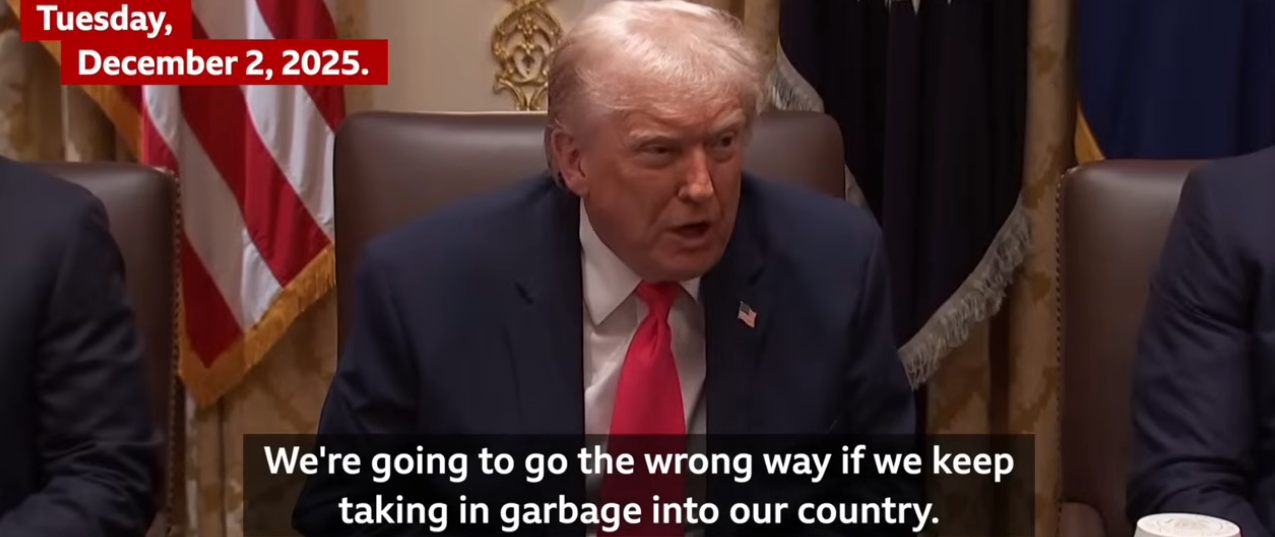

By Milton Allimadi
When Donald Trump declared this week from the White House that Somali immigrants in Minnesota were “garbage” who should be “sent back to where they came from,” he wasn’t simply reviving his familiar brand of racist provocation. He was drawing from a storyline that Minnesota’s own political and media establishment had been constructing for more than two years. The groundwork was already in place; Trump merely supplied the venom.
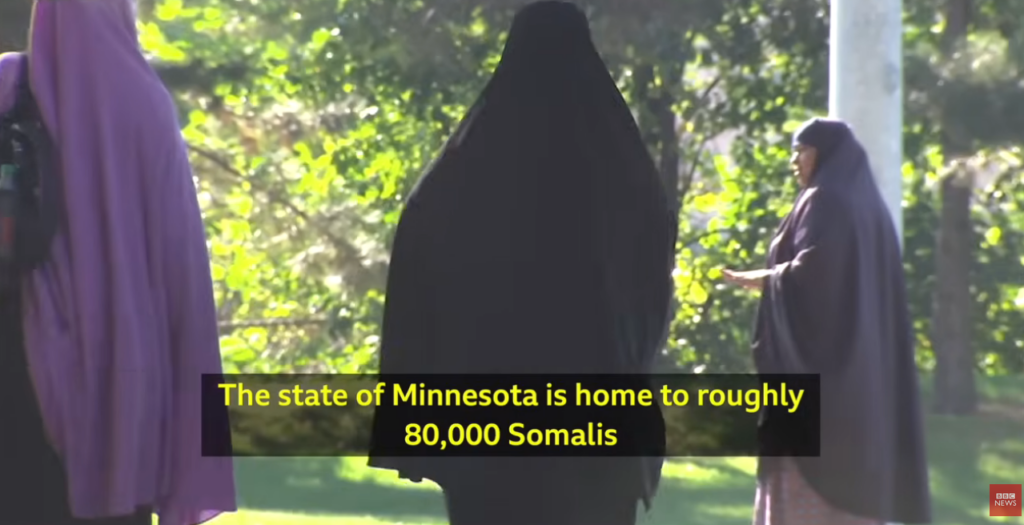
The governor, the state agency responsible for oversight of pandemic food programs, the U.S. Attorney leading prosecutions, and a compliant Minnesota press had already bundled together bureaucratic mismanagement, prosecutorial selectivity, and racial scapegoating into a ready-made caricature of Somali Minnesotans. Trump didn’t originate the script—he amplified it.
Trump’s words carry real danger. When a president labels an entire immigrant community “garbage,” he signals to the worst actors in society that Somali lives are expendable. His rhetoric follows a familiar pattern: the “shithole countries,” the congresswomen told to “go back,” the Muslims he imposed travel bans on. Now, restored to power, his incitements are not reckless improvisations; they are deliberate political weapons.
But while Trump delivered the latest, most inflammatory blow, Minnesota had already done the heavy lifting. State leaders had conditioned the public to see Somali Minnesotans as the face of pandemic-era corruption—long before any trials, long before evidence was contextualized, long before independent audits revealed the enormity of the state’s own failures.
The scandal surrounding USDA’s pandemic food program unfolded under chaotic conditions: closed schools, loosened regulations, and surging demand. With oversight weakened, the Minnesota Department of Education (MDE) was supposed to play a heightened watchdog role. Instead, it did the opposite.
A blistering report by the state’s Office of the Legislative Auditor in June 2024 found that MDE’s oversight of Feeding Our Future (FOF) was “inadequate” and that the agency’s “actions and inactions created opportunities for fraud.” Before the pandemic, MDE had already identified serious deficiencies in FOF but failed to follow up. It ignored more than 30 complaints. It approved applications that should have been rejected. And after reporting suspected fraud to the FBI in April 2021, MDE still paid out more than $265 million to organizations it claimed were suspicious.
Even worse, the local media never revealed that MDE benefited financially. Federal rules allow the agency to retain administrative fees—about $8 to $9 million per year during the pandemic, totaling $35.6 million between fiscal 2020 and 2023 according to data MDE sent me.
According to numbers MDE itself provided here are MDE’s fees breakdown:
2020: $8 million
2021: $9.3 million
2022: $9.1 million
2023: $9.3 million
The more money that flowed, the more MDE kept. Oversight failures didn’t just happen—they existed alongside a financial incentive to keep reimbursements moving.
If federal prosecutors under U.S. Attorney Joe Thompson intended to fully expose wrongdoing, they would have scrutinized all major sponsors in Minnesota. Instead, they focused their firepower overwhelmingly on Feeding Our Future and its executive director, Aimee Bock.
The numbers are undeniable:
Feeding Our Future reimbursements: $200 million.
Partners in Quality Care (PiQC) reimbursements: $200 million.
Yet only Bock was indicted; PiQC and its director, Kara Lomen, were spared criminal charges—even though PiQC admitted in a civil matter to processing suspect claims and the organization was included in the original indictment with a pseudonym.
This was not an even-handed investigation. It was a curated narrative. Prosecutors labeled the entire matter the “Feeding Our Future scandal,” ensuring that one sponsor—and by extension, the Somali community heavily involved in sites under that sponsorship—became the public face of pandemic fraud.
Of the 73 people indicted, 72 were Black and 68 were Somali. Those figures do not reflect the full landscape of responsibility. They reflect prosecutorial discretion shaped by a story already calibrated for political impact.

Minnesota’s largest media outlets adopted the government’s framing with astonishing uniformity. Headlines leaned on phrases like “largest COVID-19 fraud in U.S. history,” “$250 million scheme,” and “Feeding Our Future scandal,” even though the reimbursement totals were never independently scrutinized and PiQC’s parallel role went largely unmentioned.
Reporters embraced the narrative structure prosecutors offered: Bock as mastermind, Somalis as the operatives, and MDE as a victimized agency doing its best in difficult circumstances. There was little examination of why PiQC was spared, why MDE continued payments after reporting fraud, why administrative fee collections remained unexamined, or why the racial composition of defendants was so lopsided.
In the absence of journalistic skepticism, the narrative hardened into truth.
As Bock’s attorney Kenneth Udoibok told me, due to the prosecutor’s deliberately selective narrative embraced by local media the jury had “made up its mind before opening arguments.”
By the time Trump took the microphone, Minnesota had already transformed a complex policy failure—rooted in federal rules, state mismanagement, and agency inaction—into a simplistic morality play with Somali Minnesotans cast as the villains. So when Trump claimed Somalis had stolen “billions and billions,” it didn’t matter that the claim was fantastical. The public had already been conditioned to believe that corruption had a Somali face.
Gov. Walz’s silence was politically convenient: acknowledging MDE’s failures would implicate his administration and jeopardize political ambitions. Thompson’s prosecutorial strategy produced indictments but also a racially coded storyline. And Minnesota’s media, by uncritically repeating these narratives, created a fertile environment for Trump’s dehumanization.
Trump’s attacks arrive in a volatile moment. Dehumanizing language is a precursor to violence. Minnesota’s Somali community now faces a heightened threat environment because the state’s political and media institutions left them exposed.
Courts should seriously consider whether Trump’s rhetoric has tainted ongoing proceedings related to the food program and to pause proceedings, including sentencings. His statements have already inflamed prejudice, raising questions about whether defendants can receive fair adjudication.
If Minnesota wishes to address the real roots of the scandal, it must stop hiding behind a storyline it helped manufacture and finally ask the questions it has avoided:
Why did MDE continue payments after warning the FBI?
Why were PiQC and its director exempt from criminal prosecution?
Why did the racial breakdown of defendants skew so dramatically?
Why did the media adopt the official narrative wholesale?
Why has Gov. Walz refused to discipline MDE leadership?
These questions go to the heart of systemic accountability—none of which falls on Somali Minnesotans.
Somali families did not design the USDA program, waive federal rules, approve reimbursements, pocket administrative fees, or ignore dozens of complaints.
They did not control oversight systems. Yet they have borne the brunt of the scandal’s political and public fallout.
Trump’s attack was predictable. Minnesota’s complicity is the real scandal.
If the state hopes to protect the community it endangered, it must dismantle the racially coded narrative it helped build—and acknowledge the uncomfortable truth that Trump only said aloud what too many power brokers had been implying for years.