It’s More Than A ‘Black Woman’s Disease’: Advocates Push Congress to Take Fibroids Seriously
Fibroids are noncancerous growths in or around the uterus that are common, but for Black women, they can cause many problems.
 Black News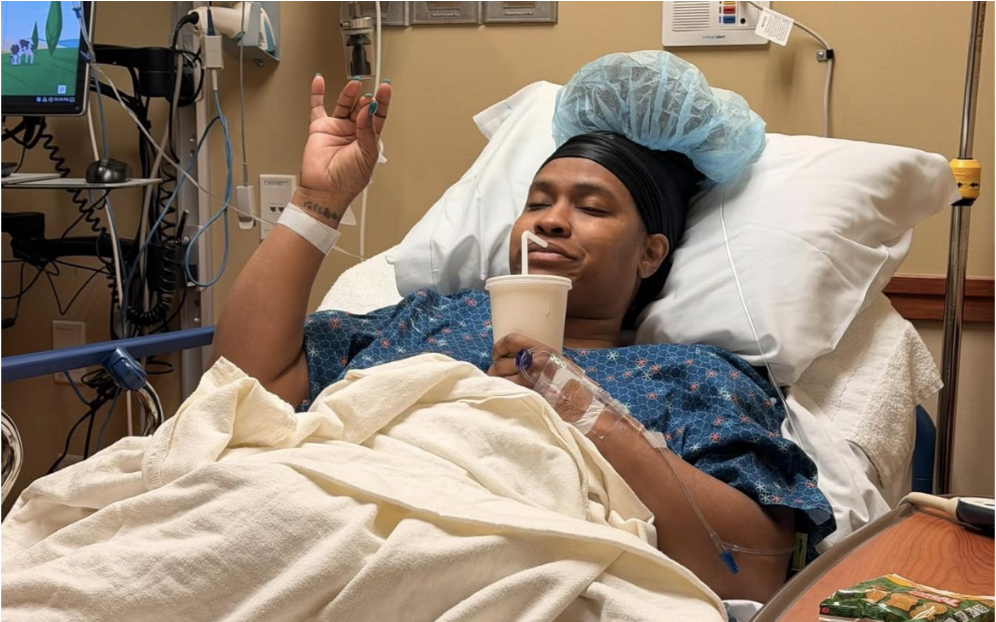
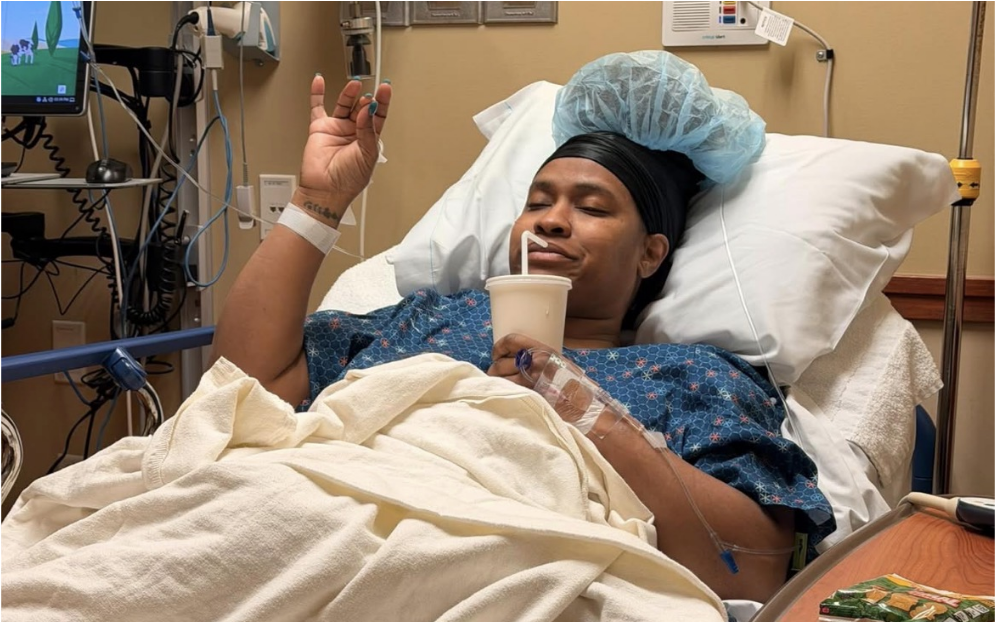
For months, Catherine McNeil bled without a clear answer.
The 46-year-old mother of three had not experienced heavy bleeding like that since using birth control. By late 2024, her menstrual periods had become longer and heavier. At first, she believed the problem might be connected to her intrauterine device, or IUD, stress, or changes connected to age. But as the bleeding continued, McNeil knew something was wrong.
“Your IUD may be faulty. You have about three years left on it. Maybe that’s the issue. We’ll swap it out,” McNeil said her provider told her, without first conducting a scan or ultrasound.
Eventually, after receiving a CT scan and an ultrasound, McNeil learned that she had a uterine fibroid.
Fibroids, also known as uterine leiomyomas, are noncancerous growths in or around the uterus. They are common, but for many women, especially Black women, they can cause heavy menstrual bleeding, pelvic pressure, pain, anemia, fertility issues, pregnancy complications, and, in some cases, major surgery.
Research has found that Black women face a higher risk of developing fibroids, tend to experience them at younger ages, and often have more severe symptoms than white women. According to the National Institutes of Health, studies have shown the cumulative incidence of fibroids can be as high as 80% among Black women, compared with 50% to 70% among white women.
Now, as May marks National Menstrual Health Awareness Month, advocates are again pushing lawmakers to treat fibroids as a public health issue, not a private burden women are expected to silently manage. The Fibroid Foundation is hosting a National Menstrual Health Awareness Month Congressional Briefing on May 19 at the Rayburn House Office Building in Washington, D.C., bringing together advocates, clinicians, patients, and policymakers to discuss menstrual health equity, research gaps, and policy action.
For McNeil, the issue became personal when she had to decide what kind of treatment would allow her to live without constantly worrying about bleeding, scans, repeat procedures or whether her youngest child would have to watch another parent navigate serious health challenges.
Her OB-GYN initially gave her the option of receiving a myomectomy, a surgical procedure that removes fibroids while preserving the uterus. But McNeil said a hysterectomy was not first presented as an option.
A hysterectomy removes the uterus, permanently ending menstruation and the possibility of pregnancy. A myomectomy removes fibroids but leaves the uterus in place, which may be important for patients who want to preserve fertility. However, fibroids can return after myomectomy, and recurrence rates vary based on factors such as age, number of fibroids, family history, treatment type, and other health conditions.
For McNeil, who already had three children, the decision came down to quality of life and stability.
“Fibroids return. Every single woman that I have talked to, that has been the consistent scenario,” McNeil said. “Anything that keeps my son from having to worry about a parent and me having to consistently come back for removals, scans, tests, or whatever the case may be. We’re doing that.”
With private insurance, McNeil was covered and scheduled for hysterectomy surgery on March 18. She said she felt comforted by her decision because it gave her the best chance of ending the cycle of uncertainty.
But not every woman has McNeil’s access, insurance coverage, family situation or ability to make an informed choice. For younger women, women who want children, women without adequate insurance or women who have never been told what fibroids are, the diagnosis can come with fear, confusion and limited options.
That was the case for Sateria Venable, who was diagnosed with fibroids at 26.
Venable said her provider told her she needed a hysterectomy but did not fully explain what fibroids were, why that procedure was being recommended or what other options might exist.
“Given my age and the fact that I didn’t have kids, or she didn’t even ask if I wanted to have kids. So I left the appointment very fearful because I didn’t know if fibroids were cancerous,” Venable said. “I just had not been informed by a caring provider. And so that kind of started my journey.”
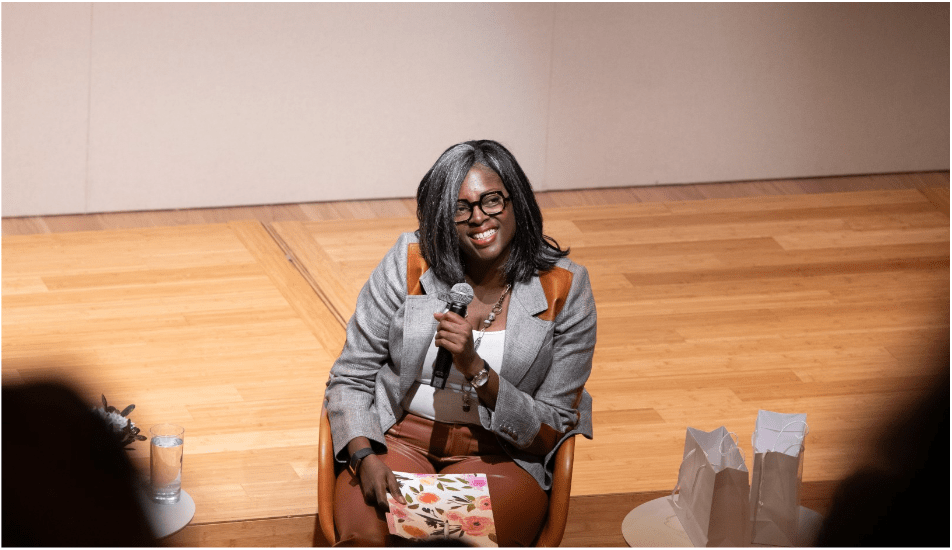
In 2013, Venable founded the Fibroid Foundation, a nonprofit organization focused on patient advocacy, education, and research for people living with fibroids. The organization now reaches patients in more than 180 countries, hosts annual summits, supports local chapters and works to make menstrual and uterine health easier to discuss publicly.
“I think there’s more of a climate to have more open conversations and to feel more comfortable advocating for yourself and demanding care, where perhaps in previous generations, you were just expected to do what the doctor told you to do,” Venable said.
The foundation calls for providers to listen closely to patients, explain all treatment options, and refer patients to other specialists when they cannot provide certain services themselves.
That issue is especially important because fibroid care has long been shaped by silence, stigma, and assumptions about Black women’s pain. Many patients report being told that heavy bleeding is normal or that they should not worry about fibroids unless they are trying to get pregnant. Others are only offered invasive procedures without a full explanation of less invasive options.
The larger public conversation around fibroids has also grown this year. Actress Lupita Nyong’o recently shared that she has experienced 77 fibroids in her lifetime, including 25 that were surgically removed and more than 50 still growing. Nyong’o has since helped launch the Make Fibroids Count campaign to call for more awareness, research and less invasive treatment options.
For advocates like Venable, the point is not only that fibroids affect Black women. It is that diseases associated with Black women are often treated as less urgent, less deserving of research and less politically important.
In 2019, the Fibroid Foundation introduced the Stephanie Tubbs Jones Fibroid Education and Research Act, which sought to increase research, education and data collection around uterine fibroids. The effort has continued in Congress, but progress has been slow.
The current version, the Stephanie Tubbs Jones Uterine Fibroid Research and Education Act of 2025, was introduced in the 119th Congress as H.R. 4395. According to the Society for Women’s Health Research legislative tracker, the bill was introduced on July 15, 2025, by Rep. Yvette Clarke and would fund and expand research on uterine fibroids and public education. The tracker lists 49 Democratic cosponsors.
The bill is part of a larger legislative package on uterine health that also includes the Uterine Fibroid Intervention and Gynecological Health Treatment Act, known as the U-FIGHT Act, the Uterine Cancer Study Act, and a resolution designating July as Uterine Fibroids Awareness Month.
Venable told BisonOne that the lack of bipartisan support has been frustrating.
“We had zero bipartisan support in the House. And minimal bipartisan support in the Senate,” Venable said. “And there’s a misnomer that it’s a Black woman’s disease. And even if it were, it’s very important. So it should pass, even if it only impacted women of African descent, but it impacts all women of every ethnicity.”
Congresswoman Yvette D. Clarke and other lawmakers have continued to push legislation to strengthen research, education, and awareness of fibroids and uterine health. But advocates say the issue remains stalled despite the number of women affected and the severity of symptoms many patients experience.
When policy moves slowly, some physicians are trying to close gaps in care through their own practice.
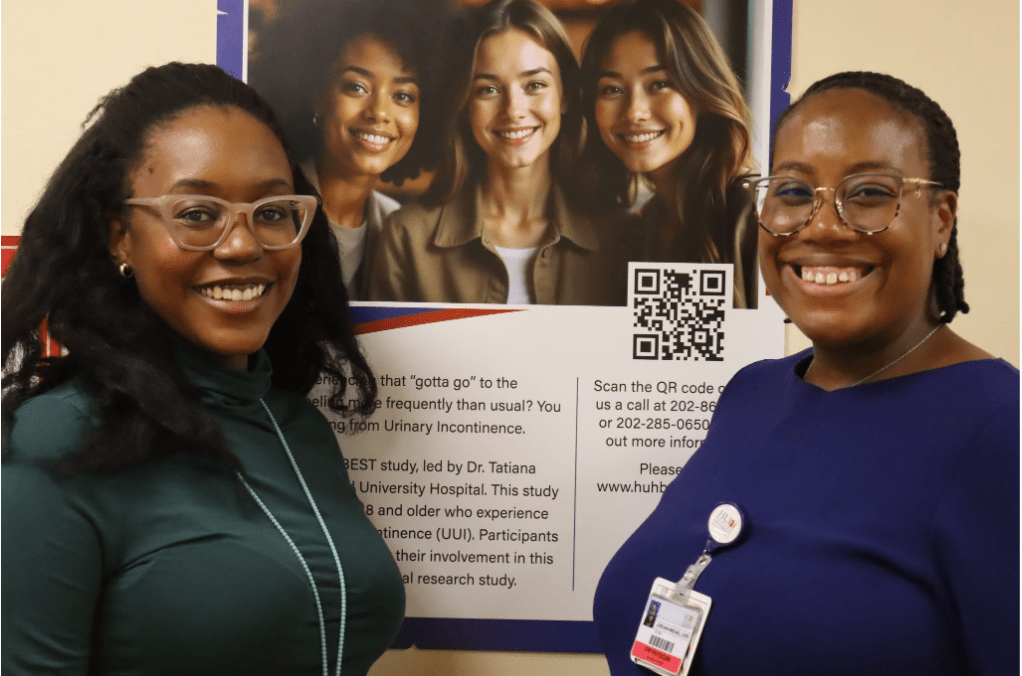
At Howard University Hospital in Washington, D.C., Dr. Jordann-Mishael Duncan and Dr. Alyssa Small Layne specialize in minimally invasive gynecologic surgery for conditions such as endometriosis and fibroids.
Their practice offers minimally invasive treatments such as laparoscopy, robotic-assisted procedures, and vaginal surgery. They also expose medical students and residents to these options so future doctors know how to discuss more than one path with patients.
Dr. Layne said fibroids are common, but that does not mean patients should be dismissed.
“I think fibroids are very common, and so I feel like often providers will say, ‘Oh, don’t worry about it,’” Layne said. “Most fibroids are actually asymptomatic, and technically, you don’t need to worry about them, but you should still be cautious about your symptoms. They don’t tell them what to look for.”
Those symptoms can include heavy bleeding, periods lasting longer than usual, pelvic pain, frequent urination, pressure in the lower abdomen, anemia, fatigue and fertility concerns. Patients experiencing those symptoms can ask their provider about imaging, including an ultrasound, and request a full discussion of treatment options.
Duncan said the goal is not to push every patient toward surgery, but to give patients individualized care based on their symptoms, fertility goals and quality of life.
“We just want to give patients the options and have individualized care,” Duncan said. “But additionally, just exposure for the residents and medical students, because that’s how you train competent doctors.”
For McNeil, that kind of information mattered. Her decision to have a hysterectomy was not simply about removing fibroids. It was about ending uncertainty and choosing the treatment that made sense for her life.
For Venable, the fight is larger. She wants fibroids to be treated as a condition that deserves research funding, early education, better provider training, and full patient choice.
As advocates gather on Capitol Hill this month, the demand is not just awareness. It is action.
Black women should not have to bleed for months, fight for scans, search for answers online, or depend on luck to find a provider who explains every option. Fibroids may affect women across racial and ethnic groups, but Black women have carried the heaviest burden of pain, dismissal, and delay.
Until research, policy, and medical care catch up to the scale of the crisis, fibroids will remain more than a diagnosis. They will remain another measure of how long women, especially Black women, are expected to suffer before the system decides their pain is worth funding.
Tatiana Allen is a journalism student at Howard University with a passion for local news reporting and international affairs. You can follow her on Instagram @co.cobeloved.
SEE ALSO:
1 Woman’s Breast Cancer Fight in Albany, Georgia
Howard Student Turns Eating Disorder Into Film Black Women Can’t Ignore