Meet the young African geologist who went from student to CEO and now directs multi-million gold operations across 3 countries
At a remarkably young age, Segun Lawson has evolved from a geology student intrigued by Africa’s untapped gold deposits to directing multi-million-dollar mining operations across West Africa, transforming natural resources into revenue while navigating some of the region’s most complex mining landscapes.
 Black News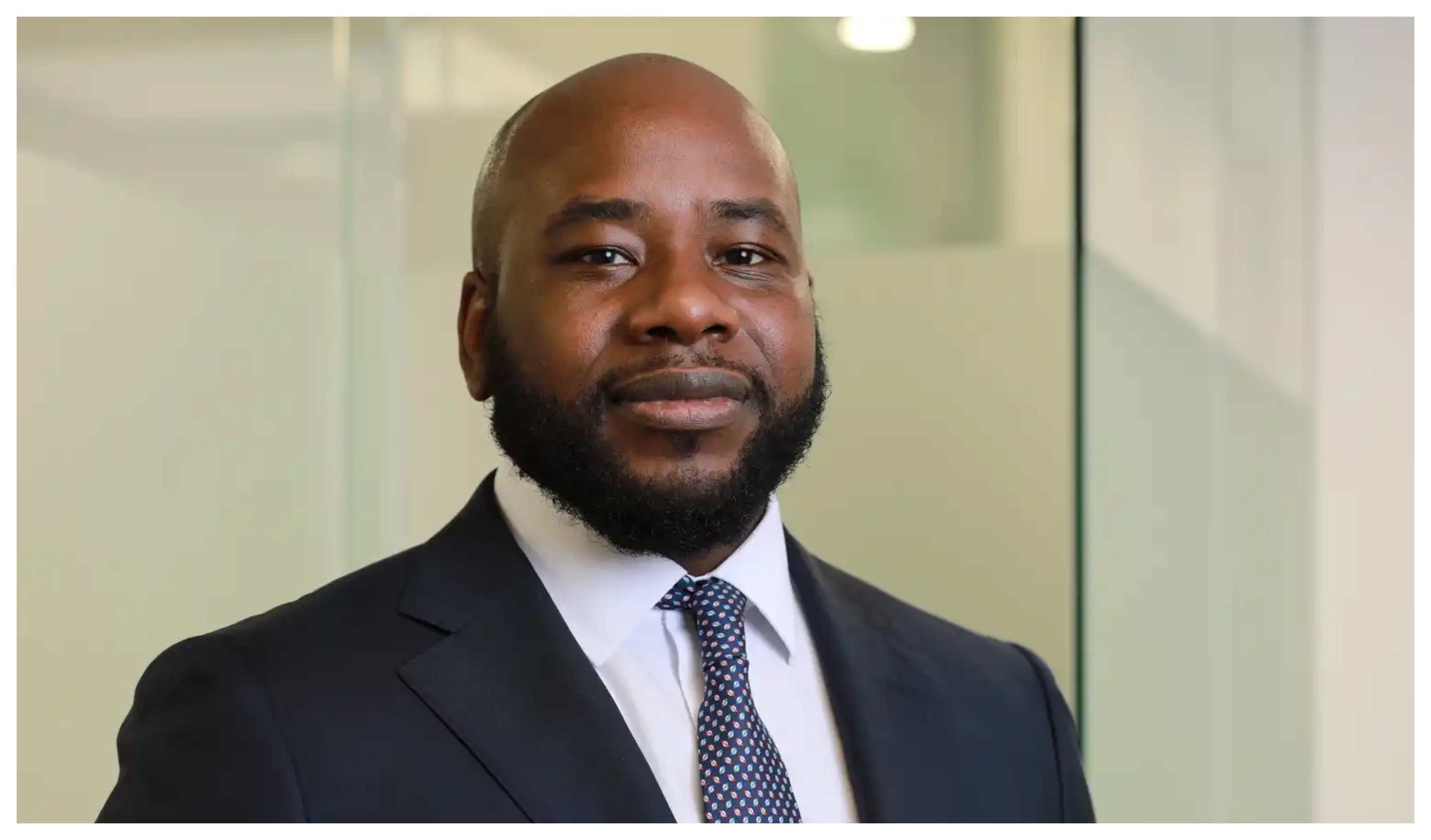

At a remarkably young age, Segun Lawson has evolved from a geology student intrigued by Africa’s untapped gold deposits to directing multi-million-dollar mining operations across West Africa, transforming natural resources into revenue while navigating some of the region’s most complex mining landscapes.
- Segun Lawson transitioned from geology student to the owner of multi-million-dollar gold operations across Nigeria, Senegal, and Côte d’Ivoire.
- His company, starting as a consultancy, moved into asset ownership, with the Segilola Gold Project in Nigeria as its flagship and foundation.
- He highlights Africa's untapped mining potential, regulatory challenges, and the importance of social license to operate, positioning his company for long-term, responsible growth in West Africa.
- Lawson emphasizes disciplined capital management, debt-free growth, and consistent shareholder returns, including paying dividends and reinvesting in exploration.
In a recent interview with Business Insider Africa, Lawson reflected on a journey that began in geology classrooms and corporate finance advisory roles before gradually evolving into building one of West Africa’s emerging gold producers.
“I studied geology at university, so I’ve always been a geologist,” he said. “Then I worked in corporate finance advising junior mining companies and junior oil and gas companies.”
Subsequently, after completing his MBA in 2008–2009, he began reassessing why Africa’s mining sector, particularly in Nigeria had consistently struggled to attract large-scale investment despite its rich geological potential.
“Rather than go back into the job market, I looked at why these projects in Nigeria hadn’t taken off,” he said. “We started packaging projects for fundraising and technical advancement. It began as a consultancy.”
“So it wasn’t like I needed a big, outgoing capital. But with my first few consultancy checks, I realized it was pretty much the same effort to do it for myself, to pick up my own licenses,” he added.
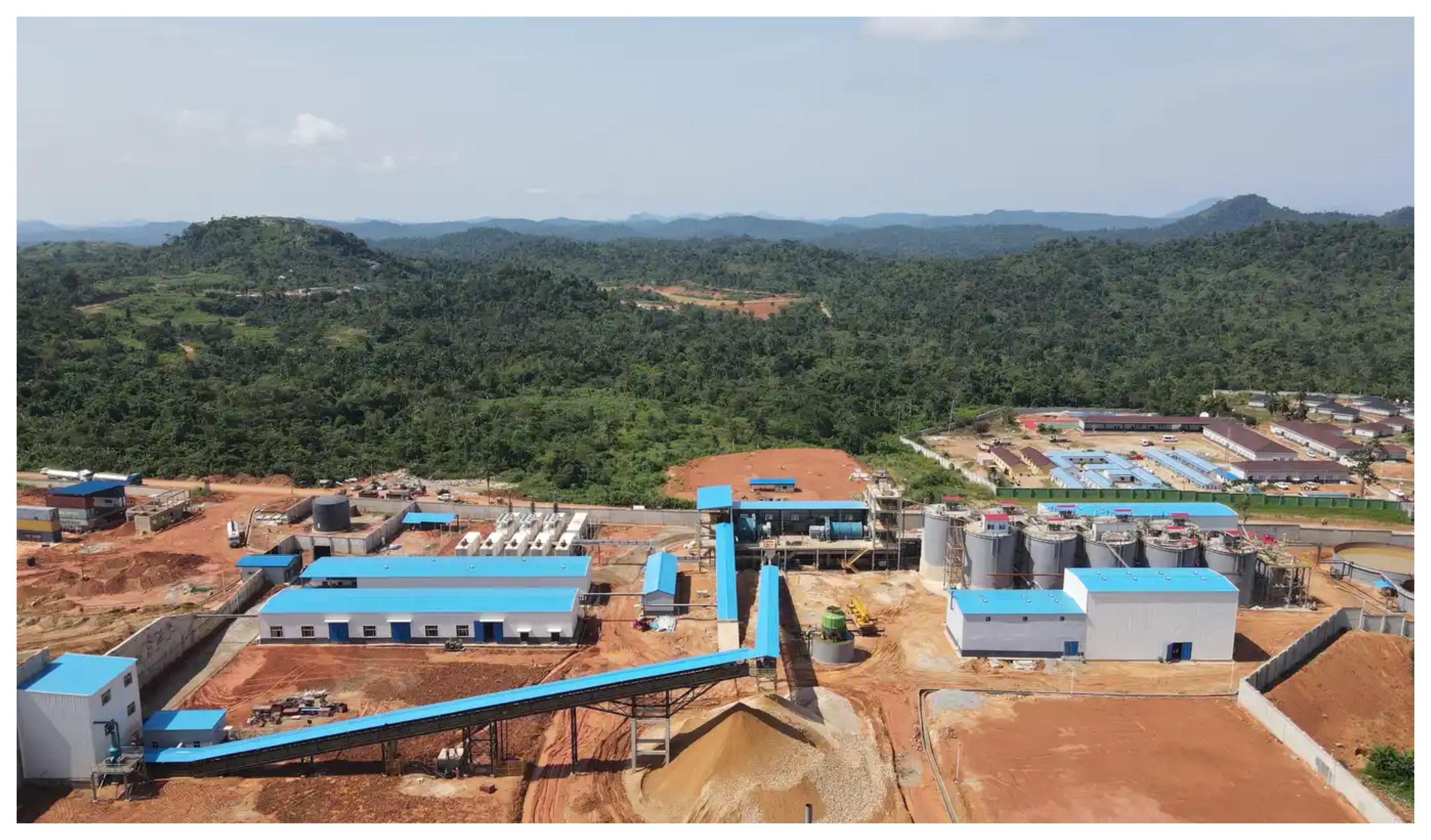
Over time, that consultancy gradually evolved into asset ownership, leading to Lawson’s Segilola Gold Project in Osun State, western Nigeria — now the company’s flagship production asset and cash engine.
“That project became our foundation,” Lawson explains. “It’s not just about producing gold; we’re building long-term value for investors and the people whose land we operate on.”
DON'T MISS THIS: Meet Mo Ibrahim, the African billionaire who built Celtel, sold it for $3.4 billion, and helped create a telecom giant later acquired for $10.7 billion
Building Through Cycles, Not Hype
Over the years, Lawson has overseen expansion across West Africa, balancing multi-million-dollar investments, operational efficiency, and exploration upside amid a strong but volatile gold cycle that steadily gathered momentum through 2025 and peaked in January 2026.
When asked where he sees gold trading by the end of 2026 and what macroeconomic factors might influence that outlook, Lawson said,
“The geopolitical environment is unprecedented. We think $4,500 to $5,000 could be realistic under current conditions.”
He added that the rally had been supported by central bank demand, geopolitical tensions, and expectations of prolonged monetary easing.
Although prices have since moderated slightly, gold remains elevated by historical standards, with major banks including JPMorgan and Morgan Stanley projecting medium-term ranges of $4,500 to $5,000 per ounce.
Despite record-high bullion prices in early 2026, Lawson maintained a cautious stance on forecasting:
“I just don’t know. We’ve set our internal budget at $3,500 an ounce. I’m a CEO of a gold company. I will always be bullish. You tell me to guess, I would always give you a very high number, but I’m no expert in forecasting.”
From Consultancy to Continental Portfolio
Since acquiring Segilola in 2016, Lawson has progressively overseen expansion into a three-country operating footprint.
“We probably spent about $12 million pre-construction, another $120 million in Nigeria, and about $28 million in Senegal. Including operations, we’ve been spending around $90 million a year over the last five years,” he said.
Meanwhile, he has implemented a structured capital allocation model, deploying roughly $30 million annually into exploration across Nigeria, Senegal, and Côte d’Ivoire.
“Depending on where the projects are ranked, some projects can get preferential advancing of that $30 million or a larger share than others,” he explained.
In Q1 2026, the Segilola Gold Mine delivered strong operational results: the company sold 15,417 ounces of gold, generating $74.3 million in revenue, poured 20,256 ounces, and recovered 18,199 ounces — a 93.1% recovery rate.
Despite this production, Lawson emphasized that his operations are not purely about extraction.
“We still have that exploration upside of duty, but we are underpinned by very strong cash flow from our producing mine, and we’re returning funds to our shareholders at the same time. So there’s a base yield, a base cash flow, and there’s also exploration upside growth from us.”
DON'T MISS THIS: Meet the Indian founder who turned $50,000 into a $120 million retail supply chain platform for Africa’s informal economy
Debt-Free Production and Shareholder Returns
Lawson highlighted disciplined debt repayment, cash management, and structured shareholder returns as key pillars of his strategy:
“We’ve been very fortunate with the timing of our debt repayments in line with the rise in gold prices,”
The company now pays quarterly dividends, a rare feature among mid-tier African miners.
“We expect to continue as a dividend-paying company,” he said. “Myself, my board, my management, we all have skin in the game. We’re all significant shareholders. We’re aligned with our shareholders. So we’re aligned to returning money to our shareholders.”
At the same time, Lawson preserves balance sheet strength to support growth, particularly for the Senegal project, which he estimates will cost $265 million.
He explained that the company cannot recover all its cash internally: “We want to build our manual equity and manage any equity dilution, funding at least $100 million ourselves and project financing the remainder.”
He framed this within a broader vision: “We’re trying to build a sustainable West African champion and, hopefully, even an African champion, extending operations to other parts of Africa over the next three to five years.”
Segilola: Extending the Foundation Asset
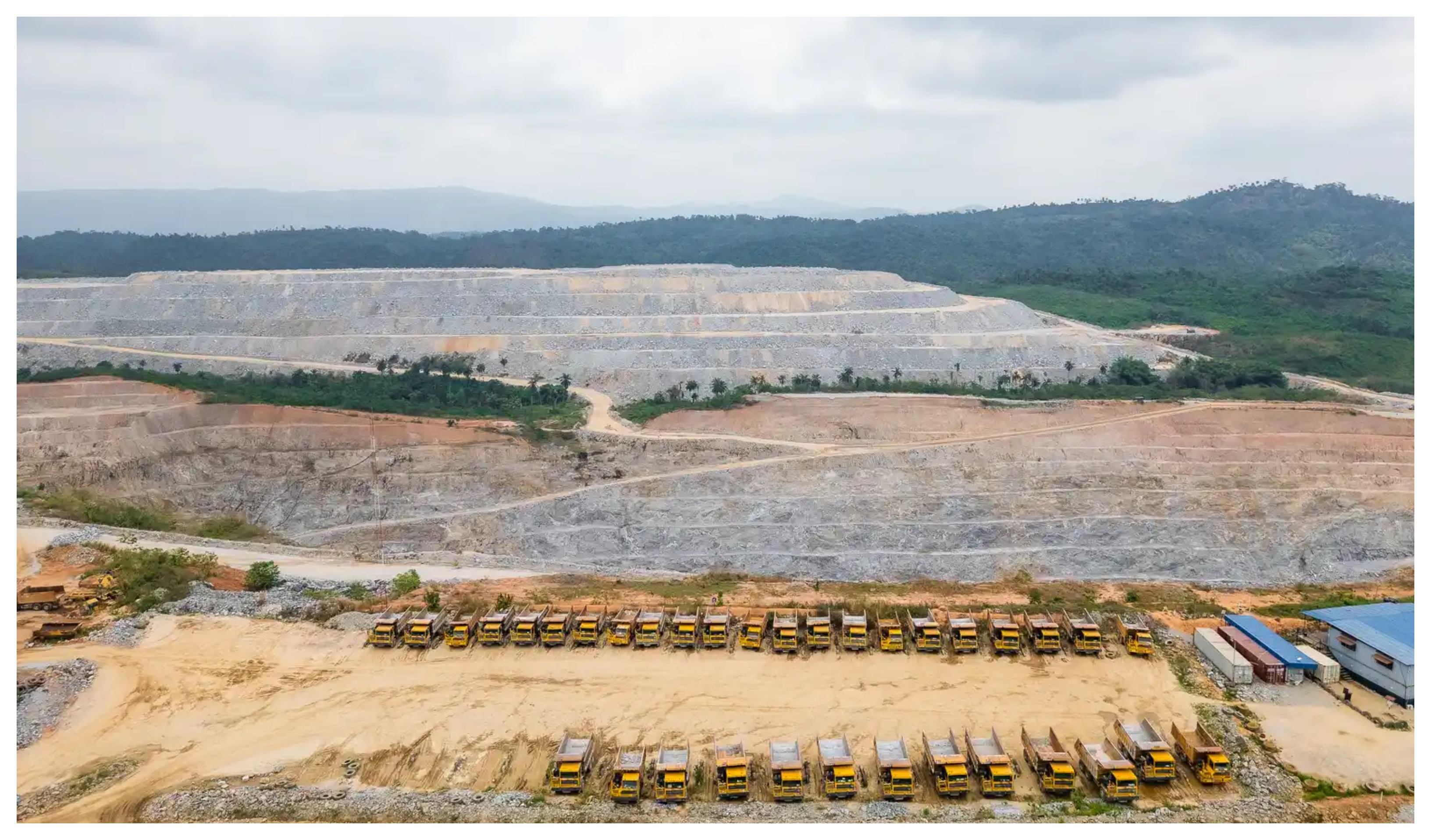
While Segilola remains central to cash flow, the CEO emphasized that extending the mine’s life is an intensive, high-stakes process.
He described the challenges of exploration as inherently uncertain: “Exploration is extremely difficult. It’s trial and error. We continue to drill beneath the pit and identify satellite pits around the main ore body. We’re aiming to aggregate everything into a minimum resource base for mine life extension within the next three to five months.”
To de-risk and accelerate the process, Lawson highlighted the company’s investment in its own drilling rigs. He said: “We’ve now purchased our own drilling rigs. We’re drilling at a much cheaper cost. We’re able to drill more flexibly, cheaper and faster.”
Senegal and the Next Phase of Growth
Thor’s Douta project in Senegal marks the next major milestone for Lawson and his team. He explained that the mine’s development requires a significant financial commitment,
“This mine is going to cost about $265 million, so we can’t get back all our cash. We want to build our manual equity, any equity dilution, so we’re going to fund from ourselves at least $100 million of that, and project finance the remaining.”
The project has already completed a preliminary feasibility study, costing between $2–3 million, underscoring Lawson’s disciplined, stepwise approach to growth across multiple jurisdictions.
Mining Policy and Africa’s Investment Divide
Lawson highlighted differences in regulatory maturity across Nigeria, Senegal, and Côte d’Ivoire.
“You’re in a country where there isn’t a precedent. They should have the most enabling mining act to attract more companies,” he said of Nigeria.
By contrast, Côte d’Ivoire and Senegal have more established mining ecosystems. Across all jurisdictions, he emphasized:
“There is significant risk in exploration. Governments need to recognise that and provide incentives, waivers, and tax support where success is achieved.”
Regarding frontier jurisdictions like Mali and Burkina Faso, Lawson added: “We don’t want to spread ourselves too thin. Over the next three years, we’re going to focus on our existing portfolio.”
DON'T MISS THIS: Meet Lanre Fadire: the designer whose work contributed to $1.5bn in savings for US borrowers
Community Licence and Long-Term Sustainability
For Lawson, social license is critical. “We don’t like when everything is just about the mining process, especially when it doesn’t directly benefit the community itself,” he said.
Thor has invested in more than 48 community projects in Nigeria, including fish farms generating $42,000 in revenue and a market garden generating $7,900.
“Particularly given the legacy issues in the oil and gas sector in Nigeria, having a social license to operate is by far and foremost the single most important agenda item for us. We’ve made sure the social licence to operate is in place from day one.”
A Long-Term African Mining Thesis
Lawson portrays Africa as a frontier market teeming with potential, calling it full of “blue sky opportunities.”
He elaborated on the scope for investors and exploration firms: “For investors looking in Africa, or looking at African exploration and mining companies, it’s still a frontier market. It’s still largely underexplored. Your ability to permit your projects is much faster than in more developed jurisdictions in these frontier regions. I think there’s a lot of opportunity, a lot of potential. I’d like to call exploration, blue sky opportunities.”
Ultimately, his long-term approach combines stable, cash-generating assets with high-upside exploration.
As he explains, “You don’t know if you’re going to find 100,000 ounces or a million ounces. That’s the nature of exploration.”