Mozambique Doubles Down on Gas, but Delivery Gap Persists
By MOZTIMES Maputo (MOZTIMES) - Mozambican President Daniel Chapo on Wednesday renewed a long-standing pledge to shift the country from an exporter of raw-materials to an industrial economy powered by natural gas, but structural constraints continue to cast doubt on implementing this vision. Speaking at the 12th Mozambique Mining and Energy Conference in Maputo, Chapo […]
 Black News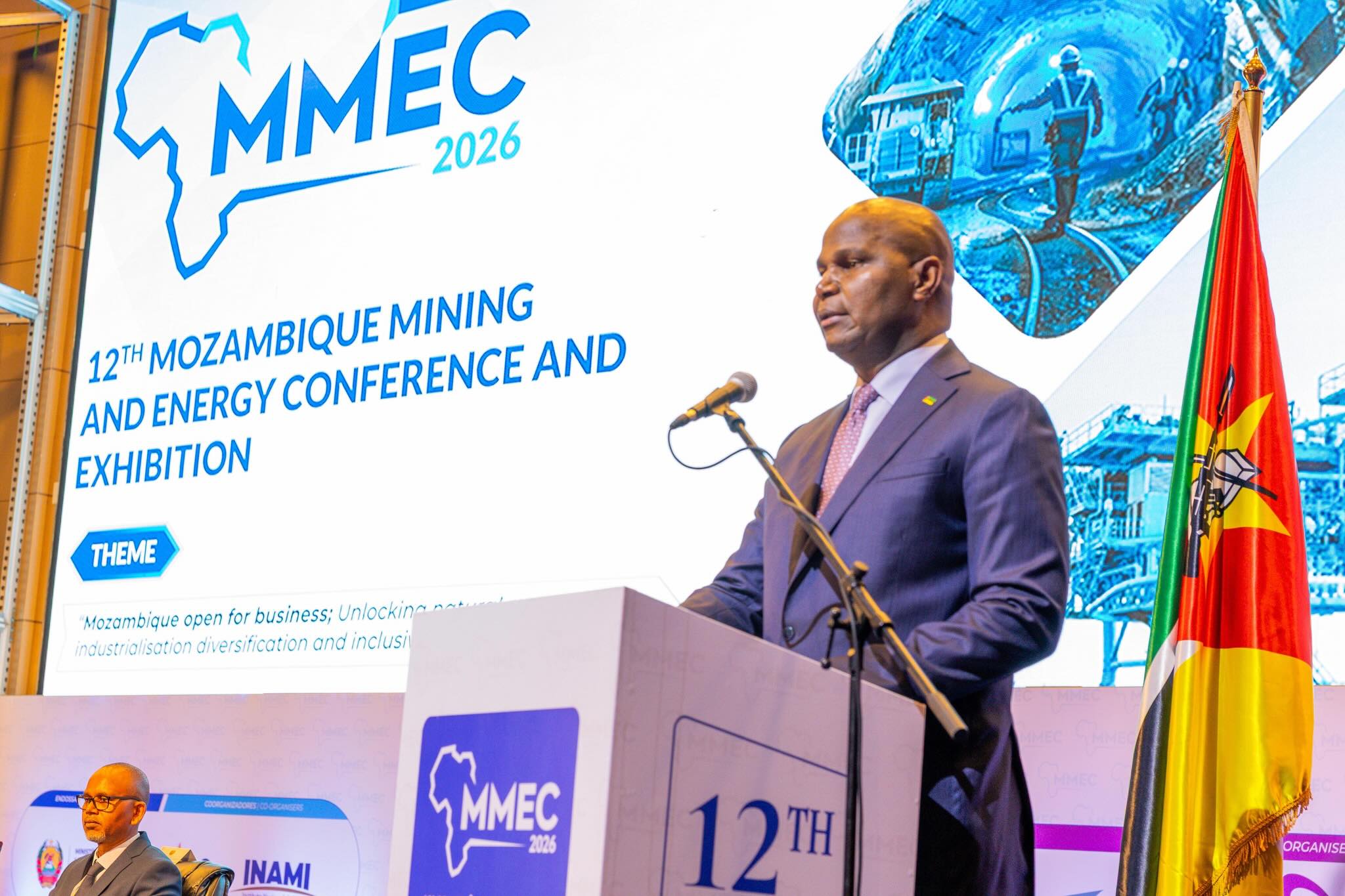
By MOZTIMES
Maputo (MOZTIMES) - Mozambican President Daniel Chapo on Wednesday renewed a long-standing pledge to shift the country from an exporter of raw-materials to an industrial economy powered by natural gas, but structural constraints continue to cast doubt on implementing this vision.
Speaking at the 12th Mozambique Mining and Energy Conference in Maputo, Chapo declared that the country is “definitively leaving a logic of resource extraction,” at the centre of government policy.
“Mozambique will not resign itself to being merely an exporter of raw materials,” he said.
The message signals continuity with past policy ambitions — but also highlights a widening gap between rhetoric and delivery.
Mozambique’s gas-led development model, long framed as the backbone of its economic transformation, is facing mounting pressure from declining production in mature fields, delayed mega-projects and fiscal strain.
Production from the Pande and Temane fields — which have sustained exports since the early 2000s — is in structural decline, with estimates pointing to a drop of around 25% between 2020 and 2024. Government projections indicate hydrocarbon output could fall by a further 9% in 2026.
At the same time, roughly 80% of Mozambique’s gas continues to be exported, mainly to South Africa, limiting domestic industrial spillovers that successive governments have promised to unlock.
Chapo acknowledged the constraints, describing the decline as “a reality that requires not only technical responses, but strategic vision,” and outlined a set of interventions aimed at stabilizing supply and repositioning the sector.
These include plans to fast-track a floating gas storage and regasification unit in Inhassoro, in Inhambane province, alongside expanded pipeline infrastructure to link supply corridors from the north to the south and sustain regional exports. The project is being monitored at cabinet level, underlining its strategic urgency.
“This infrastructure represents more than a technical response — it is a strategic choice to guarantee energy security and protect the industrial base,” Chapo said.
Yet analysts note that such measures remain largely defensive, designed to offset declining output rather than unlock new industrial capacity.
Mozambique’s vast offshore gas reserves — estimated at more than 85 trillion cubic feet — remain mostly untapped, held back by security risks, rising costs and repeated project delays.
The flagship 20 billion USD LNG project led by the French company TotalEnergies, once expected online by 2024, has been pushed to at least 2029 after a prolonged suspension linked to the insurgency in the northern province of Cabo Delgado, delaying critical revenue flows and complicating fiscal planning.
Public debt has climbed to around 90% of GDP, with international lenders warning of sustainability risks, while investor confidence remains sensitive to regulatory uncertainty and security concerns.
Against this backdrop, Chapo emphasized reforms aimed at restoring predictability, including revisions to the legislation on mining, petroleum and local content, and a broader push to strengthen the regulatory framework.
“We are consolidating a stable, transparent and competitive environment that guarantees predictability and security for investment,” he said.
But Mozambique’s energy system itself remains fragile. Electricity generation dropped by about 25% in 2025 due to reduced hydropower output caused by drought in the Zambezi valley. This exposed the country’s vulnerability to climate shocks and reinforcing the urgency of energy diversification.
Chapo’s strategy places natural gas at the center of that transition — not only as an export commodity, but as a domestic industrial driver.
“Gas should not only be an export resource, but a basis for industrialization, value chains and energy security,” he said, adding that each unit of production must translate into “industry, jobs and prosperity.”
He also outlined ambitions to position Mozambique as a regional energy hub, expanding gas infrastructure and supply networks across southern Africa, including potential linkages to Eswatini, Zambia, Malawi and beyond.
But delivering on that vision will depend on overcoming persistent constraints — infrastructure gaps, financing needs, policy consistency and security risks in the resource-rich north.
Chapo sought to project urgency and confidence, urging investors to move beyond commitments.
“This is the time for action — less talk, more work,” he said.
For Mozambique, however, the core challenge may lie less in defining strategy than in executing it.
After years of delayed timelines, export-heavy growth and limited domestic industrialization, the question facing investors is whether the latest push signals a structural shift — or a continuation of a pattern in which resource potential continues to outpace delivery. (MT)