Museveni Hails Passage of Controversial Sovereignty Bill
President Yoweri Museveni has praised ruling National Resistance Movement (NRM) legislators for passing the controversial Protection of Sovereignty Bill, 2026. Parliament passed the bill on Tuesday after adopting the committee report and completing clause by clause consideration, following weeks of heated debate and scrutiny. The legislation, tabled on April 15, 2026 by State Minister for […] The post Museveni Hails Passage of Controversial Sovereignty Bill appeared first on Daily Star.
 Black News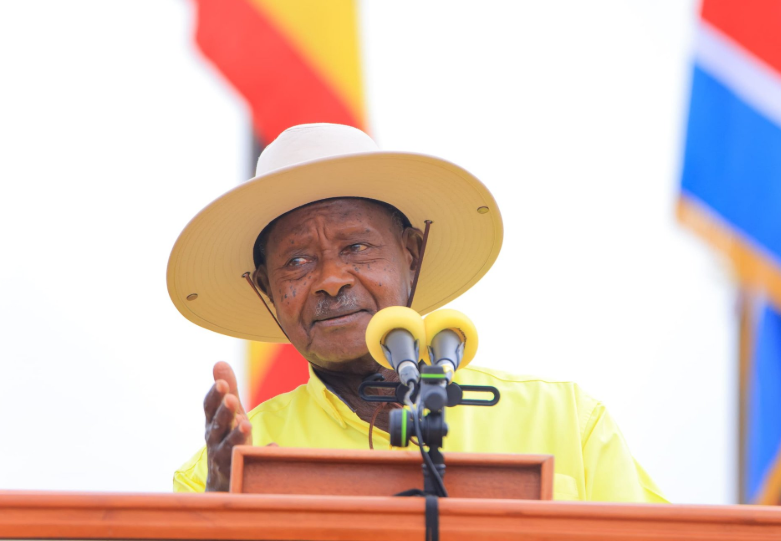
President Yoweri Museveni has praised ruling National Resistance Movement (NRM) legislators for passing the controversial Protection of Sovereignty Bill, 2026.
Parliament passed the bill on Tuesday after adopting the committee report and completing clause by clause consideration, following weeks of heated debate and scrutiny.
The legislation, tabled on April 15, 2026 by State Minister for Internal Affairs David Muhoozi, attracted sharp reactions from lawmakers, legal experts, civil society organisations and academia.
The law seeks to regulate foreign funding and influence in Uganda, with government arguing that the measures are necessary to protect national sovereignty from external interference.
It establishes a framework for the registration, monitoring and control of individuals and entities deemed to be agents of foreign interests, while tightening oversight on financial flows, partnerships and related activities.
In a statement issued after the bill’s passage, Museveni described the legislation as necessary for protecting Uganda’s independence and self determination.
“This is to congratulate the NRM MPs for passing the Sovereignty Bill, which simply means ‘let us do our things by ourselves just as you do your own things without anybody interfering with you’,” Museveni said.
The President criticised opponents of the law, questioning why some Ugandans appeared uncomfortable with measures aimed at limiting foreign interference in domestic affairs.
“Foreigners interfering in our internal issues is very dangerous,” he said.
Museveni cited historical examples to justify the legislation, pointing to the 1971 coup that brought Idi Amin to power.
According to Museveni, the coup was backed by foreign interests because former president Milton Obote had openly opposed British policy on Rhodesia, now Zimbabwe.
“It is how the Israelis led by one Barak and the British supported Idi Amin’s coup in 1971 because Obote was vocal in opposing their policy on Rhodesia,” Museveni said.
He added that former British Prime Minister Edward Heath recognised Amin’s government within 10 days of the coup.
Museveni said that despite earlier political disagreements with Obote, leaders at the time had begun working together on regional integration and liberation struggles across Africa, including in Mozambique, Angola, Zimbabwe, South Africa, Namibia and Guinea Bissau.
He argued that Amin’s rise to power disrupted those efforts and plunged Uganda into years of instability.
“We had to spend eight years and lose many lives in order to solve the problem created for us by others,” Museveni said.
The bill now awaits presidential assent to become law.
The post Museveni Hails Passage of Controversial Sovereignty Bill appeared first on Daily Star.