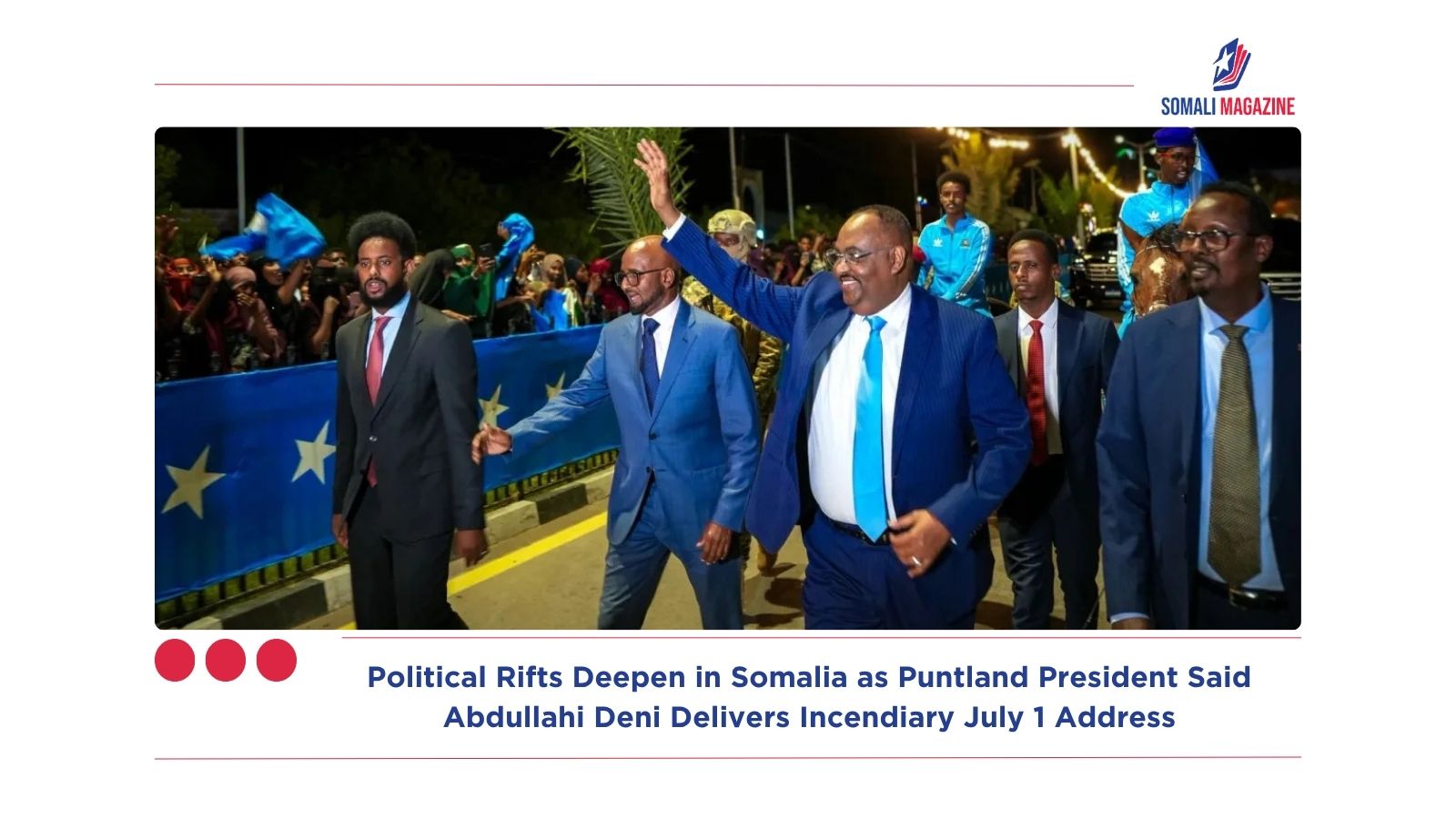
The integrity of the interim constitution has emerged as a central flashpoint in Somalia’s political landscape following an address by the semi-autonomous region’s leadership. Speaking from the regional capital of Garowe during the nationwide July 1 Independence Day commemorations, Puntland President Said Abdullahi Deni issued a strongly worded critique of the federal government in Mogadishu. In his expansive address, the regional leader accused the central administration of actively undermining key state institutions and systemically departing from foundational governance frameworks. The public remarks come amid months of escalating institutional friction over federal member state relations, proposed electoral alterations, and the shifting power balance between local capitals and the federal presidency.
According to regional officials, the latest friction reflects a deeper systemic impasse regarding how the interim constitution is interpreted and updated. During his speech, the Puntland President asserted that central organs have overridden established checks and balances, going so far as to claim that the national army has been diverted for political maneuvers. President Deni specifically pointed to recent urban security incidents in Mogadishu, including armed clashes on June 3, which reportedly impacted the residential quarters of several prominent opposition figures. He characterized these incidents as highly regrettable setbacks that erode broader public trust in national stabilization endeavors and compromise safe platforms for collaborative political dialogue.
While the rhetoric from Garowe remains assertive, the regional administration simultaneously sought to balance its criticism by explicitly reaffirming its dedication to national unity. The state leader noted that despite deep procedural disagreements over centralized policy directions, the regional state remains firmly committed to maintaining the historical cohesion of the country. President Deni concluded his public remarks by calling upon federal leadership to provide constructive guidance and inclusive guidance to resolve the country’s pressing political gridlocks. This public appeal underlines an explicit recognition that long-term developmental progress cannot be achieved through administrative fragmentation or isolated legislative models.
Conversely, federal authorities in Mogadishu have consistently maintained that all ongoing legal adaptations and structural reforms are fully legitimate steps aimed at introducing a uniform, direct voting system. Government spokespersons have previously argued that centralized security policies are necessary to secure territories and insulate national public bodies from clan-centric interference. Independent political experts warn that without an exhaustive, negotiated settlement between the central authorities and federal member states, unilateral shifts risk stalling collaborative counterterrorism measures against insurgent entities. As the country marks its historic independence milestones, the ongoing stand-off illustrates that building a stable governance model remains heavily dependent on reconciling regional autonomy with federal authority.


 Black News