Sakunda Hands Refurbished National Sports Stadium Back To Government
Sakunda Holdings has officially handed the National Sports Stadium back to the government following major refurbishment works carried out under a Public-Private Partnership (PPP) designed to restore the venue to international standards.
 Black News
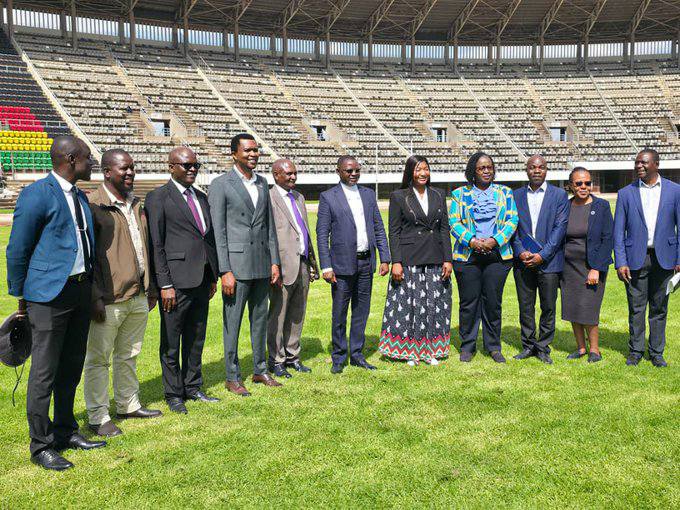
The stadium was closed several years ago after failing to meet the strict requirements set by the Confederation of African Football (CAF).
The comprehensive rehabilitation programme included the installation of a brand-new playing surface, modern bucket seats, upgraded technical areas, improved players’ tunnels, and completely refurbished changing rooms.
The Minister of Sport, Recreation, Arts and Culture, Anselem Sanyatwe, said that the stadium is now in a usable state for local football activities.
“The stadium is ready for use by local teams. Sakunda handed over the stadium. You can see the turf is lush green, the bucket seats for all areas are there, the movable dugouts are also in place, as well as the players’ tunnel, while the fittings for the changing rooms are also available, so effectively we are good to go for the opening of the stadium,” said Sanyatwe.
Sakunda Holdings Chief Operations Officer, Mberikwazvo Charles Chitambo, expressed his satisfaction with the progress made through the partnership with the government.
“We have handed the stadium back to the government, and we are delighted with how this partnership has worked. We purchased 60,000 bucket seats and installed 44,000 of them,” said Chitambo.
“The remaining seats have been handed over to the government to cover any future breakages or potentially for use in other projects. As far as our side of things is concerned, we are good to go.”
Zimbabwe Football Association (ZIFA) President, Nqobile Magwizi, welcomed the development, saying the country is finally on the verge of ending years of hosting its international matches abroad.
Premier Soccer League (PSL) chairperson, Isaiah Mupfurutsa, added that the reopening of the stadium would ease the pressure on existing venues, particularly Rufaro Stadium in Mbare.