Sovereignty without control: Sudan, gold and the limits of international law
In 2024, as Sudan reeled from one of the world’s worst humanitarian crises, UAE imports of its gold jumped by 70%. Millions had been displaced, tens of thousands killed, yet the gold kept flowing: refinery-bound, market-ready, and largely unquestioned. Sudan’s contemporary gold economy has become one of the most significant sites of violence, coercion, and resource extraction in the region. Since the early 2010s, gold has financed armed actors, shaped patterns of labour exploitation, and linked local mining communities to transnational markets stretching across the Gulf and beyond. Far from representing a breakdown of order, this is how the system […] The post Sovereignty without control: Sudan, gold and the limits of international law appeared first on African Arguments.
 Black News
In 2024, as Sudan reeled from one of the world’s worst humanitarian crises, UAE imports of its gold jumped by 70%. Millions had been displaced, tens of thousands killed, yet the gold kept flowing: refinery-bound, market-ready, and largely unquestioned.
Sudan’s contemporary gold economy has become one of the most significant sites of violence, coercion, and resource extraction in the region. Since the early 2010s, gold has financed armed actors, shaped patterns of labour exploitation, and linked local mining communities to transnational markets stretching across the Gulf and beyond. Far from representing a breakdown of order, this is how the system works.
Sudan, resources, and historical subordination
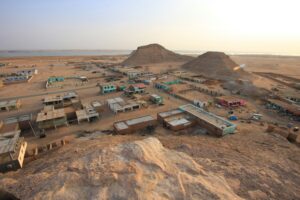
Sudan’s gold boom did not happen by accident. When South Sudan gained independence in 2011, Sudan lost the bulk of its oil revenues overnight. Gold became the government’s answer: a strategic resource to fill the fiscal gap and keep the country connected to global markets. Even before secession, Khartoum had already begun positioning gold as a key non-oil revenue source, and by 2014, it had handed out around 127 mining concessions to attract foreign investment into what was still a largely artisanal sector, though few of those concessions ever became productive.
The official narrative was one of opportunity. Rising reserves, growing production, a sector open for business. But the numbers told a different story: reported production went up, while exports barely moved. To this day, there is no comprehensive public register of active mines, and information about what is being extracted depends almost entirely on what companies choose to disclose. This opacity is not incidental to Sudan’s gold sector, it is structural.
This is partly because in Sudan, economic power and political authority have always been intertwined. Control over resource wealth is not just a perk of political power; it is how that power is maintained and reproduced. Large-scale mining is typically organised through international joint ventures, where Sudanese partners, often with close ties to ruling elites, hold majority stakes on paper. These structures are less about attracting investment than about managing access: they allow foreign companies to extract gold while insulating both them and their local partners from accountability. The corporation, in this sense, is not a neutral economic actor; it is the vehicle through which extraction has always been organised, from colonial chartered companies to today’s multinationals.
International law and extractive hierarchies

Formal sovereignty has not delivered control over Sudan’s resources, or justice for those who mine them.
These arrangements did not emerge in a vacuum. The legal architecture that enables them – the contracts, the corporate structures, the frameworks that govern foreign investments- is part of a broader international order. Understanding why Sudan’s gold economy works the way it does requires looking beyond Khartoum.
International law’s role in structuring contemporary extraction cannot be explained by domestic politics or markets alone; it must be traced to its colonial origins. As legal scholar Antony Anghie has argued, international law and doctrines like sovereignty were forged through European encounters with non-European societies, producing legal categories that enabled domination under the guise of order. Non-European polities were granted only conditional, subordinate sovereignty, which Anghie calls “alienation and subordination rather than empowerment.”
This history underlies today’s extractive hierarchies. Formal sovereignty has not ensured control over resources or economic autonomy but instead integrated postcolonial states into an unequal international economic order. As political theorist Getachew has shown, anticolonial visions of sovereignty as economic self-determination were progressively narrowed into a purely formal legal status, detached from control over resources and markets, especially after the defeat of projects like the New International Economic Order, a 1970s push by developing nations to reshape global trade rules.
In Sudan, this configuration produces a gold economy where formal sovereignty coexists with structural conditions that facilitate external access to resources and limit domestic regulation and benefit-sharing. International law recognises Sudan as sovereign while embedding it in a legal-economic order that prioritises stability, market access, and capital mobility. Responsibility for extraction is dispersed across jurisdictions and legal actors, making coercive extraction appear legitimate and investable.
Gold, conflict, and global markets
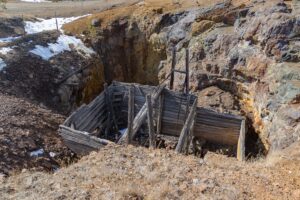
Gold has long functioned as a conflict resource in Sudan, embedded in both national and subnational struggles for power. Its role has become particularly pronounced in the recent episodes of mass violence, the October 2021 coup, and the civil war that began in April 2023, where control over gold production, trade, and circulation has directly shaped the conflict’s trajectory. The multi-billion-dollar gold economy is the primary source of income for the main warring parties, making extraction and trade central to the conduct and prolongation of war.
The military government that ruled Sudan for three decades, led by Umar al-Bashir (1989-2019), relied on security agencies and armed groups to control gold-producing regions, embedding extraction within militarised systems of authority. This mode of resource control was not new but reproduced a historical pattern – rooted in colonial governance – whereby peripheral regions were subjected to violence to facilitate extraction, a pattern that persisted after independence and remains central to Sudan’s extractive economy today.
Both the Sudanese Armed Forces (SAF) and the Rapid Support Forces (RSF), the two parties currently at war, consolidated their dominance over gold mining and trade by leveraging their political and military power during Bashir’s rule and in its aftermath. Their competition over mining sites, trade routes, and export channels is a key driver of the current civil war. This struggle extends beyond Sudan’s borders: gold extraction and circulation are embedded in transnational networks linking Sudan to regional and global markets, particularly through alliances with foreign companies and state actors in the United Arab Emirates and Russia.
Regional and international actors sustain these dynamics. Egypt and the UAE, as primary external supporters of the SAF and RSF, respectively, exert substantial influence over the conflict’s trajectory, driven by strategic, political, and economic interests tied to Sudan’s resources. While targeted sanctions and regulatory measures have been introduced, geopolitical dependencies, particularly reliance on Gulf states and Egypt for broader regional stability, constrain the willingness of powerful states to meaningfully disrupt the gold trade.
Overall, Sudan’s gold economy reveals how conflict, extraction, and global markets are deeply intertwined. Gold does not merely finance violence; it is embedded in a transnational legal and economic architecture that renders extraction profitable, governable, and resilient to political disruption.
Sudan’s gold does not disappear at the border. It is refined, traded, and absorbed into global markets that prefer not to ask many questions. Between 2012 and 2024, at least 400 tonnes of Sudanese gold were smuggled out of the country. This is not a failure of enforcement; it is the system working as intended. If international law continues to prioritise market access and investment security over the lives of those who mine the gold, no amount of sanctions or ethical sourcing commitments will change the fundamental dynamic. The question is not whether the world knows where Sudan’s gold comes from. The architecture was never designed to stop it.
The post Sovereignty without control: Sudan, gold and the limits of international law appeared first on African Arguments.