The big Polihali Dam scam
… as experts declare main contractor incapable of delivering on critical multi-billion maloti project …forcing LHDA to “descope” and rope in other contractors SUN JV, the consortium contracted to build the multi-billion Polihali Dam, simply lacks the capacity to deliver on Lesotho’s flagship water infrastructure showcase project. This according to an international panel of experts drawn from all over the world by the Lesotho... The post The big Polihali Dam scam appeared first on Lesotho Times.
 Black News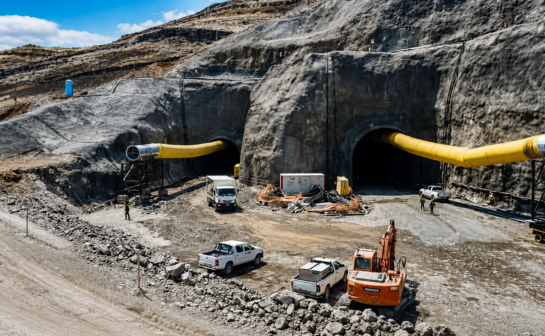
… as experts declare main contractor incapable of delivering on critical multi-billion maloti project
…forcing LHDA to “descope” and rope in other contractors
SUN JV, the consortium contracted to build the multi-billion Polihali Dam, simply lacks the capacity to deliver on Lesotho’s flagship water infrastructure showcase project. This according to an international panel of experts drawn from all over the world by the Lesotho Highlands Development Authority (LHDA) to help review and assess progress on the project.
So tragic is the SUN JV story that following the compilation and release of the Engineering Panel of Experts (EPOE) Report in October 2025, the LHDA was left with no option but to descope the project to remove some of its key components from the SUN JV and consider awarding them to other contractors. The move would hopefully lighten the burden on SUN JV and enable it to focus and complete its remaining works.
Descoping essentially means major components of the project that SUN JV had tendered and won, are now being taken away from the joint venture and given to other contractors.
These key components that the LHDA had to descope are the intake tower and bridge, outlet chute, flip bucket, plunge pool, outlet house, tailrace, compensation anchor blocks, downstream concrete works and electrical installations.
While some experts say the LHDA is to be commended for heeding the recommendations of its own panel of experts by descoping the project, others say the descoping story leaves a major stain on the reputation of all the parties involved in appointing contractors to this humungous infrastructure project, one of the largest ever implemented on the African continent.
“Descoping a project is a major admission that whoever was initially appointed should have never been appointed in the first place…” an expert close to the engineers who compiled the report said.
“This is Lesotho’s main legacy project which must survive for generations for the benefit of the citizens of this country. The last thing the country needs is a legacy project that will start cracking a few years down the line because of poor workmanship. In the meantime, the contractors and their middlemen would have collected billions and moved on….
“What this proves once again is that those responsible for appointing contractors to key infrastructure projects must be guided by the national interest and national interest only, which is rarely the case in Lesotho and does not appear to have been the case here.
“If he has the interests of this country at heart – which I have no doubt he has – the Prime Minister (Sam Matekane) and his ministers must demand answers and accountability on behalf of Basotho.
“While the project has faced incessant delays and had since been recommended for descoping, everyone in the know is aware of officials and middlemen who have become filthy rich and now drive Maybachs in lieu of bad and self-serving decisions….The story shall certainly be told one day and Matekane must not be found on the wrong side of history…He must act now.”
Panel Report
A report compiled for the LHDA by the panel of highly qualified independent engineering experts, drawn from around the world, cited a litany of problems in the project including poor quality of materials being used to build the dam wall, and the long lead times for machinery imported from China to fulfill key tasks, among the problems afflicting the project.
“The dam contractor is clearly having difficulty managing the tasks required to construct the dam in a manner that would imply a predictable completion….,” the report concludes, urging the LHDA to remove other tasks from the SUN JV and allocate them to other capable contractors.
In a further damning indictment of SUN JV, the panel recommended that the LHDA buys its own earth moving equipment from South Africa and then subleases it to SUN JV to capacitate the latter to do the work it was contracted to do.
Things should never get to such an extent in projects of this magnitude wherein competence should be the sole determining factor in choosing the appropriate contractor, another engineering expert of 30 years standing said.
“But when other considerations come into play, this kind of mess becomes inevitable. You guys (the media) once reported about a contractor so incompetent that he built a road which split right through the middle, presumably because of poor quality of construction materials used. Yet that contractor is now part of this Consortium building a wholly complicated dam wall which must last for hundreds of years….? We can only hope and pray history won’t repeat itself…”
Background
The Polihali Dam is the centrepiece of Phase II of the Lesotho Highlands Water Project (LHWP), which is expected to increase water deliveries to South Africa while significantly boosting Lesotho’s water royalties.
A joint venture comprising China’s Sinohydro Bureau 14, Unik Civil Engineering Pty Ltd, and Lesotho’s Nthane Brothers (SUN JV) was awarded the contract by the Lesotho Highlands Development Authority to construct the dam.
His Majesty King Letsie III and South African President Cyril Ramaphosa officially launched the multi-billion-maloti project with a sod-turning ceremony on 23 May 2023. Construction was scheduled to take five years. However, persistent delays have already pushed back key project milestones and heightened concerns over escalating costs.
In response, the LHDA appointed an Engineering Panel of Experts (EPOE) to assess progress on the dam. After inspecting the Polihali site in July last year, the panel concluded that SUN JV was incapable of completing the works as originally contracted.
The experts recommended that the LHDA “descope”—removing several major work packages from SUN JV’s contract—and procure them separately.
They also proposed that the Authority itself purchase and lease heavy construction and drilling equipment to the contractor, arguing that SUN JV’s reliance on importing machinery and spare parts from China had become a major cause of repeated delays.
The Lesotho Times has established that, following the panel’s report, the LHDA proceeded to descope some of the works and subsequently invited fresh bids for those packages. However, during the briefing session for the prospective bidders, the Authority did not disclose why it had elected to descope the project. It made no reference to the SUN JV’s failures to adhere to agreed performance matrixes.
However, the Lesotho Times can now exclusively reveal that the descoping followed a damning report by the Engineering Panel of Experts, which concluded that SUN JV was essentially incompetent to deliver on the project. The report was categorial that Sun JV had failed to deliver the project in line with contractual expectations and recommended that critical portions of the works be removed from its scope to prevent further delays.
By the time the EPOE carried out its sixth inspection mission in July 2025, the experts had become adamant that SUN JV was unable to execute the works efficiently.
Without a major intervention, the EPOE warned that the project would not be completed.
Removal of other tasks from SUN JV (descoping) would therefore “allow the contractor to focus all his resources and management skill on his remaining work to ensure their satisfactory completion,” the report states.
Causes of delays
According to the report, two activities had become particularly problematic: consolidation grouting of the internal plinth, and quarrying together with the placement of rockfill.
The experts found that both operations were progressing far more slowly than required to keep the overall construction programme on track.
A major contributing factor, they said, was the contractor’s dependence on machinery imported from China. Whenever critical equipment broke down, replacement parts often had to be sourced overseas, resulting in lengthy interruptions.
“Supply of equipment and spares from China introduces delay if not planned appropriately — and it does appear that this has contributed to delays in some part.”
The experts said this reliance on imported equipment had become incompatible with the pace required on a project of Polihali’s magnitude.
LHDA’s own machinery
The panel then recommended that the LHDA itself procure heavy earth-moving machinery from South African suppliers and lease it to the contractor.
“The EPOE suggests that LHDA explores the possibility of directly leasing (including maintenance) loaders, trucks — such as the Volvo articulated variety seen on site — and dozers so that the on-site fleet is matched to the task.”
The experts noted that South Africa’s mining industry provided a ready market for suitable equipment and spare parts, making it possible to obtain replacements much faster than importing them from China.
They further recommended that the LHDA also lease drilling rigs and grouting equipment, since SUN JV lacked sufficient backup machinery.
“The contractor appears to be having difficulty in mobilising sufficient and appropriate grouting resources for the required work. There may be nominally sufficient pumps but not enough to maintain production upon breakdowns.”
Major works for descoping
The most far-reaching recommendation made by the experts was that significant portions of the contract should be removed from SUN JV altogether. The report argues that reducing the contractor’s workload would allow it to focus its remaining resources on completing the core embankment.
Among the first tasks recommended for removal was the upstream plinth grouting, which the panel said could easily be undertaken independently.
“Consolidation and curtain grouting of the upstream plinth is an activity that can be completed separately from all other works related to the completion of the embankment.”
The experts acknowledged that a replacement contractor would have to establish itself on site and share access roads with SUN JV but noted that these challenges would exist regardless of which activities were descoped.
The report also identified the outlet gate tower and outlet works as among the strongest candidates for immediate removal from SUN JV’s contract.
“While the strategy of descoping is being considered, work on the outlet tower has been halted, and the EPOE agrees that it is a prime candidate to be removed from the dam contractor’s scope.”
Although SUN JV had already begun procuring the electrical and mechanical equipment for the outlet works, the panel recommended that an entirely new contractor should undertake all concrete works to minimise contractual complications.
“The EPOE considers that it would be contractually cleaner — and with less risk — to ask a new participant to perform all concrete works associated with the tower.”
The report further recommended that SUN JV should continue supplying concrete aggregates from the Tsilantso South quarry, while the new contractor would batch and mix its own concrete to reduce the interface between the two contractors.
Delay power plant
The experts also proposed postponing construction of the hydroelectric power plant, arguing that it was not essential for the dam’s primary purpose of transferring water.
“Removing the hydropower plant (planned for the outlet) and delaying its completion could be done. The plant is not vital for the functioning of the dam and the Polihali transfer, and many small hydro plants have been added to existing dams around the world.”
Attention was also drawn to the saddle dam works, with the panel recommending that SUN JV’s limited grouting resources should instead be concentrated on the main dam.
“The EPOE suggests that — at least for now — all grouting resources be directed… away from the saddle dam. Depending on the progress… the saddle dam grouting could be removed completely from the dam contractor’s scope.”
The spillway concrete works were similarly identified as suitable for reassignment because they rely on different resources from those required for embankment construction.
“Removal of concreting of the spillway weir, walls and chute may have limited effect on the dam contractor’s operations as the resources mobilised are different from those used for the embankment.”
Although the panel acknowledged that removing completion of the saddle dam from SUN JV’s scope was an attractive proposition, it cautioned that the scale of mobilisation required by a replacement contractor could outweigh the benefits.
“The prospect of removing the Saddle Dam from the contractor is a tempting option, but a new contractor would need to mobilise considerable plant and resources… and the option may not make sense.”
The experts also regarded transferring construction of the concrete face slab as a measure of last resort because of the specialised equipment required.
“Transferring the placement of the face slab… is theoretically possible, but a new contractor is unlikely to possess all the special plant required, so it should be considered as an extreme option.”
Overall, despite warning that descoping would inevitably increase project costs, the panel concluded that it would provide greater certainty over the project’s completion timetable.
“It must be accepted that transferring tasks to a third party may well increase cost but will introduce certainty into the overall schedule.”
‘Carrot and stick’ negotiations
The report cautioned that descoping would only succeed if negotiations with SUN JV were completed quickly. Any delays, it warned, would simply strengthen the contractor’s bargaining position.
“Negotiations will require a ‘carrot and stick’ approach.”
The Carrot and stick motivation is a motivational approach that involves offering a “carrot” (a reward—for good behaviour) and a “stick” (a negative consequence for poor behaviour).
The experts further warned that competitive bidding for the descoped works would likely consume too much time. Instead, they recommended direct negotiations with experienced regional contractors capable of mobilising quickly.
“Rebidding for descoped tasks may not be feasible due to lengthy schedule and a more realistic option is probably direct negotiation with a competent contractor.”
It also noted that few firms possessed the technical expertise required to undertake the specialised works.
The experts further observed that no reputable contractor would likely agree to work as SUN JV’s subcontractor.
Computer modelling to guide decisions
To determine precisely which activities should be descoped, the EPOE recommended running repeated Monte Carlo simulations (repeated random sampling) of the construction schedule. Different descoping scenarios could then be compared before negotiations commenced.
“Repeated Monte Carlo simulations using combinations of the descoping options will result in guidance on which ones are both viable and effective in making the project completion date more certain.”
The experts said such modelling would provide invaluable information during negotiations with both SUN JV and any replacement contractor.
Early reservoir filling still possible
The report also explored whether the dam could begin storing water before all construction works had been completed. It concluded that early impoundment remained technically possible, provided several critical works had first been completed.
These included completion of the outlet works, embankment filling to the required elevation, the first stage of face slab concrete, grouting below the intended water level, and placement of protective fill above the perimeter joint.
Interestingly, the experts noted that completion of the saddle dam was not essential before early filling could begin.
However, they rejected proposals to regulate reservoir levels using gates inside the diversion tunnel. The report warned that the tunnel had never been designed to dissipate the energy generated by high-velocity flows from such gates.
Instead, the experts concluded that the low-level outlet remained the only practical option for safely controlling reservoir filling.
Efforts to obtain comment from both the LHDA and SUN JV were unsuccessful, as neither had responded to questions from the Lesotho Times by the time of going to print last night.
As the Polihali Dam is Lesotho’s mainstay infrastructure project and the nation’s economic survival depends on it, the Lesotho Times will update this story on our website with their comments if they bother to respond, alongside with providing a link to the panel of experts reports.
The LHDA had invited contractors to submit their expressions of interest for pre-qualification for descoped work by 8 April 2026, followed by an invitation for those selected to submit formal bids.
Five contractors were then shortlisted for the descoped work. It’s not clear how far the process of appointing contractors for the descoped work has since gone as the information has since all been removed from the LHDA website.
The post The big Polihali Dam scam appeared first on Lesotho Times.