How Caitlin Clark’s White Woman Grievance Spiral Is Driving Her Career Toward An Early End
Indiana Fever guard Caitlin “Contusion” Clark has locked herself into a grievance spiral, constantly gaslighting her fans, the media, and the general public.
 Black News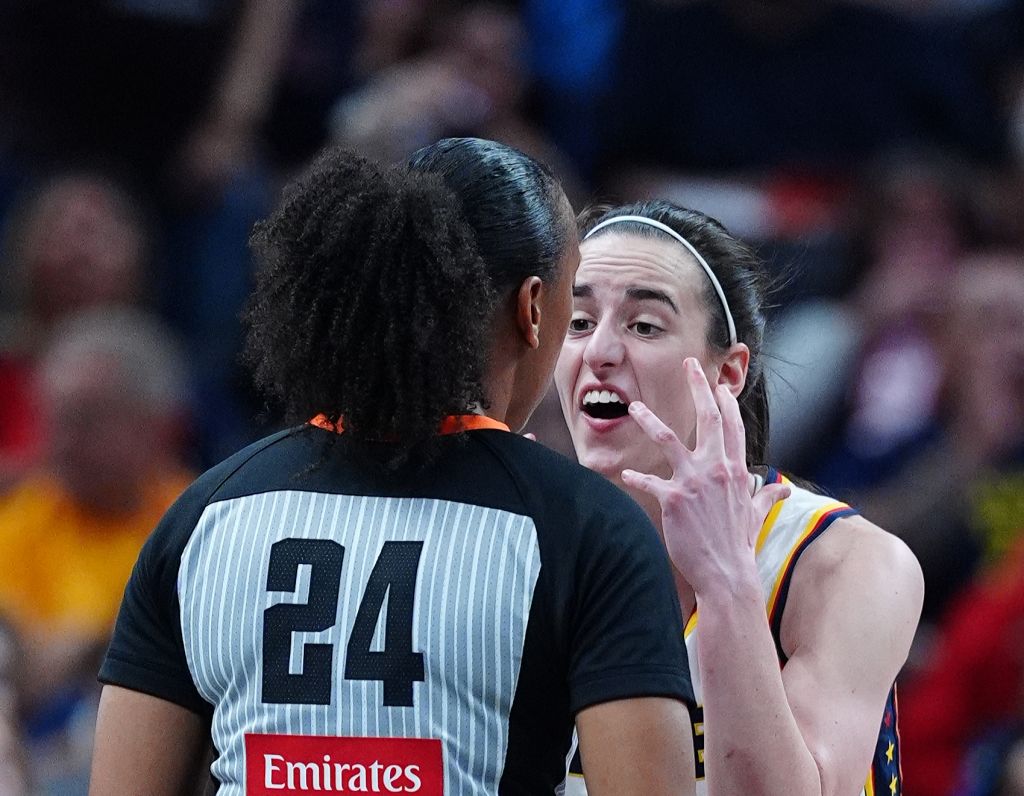

I never expected a black-and-white psychological thriller from 1944 to perfectly describe the current, exhausting state of the WNBA and Caitlin “Contusion” Clark’s antics, but here we are.
In the classic film, Gaslight, Gregory Anton systematically manipulates his wife, Paula, into believing she’s losing her mind. He secretly dims their home’s gas lights without telling her, misplaces items only to blame her for being absent-minded for losing them, isolates her, and flatly denies reality as she doubts her own sanity.
The movie shows a slow, agonizing psychological erasure where the victim is forced to choose between trusting her own eyes and believing a fabricated narrative deliberately meant to manipulate her and break her down. The story is where the oft-repeated term, gaslighting, originates.
Indiana Fever guard Caitlin “Contusion” Clark has locked herself into a parallel spiral, constantly gaslighting her fans, the media, and the general public.
During this week’s game between the Golden State Valkyries and the Indiana Fever, Contusion Cait drove to the basket and strong-armed Valkyries’ star Kiah Stokes on her way up for a shot. Their legs grazed. Clark fell to the floor, got up and stumbled, then hobbled down the court before recovering to yell at the officials. Referees had called no foul. After Clark angrily shouted at them, two refs issued her warnings. This was a display that one announcer noted would have earned any other player a technical foul in every state in this country.
After the game, Contusion Cait used the press conference to gaslight the media and the audience about the play. “She hit me right in the quad. That hurts. The ref can’t miss that,” she said, “Then I have to play with a contusion on my leg the rest of the game. It’s ridiculous. You can’t miss calls like that. [The ref] said I initiated the contact. Which is fine, but you can’t knee me in the leg. Knock me over.”
The video footage reveals what really happened. It shows that Stokes did not knee Clark in the leg, nor did she knock her over. It was one of the tamest plays in a physical league that regularly sees far worse collisions send players slamming into the hardwood floor.
By insisting she was violently struck when the tape shows a routine basketball play, Clark demands that the public accept her spin over the visible evidence that directly contradicts her reframing.
Clark is keenly aware that a good portion of her fan base, as well as people who don’t watch basketball, might only be exposed to her quotes. She also knows that press outlets will run the most outlandish parts of her comments as headlines, painting her as a victim.
Clark’s habit of manufacturing victimhood has successfully riled up her fan base and prompted Republican members of Congress to step in on her behalf. The political intervention has led to uneven officiating during games and enabled her to continue to mischaracterize plays, making her Black opponents targets of racial attacks by her fan base. It has also emboldened Clark to challenge referees more forcefully on the court, knowing they are increasingly reluctant to call a technical foul on her.
So far, the league hasn’t shown it has the backbone or desire to appropriately rein in Clark, support its referees, or address the racist backlash Black players experience after Clark accuses them of being too rough on her. The league has not backed away from supporting her, and this week, despite her pattern of on-court disrespect, it doubled down, with NBA commissioner Adam Silver calling Clark an “incredible person.”
Instead, individual organizations and players have stepped up to address what the league has been slow to confront. During a recent game against the Las Vegas Aces, Clark doubled over and crumbled onto the floor after experiencing minimal contact with Aces’ star Chelsea Gray. Following that game, Gray received a racist message from a man calling her the N-word. It fell on Gray and the Aces’ organization to address the abuse in a statement, which the WNBA regurgitated in its own release hours later.
Aces’ head coach Becky Hammon took the step most fans and players have been waiting for the league to take for years. Hammon directly called out the racism, saying, “Any kind of racist, homophobic comments. We don’t need you as fans, don’t want you as fans. Just move on.”
Clark’s manufactured pain at the hands of countless Black women players follows a historic trope whereby white women falsely claim to have been physically or emotionally harmed by Black people.
Those claims traditionally move public opinion, punishment, and political power against whatever Black person is named, regardless of the evidence provided to defend them. The trope is effective because it elevates white distress over observable reality by drawing on a presumption that white women tell the truth and Black people, especially Black women, are inherently guilty, liars, and always the aggressors.
By validating Clark’s manufactured white grievances, Republican lawmakers and the league are insulating her from the reality of her declining performance and the physical fragility that has exposed her as incapable of meeting the physical baseline expected of any professional athlete playing in a contact sport like basketball.
It’s hard to imagine that Clark and the WNBA can sustain or absorb this volatile and inane trajectory for much longer. The more she spirals, the more her fan base reads that spiral as proof that the league and Black women players drove her to it.
This has set the stage for a very public, final act.
Because she feels as though she’s been given a get-out-of-jail-free card with the refs, it’s not hard to imagine a scenario where Contusion Cait’s exit comes after she shoves an official and is ejected, choosing afterward never to return to the league.
The likelier scenario, though, is that Contusion Cait erupts on the court again, inciting a physical fight, only for the other player(s) to get the better of her in front of a national audience, leading her to announce she’s leaving the league permanently because she doesn’t feel safe.
There’s another version of this ending that doesn’t need a televised incident. An announcement that the physical toll and injuries she’s sustained over the years playing basketball are taking her out of the game permanently.
This ending would give her and the league a somewhat clean exit. It’s a better alternative than having to confront the reality that haunts them: that their manufactured “face of the league” ultimately didn’t have the talent or work ethic to live up to their expectations.
However her exit arrives, the reality at the moment is that what Clark and her fan base want doesn’t fit the rules of professional basketball in any league on this planet. Not to mention, defense without contact isn’t a version of the WNBA even her most loyal fans would find entertaining to watch.
At any point, both sides could fix this. Clark could put in the work her game is missing. The league could step up and protect Black women.
History shows I shouldn’t hold my breath for either option.
So, I have another alternative for Contusion Cait and her fans to consider.
The good news is there is no need to reinvent the wheel or to try to upend the WNBA when the game she seems to want to play already exists.
Ok, ok. Hear me out. Instead of staying unhappy and creating chaos during every WNBA game while underperforming in front of a national TV audience, Clark should steer her fans away from the W and away from racially attacking Black women.
Instead, she should mobilize them and get them to Capitol Hill to ask Congressional Republicans to start a new government-funded league built around a game called HORSE, just for her.
In case you don’t know, and this description is only for ALL the fans she brought into basketball who are still new to the sport itself, HORSE is the driveway staple where one player calls a trick shot, makes it or misses it, and the other player has to match it or take a letter. The first person to spell out HORSE, loses. There are no defenders, no rebounding position, and no bodies anywhere near the shooter. It rewards shot creativity and doesn’t require any tolerance for contact.
I mean, after all, she’d excel and could TOTALLY become the GOAT of a game where the only thing standing between her and a made shot is her own aim. See how we can all win here?
Or, better yet, I think she’s earned a slightly different version of the same game. Maybe, to make it more challenging and on brand for her, let’s change the name from HORSE to DONKEY.
SEE ALSO:
Alyssa Thomas Gets 1-Game Suspension For Hitting Caitlin Clark’s Throat
The Unraveling: How Reality Caught Up With The Cult Of Caitlin Clark
In A World Full Of Targets, The WNBA Needs To Be A Costco
Caitlin Clark Was On Stage With Country Music Singer Morgan Wallen
Caitlin Clark Lost Her Footing, So Her Fans Called 911
An Open Letter To Caitlin Clark From A Black Woman Who Loves The WNBA