They came for us and no one is speaking for us
Martin Niemöller could have easily been speaking to any one of us within Saint Lucia and the wider Caribbean, when he bemoaned the complicity of himself and Germans during the Nazi imprisonment, persecution and genocide of millions of people, particularly, among leaders of the cloth. He articulated a position that has been quite common within […] The article They came for us and no one is speaking for us is from St. Lucia Times.
 Black News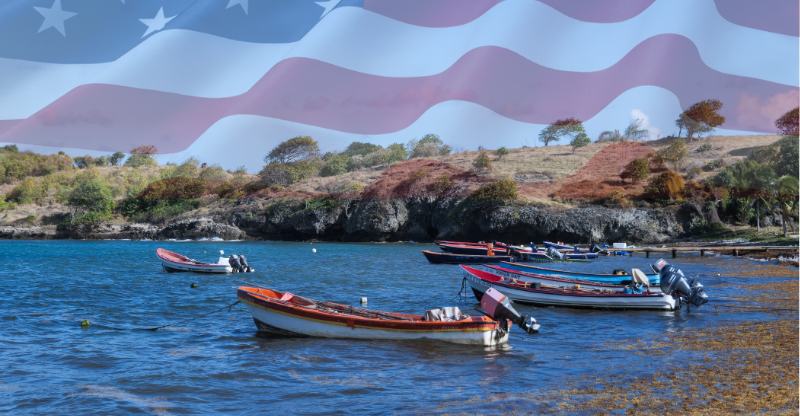
Martin Niemöller could have easily been speaking to any one of us within Saint Lucia and the wider Caribbean, when he bemoaned the complicity of himself and Germans during the Nazi imprisonment, persecution and genocide of millions of people, particularly, among leaders of the cloth.
He articulated a position that has been quite common within our commentary in the country, as the US continues extra-judicial killings and human rights atrocities within the Caribbean Sea. Whether it was a Trinidad young man, or a Saint Lucian fisherman, he essentially was speaking to us when he said, “First they came for the socialists, and I did not speak out because I was not a socialist, then they came for the trade unions and I did not speak out because I was not a trade unionist. Then they came for the Jews, and I did not speak out because I was not a Jew, then they came for me, and there was no one left to speak for me.”
Instead, today, our complicity is with the US, as they continue to execute citizens in the Caribbean Sea, on the accusations of smuggling and trafficking of drugs to the US. Only that, there exists minimal evidence that anyone else but the Americans can see and access, and what may have been left to prove such a case has been destroyed in the bombing, with a lack of due process, a fair trial, prosecution of the alleged perpetrators, flagrant breaches of international human rights law and domestic law, no oversight and consultation with relevant Caribbean authorities, and the consequent silence or endorsement of leaders across the Caribbean region, when these occur, even when it is their own citizens. Instead, we continue to hide behind diplomatic niceties and plausible deniability, hoping that it will shield us from further isolation, recolonisation, economic fallout and diplomatic repercussions, cognisant of the sheer power and might of the US. Certainly, Bob Marley is looking down on us singing, “Now we will see who is a real revolutionary!”
But, certainly, regrettably, that time has come for us, we must speak for ourselves notwithstanding our continued hesitance to speak for others – Haitians, Migrants, Cubans, Trinidadian people, Palestinians, et cetera, borne out of a lack of global solidarity for oppressed peoples the world over, as we have in the past and the economics of survival. Martin Luther King Jr was accurate, though, when he suggested that, in his Letter from Birmingham Jail, “Injustice anywhere is a threat to justice everywhere.”
As such, what has been reported to occur remains contrary to international human rights law and other forms of international law, diplomacy, et cetera, recognising that if individuals are suspected to be smuggling drugs across the waters en route to the United States of America, there exists technology, intelligence and existing forms of detection, interception, arresting, collection of evidence, prosecuting before an international or ordinary domestic law courts with competence to be tried by a jury of their peers that should occur in accordance with the rule of law. Irrespective of what individuals are being accused of, there should exist an entrenched process for accountability and fairness which provides for a fair trial, presentation of evidence to substantiate the charge, due process before the law, provision of one’s day in court to face their accusers and the right to present a legal defence. Nobody is suggesting that there should not be tackling of drugs and guns within the Caribbean Sea, which continue to exacerbate crime and violence within the region. Instead, the argument is that how one does that matters.
It is thus an affront to the rule of law, human rights and basic human decency that our political systems are built on for individuals to be arbitrarily executed in the waters, without any evidence that they did commit the crimes that they are being accused of. Certainly, neither in the US nor in Saint Lucia are these offences meted out with death, vigilante justice, or an “eye for an eye”. There is no legal penalty for drug trafficking involving summary execution, as gone are the days when our civilisation is defined as following the law of the jungle, even if President Trump has signalled a return to these days.
Put another way, one only has to ask oneself whether, if they put on John Rawls’ “veil of ignorance” and were accused of a crime, they would want the process used to determine their guilt? Provision of an opportunity to plead their defence or being executed in waters?
What is also more alarming is the unhinged nature of these operations, cloaked in national security hogwash used to evade accountability and oversight by domestic and international bodies, and a culture of justification, which also ignores the possibility that within these boats exist immigrants, children, trafficked individuals or individuals who have not been smuggling drugs but who continue to fish in these waters.
In fact, this posture only creates a slippery slope, wherein discretion to determine innocence and guilt is not placed in the hands of those who have access to weigh and balance evidence within courtrooms and other adjudicative mechanisms, but within the hands of military and political officials, with their varying ideological, political, economic, geopolitical and other considerations. It means that tomorrow, when political officials, backed by military personnel, provide another individualistic, fabricated rationale for exercising their discretion without strict guidelines, rules, processes, reporting systems, or evidence proving guilt beyond a reasonable doubt, it would be permissible and executable. This is especially true when there are no repercussions for their actions. Today, it will be “drugs”, without provision of evidence, but what will tomorrow bring, when it is “just because”, recognising that there are no requirements for a culture of justification for the actions. And then the rumour mill, similar to during and after the Grenada Invasion, would be used as justification.
Moreover, international law, such as the UN Convention on Narcotic Drugs, which suggests under Article 35 that individuals who are believed to be engaging in illicit trafficking of drugs shall be liable to adequate punishment particularly by imprisonment and other penalties of deprivation of liberty, provision of reporting mechanisms and procedures to ensure that the interdiction of the parties are being done in accordance with international best practices and standards, or that the principle of no one being above the law such that these states cannot be the judge, jury and executioner without due process, and so on.
Further, for example, the United Nations Convention against Illicit Traffic in Narcotic Drugs and Psychotropic Substances, also notes under Article 17, that respective parties must board, search, and take appropriate action if illicit drugs are found on the vessel. It certainly does not contain any provisions which permit the execution of drone strikes on the vessel. Implicit in this convention is also the satisfaction that there are illicit drugs on the vessel, which, in accordance with international best practices, must be safeguarded as evidence for the prosecution of the criminals. But this is not occurring as the drone strikes destroy any “evidence” of drugs and fuel constructive cynicism and lack of trust for political officials among people who question whether there were any drugs to begin with.
There is no legal penalty for drug trafficking through summary execution without due process, i.e., being arrested, charged, provided with a trial and the prosecution being permitted to prove its case beyond a reasonable doubt. In fact, even in circumstances where guilt is proven or pleaded by the perpetrators, the penalty is not death by execution, as witnessed in recent weeks. As such, why should this be the policy position on the waters by these states, in flagrant disregard for domestic and international law? Instead, in these countries, which are highly rated for their adherence to the “rule of law”, officials could have simply conducted maritime interdiction of the drug shipments utilising their intelligence, and the subsequent processing, charging, prosecuting, and sentencing of the individuals without attacking the vessel’s occupants.
As I argued in another article on this subject, appropriate safeguards must accompany these operations, even in circumstances where I believe they should not occur in the first place. But, in circumstances where they will be occurring, there should not be any executions within the waters, but certainly, there should be intelligence that ensures reporting, ensuring adequate and accurate intelligence is received and communicated to the political officials and the wider Caribbean Community, proper accessible policies and procedures that provide us with some information on the authority to engage in such intervention and the four corners in which it is occurring, and other requisite communication with other geographically closer member states to prevent unforeseen harm and damage. In effect, these safeguards are intended to ensure that the mission’s objective is met and aligned with international law, the rules-based order, and best practices.
In fact, if drugs are truly the target, what should be occurring, in addition to the above, is the reskilling and training of Regional Security System officials and other security apparatuses to oversee and contribute to these operations, so that the Caribbean region has ownership of the process and procedures.
But, certainly what is continually alarming is the manner in which the ”evidence” continues to be destroyed in the strikes, and also the data from the US itself, which notes that as per academic and departmental research, that 84% of the cocaine seized in the US comes not from Venezuela, as they are not a cocaine producer, but from Colombia. In fact, the major cartels that pose a threat to the US, according to the DEA, are the Sinaloa Cartel and the New Generation Cartel from Mexico. As such, Dr Quashie argues, and he may be accurate, that this position is about the destabilisation of the Maduro regime, which may result in their [Trinidad and Tobago’s] view in a return of the oil market for Trinidad and Tobago, which was obliterated with the Petro-Caribe Initiative. And in circumstances where Maduro has already been captured, there may be a need for the legitimisation of the actions of the US, and as such, they continue to bomb small boats to legitimise their “war on drugs”. But, certainly, the US has to turn inwards, recognising that the drug war must also encapsulate the attendant “gun” war, which the region continues to suffer from, because of the liberal gun laws of the US. While the “drugs” may be ruining lives, the US should reorganise their gun laws to facilitate a reduction in crime and violence in the Caribbean, recognising their benevolence in reducing crime and violence in the Caribbean.
Dr Emmanuel Quashie is accurate and instructive when he notes that “thus, the idea that the US military presence in the Caribbean will result in a reduction in illegal guns, drugs and violent crimes is to have a fanciful and superficial understanding of US foreign policy. Plain and simple, it’s about Venezuela’s oil, because they hold the largest oil reserves in the world and nothing to do with supposed “drug cartels” or “narco-terrorists” or even illegal guns that actually come from the United States and are the main source of the burgeoning gun violence that is ravaging our Caribbean communities.
But the complicity, masquerading as diplomatic niceties, that is occurring from the political elite and ordinary people in Saint Lucia and the wider Caribbean, even in circumstances where our people are allegedly subjected to execution at sea, is precisely what Niemöller was describing.
One must wonder whether a country that continues to execute people within waters, proudly, such that the Vice President JD Vance could gleefully note that “if I were a fisherman, I would not be fishing in the Caribbean sea right now” or the president can suggest that he has singlehandedly destroyed the fishing industry within the Caribbean, admitting the imprecise nature and lack of care within these operations, would voluntarily provide information through diplomatic channels that they are engaging in execution of citizens.
A country that has weaponised the national guard and ICE agents on its own citizens with violence, justifying the raids and deaths with “criminal records of the individuals”, is certainly uninterested in the provision of information on operations. In fact, one should not even be interested in knowledge in bereavement, but in dialogue, diplomacy and other forms to terminate this nightmare within the zone of peace of the Caribbean. As such, it is not acceptable for our political elite to suggest that the people should be satisfied with the official communication that “we have received no official communication from the US” as if criminals voluntarily provide information that demonstrates their criminality. As such, there should be continuous dialogue with the US that provides proper information on the occurrences within the Caribbean Sea, affecting sons and daughters of the Caribbean civilisation, as opposed to us engaging in his learned helplessness or lay down and play dead approach, while the US continue to engage in illegal activities within the waters in the Caribbean.
Certainly, the role of the political elite must continually be to prioritise not only the security of its citizens but also to communicate in a language that alleviates their fears and legitimate concerns during these difficult geopolitical periods, which also touch and concern their daily lives and livelihoods.
The abovementioned, though, continues to demonstrate the by-products of political, but not economic, independence or interdependence: smallness, a northward and Western gaze and power, economic fragility, monocropism, weak state capacity, ill-equipped and undesigned regionalism and a global order gone mad. In these instances, regionalism continues to be our most appropriate response, while building capacity internally to deal with some of our own perennial issues in new and creative mechanisms, recognition that we are all that we have, while still forging new friendships and relationships with non-traditional partners and countries, and engaging in continuous regional solidarity and international lobbying for the termination of the illegal activities within the waters in the Caribbean. Moreover, it is time for the utilisation of the CELAC (Community of Latin American and Caribbean States) bloc to further deal with some of the legitimate drug issues and provide a plan of action that can assist in the reduction of militarisation.
It goes without saying that the Caribbean must continue to be firm on certain domestic, regional and international principles, including, but not limited to, non-militarisation within the Caribbean, the endurance of the Caribbean as a zone of peace, diplomatic flexibility, negotiation and consensus-building as pillars of the resolution of issues, et cetera.
The article They came for us and no one is speaking for us is from St. Lucia Times.