Top 5 electricity-producing countries in Africa
Electricity generation remains a critical driver of economic growth and industrial development across Africa, with a handful of countries accounting for a significant share of the continent’s total power output due to their large economies, energy infrastructure, and natural resource capacity.
 Black News

Electricity generation remains a critical driver of economic growth and industrial development across Africa, with a handful of countries accounting for a significant share of the continent’s total power output due to their large economies, energy infrastructure, and natural resource capacity.
- South Africa leads the continent in electricity production, primarily using coal, but struggles with planned outages due to demand.
- Egypt, ranking second, achieved a supply surplus and exports electricity, relying mainly on natural gas and investing in renewables.
- Algeria, Morocco and Nigeria are also top producers, with Algeria using mostly natural gas while Morocco balances imports with ambitious renewable targets.
- North Africa dominates the continent's electricity rankings, highlighting the region's enduring investment in infrastructure and diverse energy sources.
The importance of stable electricity for every nation can never be overemphasized. Without sufficient electricity, industrial and economic development will remain a tall tale.
It is needed in virtually every sector of the economy, including health, agriculture, and education. Insufficient power supply has been a major obstacle hindering development in Africa.
Hence, this article is designed to rank the top African countries based on electricity produced based on information from the International Energy Agency.
1. South Africa
South Africa, Africa's most industrialized nation, is the continent's top producer of electricity. The country produces a whopping 229,303 GWh of electricity, earning it the top spot among electricity producers on the continent.
Despite this, the country contends with planned outages. Energy experts are of the opinion that an additional 15,000 MW will stabilize its grid and help meet both industrial and domestic energy demands.
Its main source of electricity is primarily coal, which accounts for over 70% of total generated electricity. Toward the end of 2025, electricity generated from solar and wind power has been on the rise.
2. Egypt
This North African nation had to contend with power shortages for several years, but in 2016, it achieved a dependable surplus.
This has earned it the second spot on the African continent. Recently, Egypt has invested over EGP 130 billion to further improve electricity production.
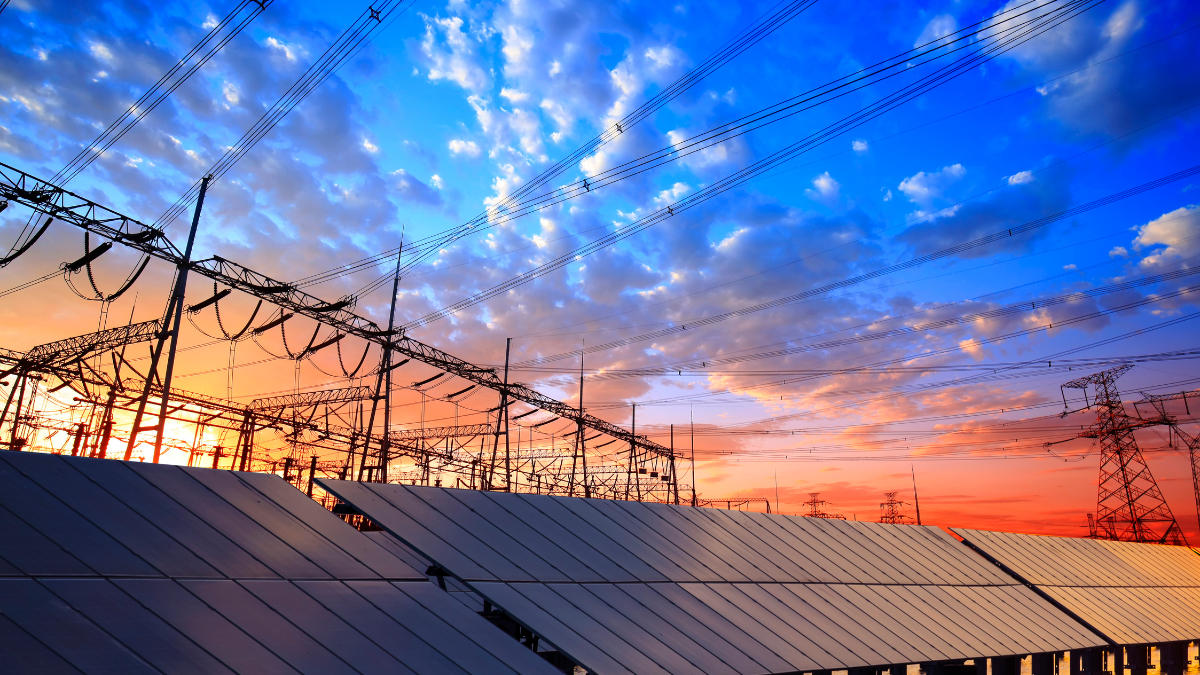
The huge amount of electricity it generates,over 200,000 GWh,has given it the opportunity to export electricity to other countries. Over 75% of Egypt's electricity supply is generated from natural gas.
Solar power and wind energy projects on the historic Red Sea also generate significant electricity for the nation.
3. Algeria
Algeria is another leading producer of electricity on the continent. It generates over 85,500 GWh of electricity.
As the geographically largest country on the continent, it utilizes its vast natural resources to generate over 95% of its electricity supply from natural gas.
Although Algeria easily meets domestic electricity demands, experts have revealed that the country needs to invest more in high-voltage transmission to meet the industrial demands of its growing economy.
4. Morocco
Morocco is another country leading electricity generation in Africa. The North African nation generates over 41,000 GWh of electricity.
Although Morocco generates a large amount of electricity, it still has to import power from Spain to meet peak demand.
The country has a goal of generating over 50% of its electricity from renewables by 2030. Morocco has a wide range of electricity sources, which includes coal, solar, wind, and natural gas.
5. Nigeria
As the country with the highest population in Africa, this "Giant of Africa" has not been a giant in electricity production, and the country has been plagued with severe electricity shortages for decades.
Despite producing over 40,000 GWh, its large population makes this output relatively low in comparison with the quantity of electricity needed to cater to its domestic and industrial demands.
Nigeria's main sources of electricity supply are hydropower and natural gas. To meet domestic and industrial demands, Nigerians are heavily reliant on fossil-fuel-powered generators and privately owned solar panels.
The North African Advantage
North Africa dominates Africa’s electricity production rankings, with five countries from the region featuring among the continent’s top ten producers.
Egypt and Algeria rank among Africa’s three biggest electricity producers, while Morocco and Libya continue to outperform many larger sub-Saharan economies.
Libya alone generated 35,746 gigawatt hours (GWh) of electricity, placing it sixth on the continent despite years of political instability.
Tunisia also made the top ten, giving North Africa half of all the spots in the ranking and reinforcing the region’s position as Africa’s most electrically advanced bloc.
The dominance reflects decades of investment in grid infrastructure, natural gas-powered generation, and expanding renewable energy capacity, particularly in Egypt and Morocco.
Victor Awogbemila