Top Companies in Nigeria: Powering the Nation’s Economy
Nigeria, often called the “Giant of Africa,” is home to some of the continent’s most influential and successful companies. With a population exceeding 200 million people and a rapidly growing economy, the country has become a hub for innovation, manufacturing, telecommunications, banking, oil and gas, and consumer goods. These companies not only contribute significantly to […]
 Black News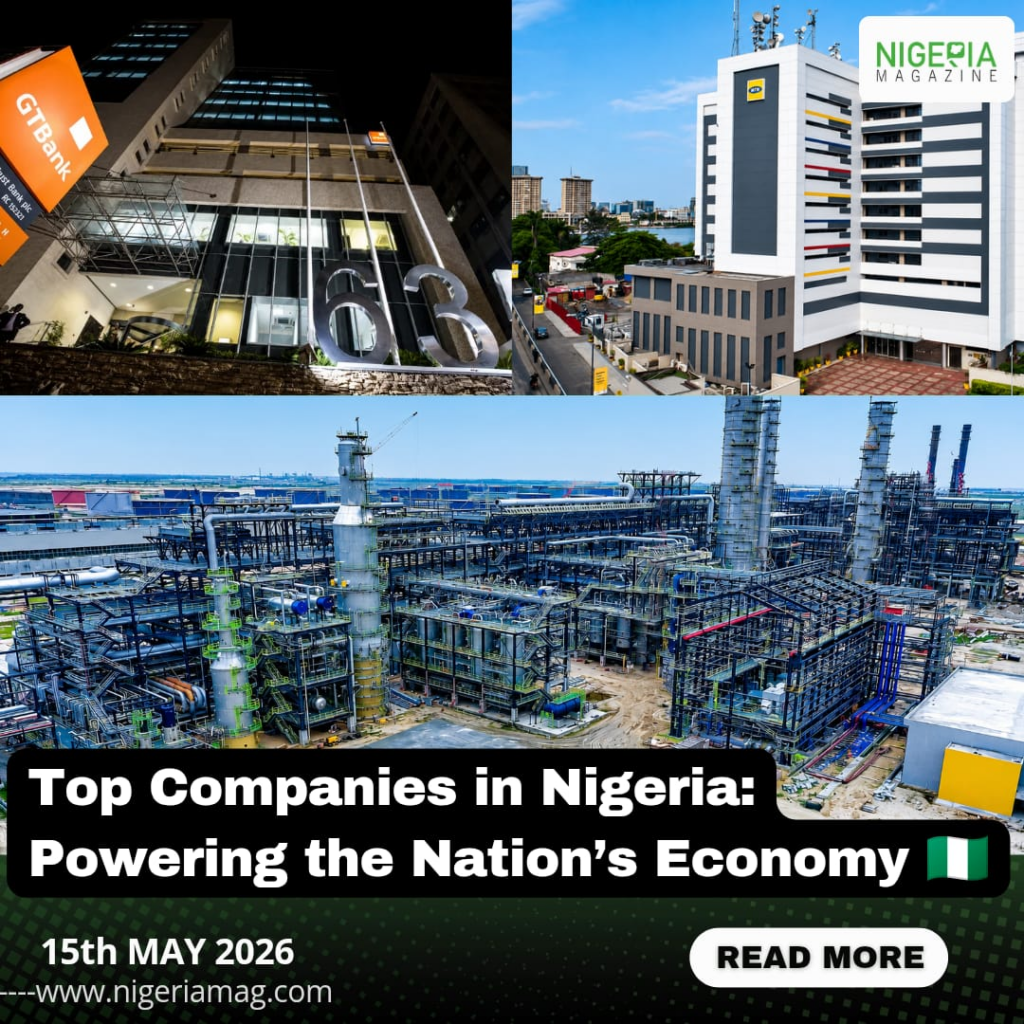
Nigeria, often called the “Giant of Africa,” is home to some of the continent’s most influential and successful companies. With a population exceeding 200 million people and a rapidly growing economy, the country has become a hub for innovation, manufacturing, telecommunications, banking, oil and gas, and consumer goods. These companies not only contribute significantly to Nigeria’s Gross Domestic Product (GDP) but also create jobs, drive investments, and shape the nation’s economic future.
Here is a closer look at some of the top companies in Nigeria and their impact on the country.
Dangote Group
When discussing top companies in Nigeria, the Dangote Group is impossible to ignore. Founded by Nigerian billionaire Aliko Dangote, the company has grown into one of Africa’s largest conglomerates.
Dangote Group has interests in cement, sugar, salt, food processing, and oil refining. Its subsidiary, Dangote Cement, dominates the cement market across Africa, making it one of the continent’s most valuable manufacturing brands. The launch of the Dangote Refinery also marks a major step toward reducing Nigeria’s dependence on imported fuel products.
The company’s influence on industrialisation and economic growth places it at the top of Nigeria’s corporate ladder.
Dangote Group itself is private and doesn’t publish a consolidated market cap. What’s publicly traded are its subsidiaries on the Nigerian Exchange (NGX).
“Dangote Group market cap”, they usually mean Dangote Cement at ₦13.89T, since that’s the only major listed entity with current data. The full group valuation depends on the refinery IPO going through.
Current market cap of listed Dangote companies
Dangote Cement Plc – DANGCEM
₦13.89T / $8.9B USD
Largest cement producer in Africa, 3rd most valuable company on the NGX
Dangote Sugar Refinery Plc
₦898.87B / $570M USD
NASCON Allied Industries Plc
₦172.21B / 110M USD
Combined market cap of listed subsidiaries: ~₦15T or $9.6B USD
The unlisted part – Dangote Refinery
The 650,000 bpd refinery is the biggest asset in the group and is still private.
Aliko Dangote said the group is targeting a $200B+ market cap after the refinery IPO
The planned IPO in 2026 could lift NGX total market cap above ₦100T
Dangote’s personal net worth is $35.4B mostly from the refinery and cement.
MTN Nigeria
Telecommunications has become a backbone of modern life, and MTN Nigeria remains one of the biggest players in the industry. As one of the country’s leading telecom providers, MTN serves millions of subscribers across urban and rural communities.
The company has revolutionized communication through mobile services, internet connectivity, and fintech innovations such as mobile money. Beyond business, MTN contributes to social development through education, healthcare, and youth empowerment programs.
Its extensive coverage and technological investments continue to shape Nigeria’s digital future.
MTN Nigeria is the 2nd most valuable company on the Nigerian Exchange (NGX). It makes up about 16% of the NGX total market cap.
MTN Nigeria Communications PLC (MTNN) market cap is ₦17.19 trillion / $11.0B USD
Share price: ₦835
Shares outstanding: 20.99B
Revenue: ₦5.64T
Earnings: ₦1.33T
Globacom
Popularly known as Glo, Globacom is another telecommunications giant that has transformed Nigeria’s connectivity landscape. Founded by Nigerian entrepreneur Mike Adenuga, the company is celebrated for affordable data services and wide network coverage.
Globacom played a major role in reducing communication costs in Nigeria, making mobile access more affordable for millions of citizens. Its investments in broadband and digital services continue to support economic and social development.
Globacom doesn’t have a public market cap because it’s a private company and isn’t listed on any stock exchange.
What is known:
Globacom Limited is owned by Mike Adenuga and operates as Glo in Nigeria, Ghana, and Benin.
It’s not listed on the NGX, so there’s no share price or market cap published.
Industry analysts have historically put Glo’s valuation in the $3B – $8B USD range.
Glo is Nigeria’s 2nd largest mobile operator by subscribers.
Glo’s revenue and EBITDA aren’t public, so any valuation is speculative.
Guaranty Trust Holding Company (GTCO)
Nigeria’s banking sector is among the strongest in Africa, and GTCO stands out for innovation, customer service, and digital banking solutions.
Known for its efficiency and strong financial performance, the institution has expanded operations beyond Nigeria into several African countries and international markets. GTCO’s digital transformation strategy has positioned it as a favorite among young professionals and entrepreneurs.
GTCO is listed on both the Nigerian Exchange (NGX: GTCO) and London Stock Exchange. It’s one of the largest financial holding companies in Nigeria and ranks among the top 10 most valuable stocks on the NGX.
Guaranty Trust Holding Company (GTCO) market cap is ₦5.59 trillion /$4.07B USD
Share price: ₦147.50
Shares outstanding: 36.55B 3952
Revenue: ₦1.73T
Earnings: ₦814.47B
P/E ratio: 6.8x
Net profit margin: 47.19%
Zenith Bank
Zenith Bank has built a reputation for excellence in financial services and corporate banking. Consistently ranked among Nigeria’s top-performing banks, the institution has maintained strong profitability and investor confidence.
Its commitment to innovation, strong governance, and customer satisfaction has enabled it to remain competitive in a rapidly evolving financial environment.
Zenith Bank is listed on the Nigerian Exchange (NGSE: ZENITHBANK) and London Stock Exchange (LSE: ZENB). It’s consistently ranked among Nigeria’s top most valuable banks by market cap.
Zenith Bank Plc market cap is ₦5.42 trillion / $4.02B USD
Share price: ₦132.20
Shares outstanding: 41.07B
Revenue: ₦2.37T
Earnings: ₦1.04T
P/E ratio: 5.3x
Net profit margin: 44.02%
Dividend yield: 7.4%
The stock is up 170.5% over the past year, outperforming both the NG Banks index and the broader market.
Access Holdings
Formerly known mainly through Access Bank, Access Holdings has emerged as one of Africa’s leading financial institutions. Through mergers, acquisitions, and strategic expansion, the company has broadened its reach across Africa and beyond.
Its focus on digital banking, financial inclusion, and sustainable growth has helped millions of Nigerians access modern financial services.
Access Holdings is listed on the Nigerian Exchange (NGX: ACCESSCORP). It’s the holding company for Access Bank and ranks among the top 10 most valuable banks in Nigeria.
Access Holdings Plc (ACCESSCORP) market cap is ₦1.25 trillion / ∼$870M USD
Share price: ₦23.60
Shares outstanding: 52.95B
Revenue: ₦2.78T
Earnings: ₦745.87B
P/E ratio: 1.7x
P/B ratio: 0.3x
Net profit margin: 26.79%
Nigerian National Petroleum Company Limited (NNPC)
Oil and gas remain crucial to Nigeria’s economy, and NNPC Limited plays a central role in the nation’s energy sector. As the state-owned oil company, it oversees petroleum exploration, refining, and partnerships with international energy firms.
NNPC contributes significantly to government revenue and remains central to Nigeria’s ambition to achieve energy security and industrial growth.
Nigerian National Petroleum Company Limited (NNPC) doesn’t have a public market cap because it’s not listed on any stock exchange.
NNPC Limited is a state-owned company under the Petroleum Industry Act 2021.
It was incorporated as NNPC Limited in July 2022 and operates as a commercial entity, but 100% of the shares are held by the Nigerian government.
Since it doesn’t trade publicly, there’s no share price or market capitalization figure like you see for Dangote Cement or MTN Nigeria. b8cb
Public Knowledge: Profit: NNPC reported ₦276B profit for March 2026.
Status: Listed as “Acquired/Merged” on PitchBook, with 10 financing rounds and 25 investments.
Valuation: PitchBook holds valuation data, but it’s behind a paywall and not public.
Old data: Pre-2022, NNPC reported $2.6B sales in 2005, but that’s outdated and not a market cap.
Plans for listing: The government has talked about an IPO for NNPC to raise capital and improve transparency. As of May 2026, no IPO date has been set.
Nestlé Nigeria
In the consumer goods sector, Nestlé Nigeria is a household name. Known for producing popular food and beverage brands, the company has established itself as a trusted player in the Nigerian market. Brands include Maggi, Milo, Nescafé, Cerelac, and Golden Morn.
Its investments in local sourcing, nutrition, and sustainable development have strengthened its relationship with Nigerian consumers while boosting agricultural value chains.
Nestlé Nigeria is listed on the Nigerian Exchange (NGX: NESTLE). It’s one of the largest consumer goods stocks on the NGX and ranks in the top 15 by market cap.
Nestlé Nigeria Plc market cap is ₦2.48 trillion / ∼$1.6B USD
Share price: ₦3,125
Shares outstanding: 792.66M
Revenue: ₦1.24T
Earnings: ₦113.79B
P/E ratio: 21.8x
Net profit margin: 9.18%
The stock is up 212.5% over the past year after recovering from FX losses in 2024.
Nigerian Breweries
Nigeria’s beverage market is one of the largest in Africa, and Nigerian Breweries has maintained a dominant position for decades. The company produces several popular beverage brands enjoyed nationwide. Brands include Star, Gulder, Heineken, Maltina, and Fayrouz.
Apart from its commercial success, Nigerian Breweries contributes to employment opportunities and local manufacturing growth, making it an important corporate player in Nigeria.
Nigerian Breweries is listed on the Nigerian Exchange (NGX: NB). Heineken N.V holds ∼72.9% of the company. It’s the largest brewer in Nigeria and one of the top 20 companies on the NGX by market cap.
Nigerian Breweries Plc market cap is ₦2.65 trillion / ∼$1.7B USD
Share price: ₦94
Shares outstanding: 30.98B
Revenue: ₦1.50T
Earnings: ₦110.49B
P/E ratio: 24x
Net profit margin: 7.38%
BUA Group
BUA Group has become one of Nigeria’s fastest-growing conglomerates with investments in cement production, sugar refining, and infrastructure development. Founded by Abdul Samad Rabiu, the company has significantly increased competition in the manufacturing sector.
Its commitment to industrial expansion and economic diversification positions it as a major contributor to Nigeria’s long-term growth.
BUA Group itself doesn’t have a public market cap because it’s a private conglomerate.
What’s publicly traded are its 2 main subsidiaries on the Nigerian Exchange (NGX):
BUA Foods Plc – BUAFOODS
Market cap: ₦17.41T / ∼$11.1B USD
Share price: ₦629.70
Status: Most valuable listed company on the NGX as of late 2025
Business: Food processing – flour, sugar, pasta, rice, edible oils. In Dec 2025, BUA Foods alone overtook Dangote Cement and MTN Nigeria to become NGX’s most valuable company.
BUA Cement Plc – BUACEMENT
Market cap: ₦14.56T / ∼$9.3B USD
Share price: ₦326.70
Business: Cement manufacturing and distribution
Combined listed value
~₦31.97T / $20.4B USD.
BUA Group also owns BUA Refinery, BUA Ports, BUA Estates, and other unlisted businesses.
Abdul Samad Rabiu, the founder, uses the combined value of his listed holdings to rank among Africa’s richest people.
The Role of Top Companies in Nigeria’s Economy
Nigeria’s top companies do more than generate profits—they shape the nation’s future. From creating millions of jobs to attracting foreign investment and driving technological advancement, these corporations influence nearly every aspect of economic life.
Telecommunications firms are accelerating digital transformation, banks are deepening financial inclusion, manufacturing companies are boosting local production, and energy firms are supporting national development.
As Nigeria continues to grow, the success of these companies will remain essential in building a more competitive and prosperous economy.
The top companies in Nigeria reflect the country’s economic diversity, resilience, and entrepreneurial spirit. Whether in telecoms, banking, manufacturing, oil and gas, or consumer goods, these organisations continue to play a vital role in positioning Nigeria as a leading economic force in Africa.