U.S. House moves to block nearly $1 billion in annual aid to Nigeria over Christian killings
The U.S. House of Representatives has approved an amendment that could halt nearly $1 billion in annual U.S. assistance to Nigeria, citing the country's failure to protect Christians and other religious minorities from years of violence and terrorism.
 Black News

The U.S. House of Representatives has approved an amendment that could halt nearly $1 billion in annual U.S. assistance to Nigeria, citing the country's failure to protect Christians and other religious minorities from years of violence and terrorism.
- The U.S. House approved an amendment to potentially halt nearly $1 billion in annual aid to Nigeria.
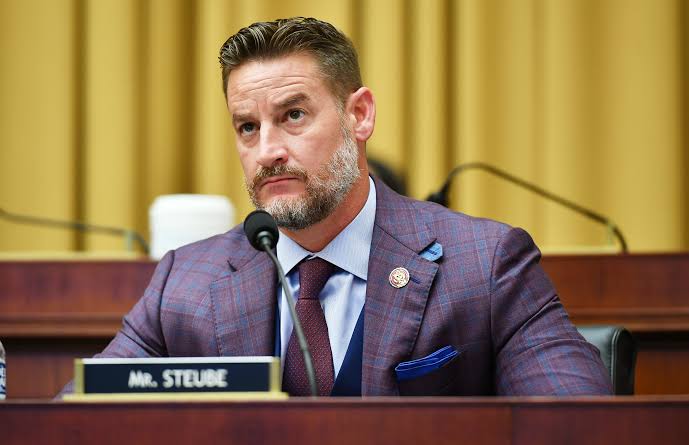
- The amendment, introduced by Rep. Greg Steube, was attached to the 2027 State Department appropriations bill and passed by a narrow House vote.
- If signed into law, U.S. taxpayer funding to Nigeria would be halted due to ongoing violence against religious minorities, particularly Christians.
- Nigeria is one of the largest recipients of U.S. aid in Africa, with funding focused on health, humanitarian, and economic development programs.
The amendment, introduced by Representative Greg Steube, Republican of Florida, was adopted by voice vote and added to the fiscal year 2027 State Department appropriations bill, which the House later passed by a 217-209 vote.
If ultimately enacted into law, the measure would prohibit U.S. taxpayer funds from flowing to Nigeria, marking one of the strongest congressional actions in recent years linking American foreign assistance to religious freedom concerns in Africa's most populous nation.
DON'T MISS THIS: Trump administration puts Nigeria’s 2027 election under close watch as US weighs tougher ties
According to UN News, Islamist extremist groups have kidnapped, killed and displaced more than 3.5 million Christians in Nigeria amid years of insecurity, particularly in the country's northern and central regions.
"Nigeria's government failed to protect Christians and other religious minorities from years of violence and terrorism carried out with impunity," Steube said after the amendment's adoption.
He added that American taxpayers should not fund governments that fail to protect vulnerable religious communities while the United States faces mounting fiscal pressures.
Nigeria among Africa's largest U.S. aid recipients
Nigeria has consistently ranked among the largest recipients of U.S. foreign assistance in sub-Saharan Africa, receiving nearly $1 billion annually in recent years through programs supporting healthcare, humanitarian relief, economic development and security cooperation.
Official U.S. data show aid to Nigeria grew from about $227 million in 2005 to a record $1.163 billion in 2022 before easing to $1.035 billion in 2023 and approximately $929 million in 2024. Provisional figures for 2025 show more than $614 million had been obligated at the time of reporting.
Much of the funding has been directed toward HIV/AIDS treatment under the President's Emergency Plan for AIDS Relief (PEPFAR), malaria prevention, maternal and child health initiatives, emergency humanitarian assistance and governance programs.
The latest amendment follows earlier efforts in Congress to condition U.S. support for Nigeria on improvements in religious freedom.
DON'T MISS THIS: Trump is sending a U.S. top diplomat to three key West African nations as geopolitical competition heats up
A previous proposal sought to withhold 50% of appropriated funds until Secretary of State Marco Rubio certified that Nigeria had taken effective steps to prevent religious violence and hold perpetrators accountable.
The House vote comes as Nigeria continues to battle multiple security threats, including insurgencies by Boko Haram and the Islamic State West Africa Province (ISWAP) in the northeast, as well as widespread banditry and communal violence across parts of the country's Middle Belt.
The amendment still faces several legislative hurdles before becoming law.
It must survive negotiations with the Senate, be included in a final appropriations package approved by both chambers of Congress, and be signed by President Donald Trump before any funding restrictions can take effect.
For now, the House vote signals growing bipartisan scrutiny in Washington over Nigeria's security challenges and raises fresh uncertainty over the future of one of Africa's largest U.S. aid relationships.