When Schools Become Hunting Grounds: The Cost of Insecurity on Education
Every admission season, Nigerians are told that education is the key to a better future. Parents make sacrifices, teachers show up despite difficult conditions, and children walk through school gates carrying dreams larger than their years. But what happens when the school gate is no longer a symbol of hope, but a point of fear? […]
 Black News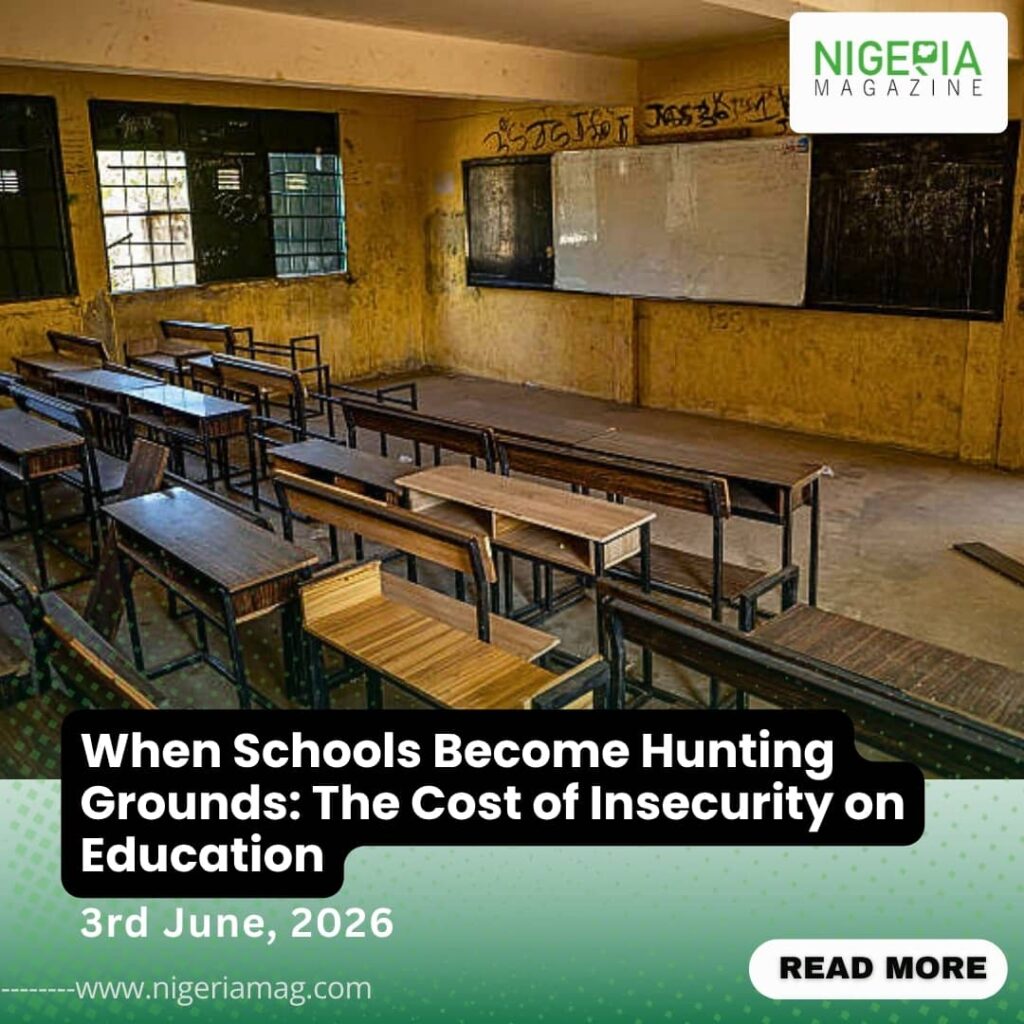
Every admission season, Nigerians are told that education is the key to a better future. Parents make sacrifices, teachers show up despite difficult conditions, and children walk through school gates carrying dreams larger than their years.
But what happens when the school gate is no longer a symbol of hope, but a point of fear?
The recent abduction of pupils and teachers in Oriire Local Government Area near Ogbomoso is more than another security incident. It is an attack on education itself. While public attention often focuses on the number of victims, the deeper tragedy is the message such attacks send to every child, parent, and teacher across the country: nowhere is truly safe.
Education cannot thrive where fear is the dominant lesson.
A child who fears being kidnapped on the way to school cannot fully concentrate on mathematics, science, or literature. A teacher who worries about returning home safely cannot give their best in the classroom. Parents who believe school attendance could endanger their children may decide that keeping them at home is the safer option.
The consequences extend far beyond the immediate victims. Every successful attack on a school weakens public confidence in education and pushes communities further away from learning. In a country already struggling with millions of out-of-school children, this is a dangerous setback.
The irony is painful. Governments at all levels continue to invest in classrooms, recruit teachers, and promote enrolment campaigns. Yet these efforts risk being undermined if basic safety is not guaranteed. A classroom without security is like a hospital without medicine; its purpose cannot be fully achieved.
This is why school security must no longer be treated as a secondary issue. It should be considered an essential component of educational planning. When budgets are prepared, discussions should not focus only on buildings, textbooks, and examinations. They should also address fencing, surveillance, emergency response systems, safe transportation routes, and stronger collaboration between schools and security agencies.
The Ogbomoso tragedy also raises important questions about rural education. Many schools located in remote communities face unique security challenges. Their isolation often makes them attractive targets for criminal groups. If Nigeria is serious about providing equitable access to education, rural schools cannot be left to fend for themselves.
Teachers deserve special attention in this conversation. They are often celebrated as nation-builders, yet many work under conditions that expose them to significant risks. When teachers become victims of insecurity, recruitment and retention become even more difficult, particularly in underserved communities. A nation cannot strengthen its education system while the people entrusted with educating its children feel abandoned.
The true measure of an education system is not only how many children are enrolled or how many pass examinations. It is also whether learners can pursue knowledge in safety and dignity.
As the nation awaits the safe return of the abducted pupils and teachers, one lesson is already clear: educational reform cannot succeed without educational security. Until every child can attend school without fear and every teacher can teach without looking over their shoulder, the promise of education will remain incomplete.
A school should be a place where futures are built; not a place where they are stolen.