Why Tanzania is betting on a mega coastal project to challenge East Africa’s investment giants
Tanzania is making a fresh push to position itself as one of Africa’s leading investment destinations, with President Samia Suluhu Hassan inviting Russian and other international companies to participate in the development of the Bagamoyo Special Economic Zone (BSEZ), widely regarded as one of East Africa’s most ambitious industrialization plans.
 Black News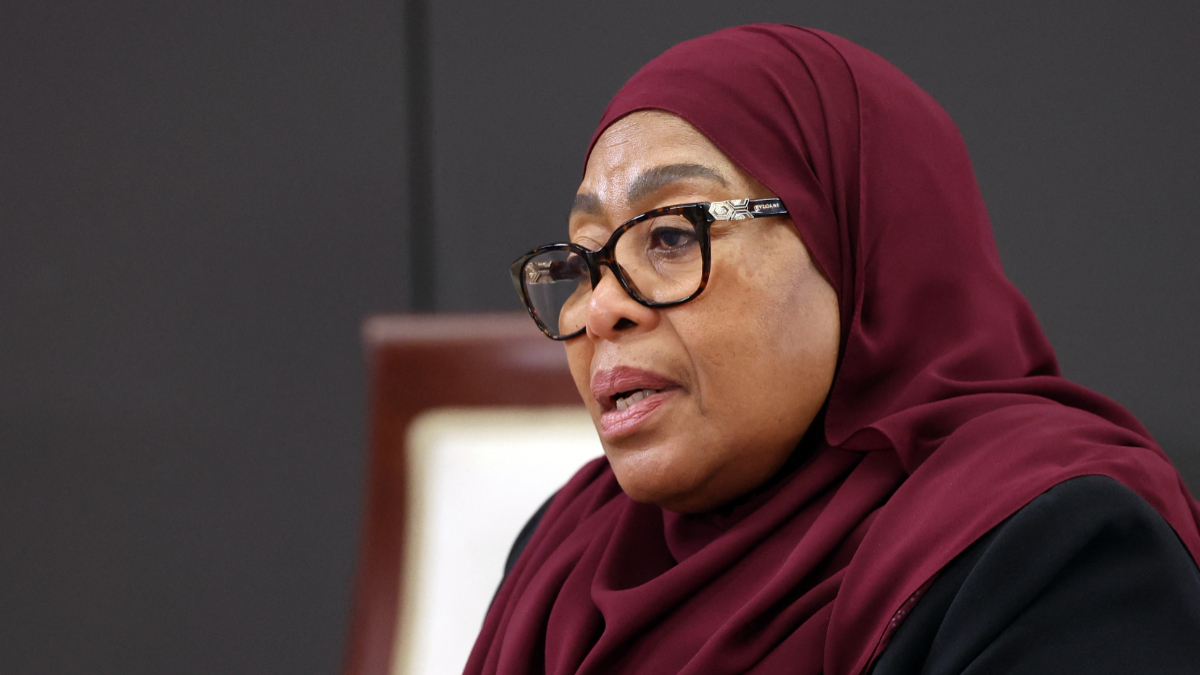
![Tanzania's President Samia Suluhu Hassan attends the St. Petersburg International Economic Forum (SPIEF) in Saint Petersburg on June 5, 2026. [Photo by Alexander KAZAKOV / POOL / AFP via Getty Images]](https://ocdn.eu/pulscms/MDA_/fd061ccfd513ab67d00ef4e37944b819.jpg)
Tanzania is making a fresh push to position itself as one of Africa’s leading investment destinations, with President Samia Suluhu Hassan inviting Russian and other international companies to participate in the development of the Bagamoyo Special Economic Zone (BSEZ), widely regarded as one of East Africa’s most ambitious industrialization plans.
- Tanzania has intensified efforts to attract foreign investment by opening its flagship Bagamoyo Special Economic Zone to Russian and international firms.
- President Samia Suluhu Hassan used a major global economic forum in Russia to position Tanzania as a competitive destination for manufacturing, logistics, and infrastructure investment.
- The Bagamoyo project is expected to strengthen Tanzania's role in regional trade and industrialization while creating jobs and boosting exports.
- The move comes as African economies compete for global capital amid shifting supply chains and growing demand for alternative production hubs.
Speaking at the St. Petersburg International Economic Forum on Friday, June 5, President Hassan used the global platform to showcase Tanzania’s economic ambitions and court foreign investors at a time when African countries are increasingly competing for manufacturing, logistics, and infrastructure capital.
At the centre of her pitch was the Bagamoyo Special Economic Zone, a flagship project the government hopes will transform Tanzania into a major manufacturing and trade hub serving both regional and international markets.
“The Bagamoyo Special Economic Zone is our number one project, and we welcome international companies to partner with us in its development,” Hassan told participants at the forum, which was attended by Russian President Vladimir Putin, business executives, and policymakers from around the world.
The renewed investment drive comes as global companies seek alternative production and supply chain locations beyond traditional manufacturing centres in Asia. Several African economies, including Kenya, Ethiopia, Egypt, and Morocco, have intensified efforts to attract industrial investments, creating a growing race to become the continent’s next manufacturing powerhouse.
For Tanzania, Bagamoyo represents more than a single infrastructure project. Located along the Indian Ocean coastline, the zone is expected to support manufacturing, logistics, export processing, and regional trade while leveraging Tanzania’s strategic access to East and Central African markets.
The government believes the project could help unlock new jobs, boost exports, and strengthen Tanzania’s position within the East African Community, one of Africa’s fastest-growing economic blocs.
Hassan also sought to reassure potential investors about Tanzania’s business environment, saying her administration remains committed to infrastructure upgrades, regulatory reforms, and policies to improve investor confidence.
![Tanzania's President Samia Suluhu Hassan, Russian President Vladimir Putin, Uzbek President Shavkat Mirziyoyev and Vice President of the People's Republic of China Han Zheng arrive for the plenary session of the St. Petersburg International Economic Forum (SPIEF) in Saint Petersburg on June 5, 2026. [Photo by OLGA MALTSEVA / AFP via Getty Images]](https://ocdn.eu/pulscms/MDA_/638911e8df7b94677caa13091b57c53f.jpg)
Those assurances are likely to be closely scrutinised by investors, many of whom consider policy consistency, transport infrastructure, and ease of doing business among the most important factors when evaluating emerging markets.
Tanzania enters the competition with several advantages. The country possesses significant reserves of natural gas and minerals, a large agricultural sector, a population exceeding 60 million people, and relative political stability compared with some regional peers.
The St. Petersburg forum provided Tanzania with an opportunity to deepen its engagement with Russia while reinforcing its broader strategy to diversify investment partnerships.
Beyond traditional Western investors, the country has increasingly sought capital from China, the Gulf states, and other emerging economies to support its long-term development agenda.
Yet attracting investor interest is only the first step. Analysts say the ultimate test will be whether Tanzania can convert ambitious plans into concrete investments and deliver the infrastructure, policy stability, and business conditions needed to compete with Africa’s established industrial hubs.
As countries across the continent race to capture manufacturing and logistics opportunities, the success or failure of Bagamoyo could help determine Tanzania’s place in Africa’s next phase of economic transformation.