Zimbabwe becomes latest UN Security Council member
Zimbabwe has secured a coveted seat on the United Nations Security Council (UNSC), marking a major diplomatic milestone for the southern African nation as it seeks to expand its influence in global peace and security.
 Black News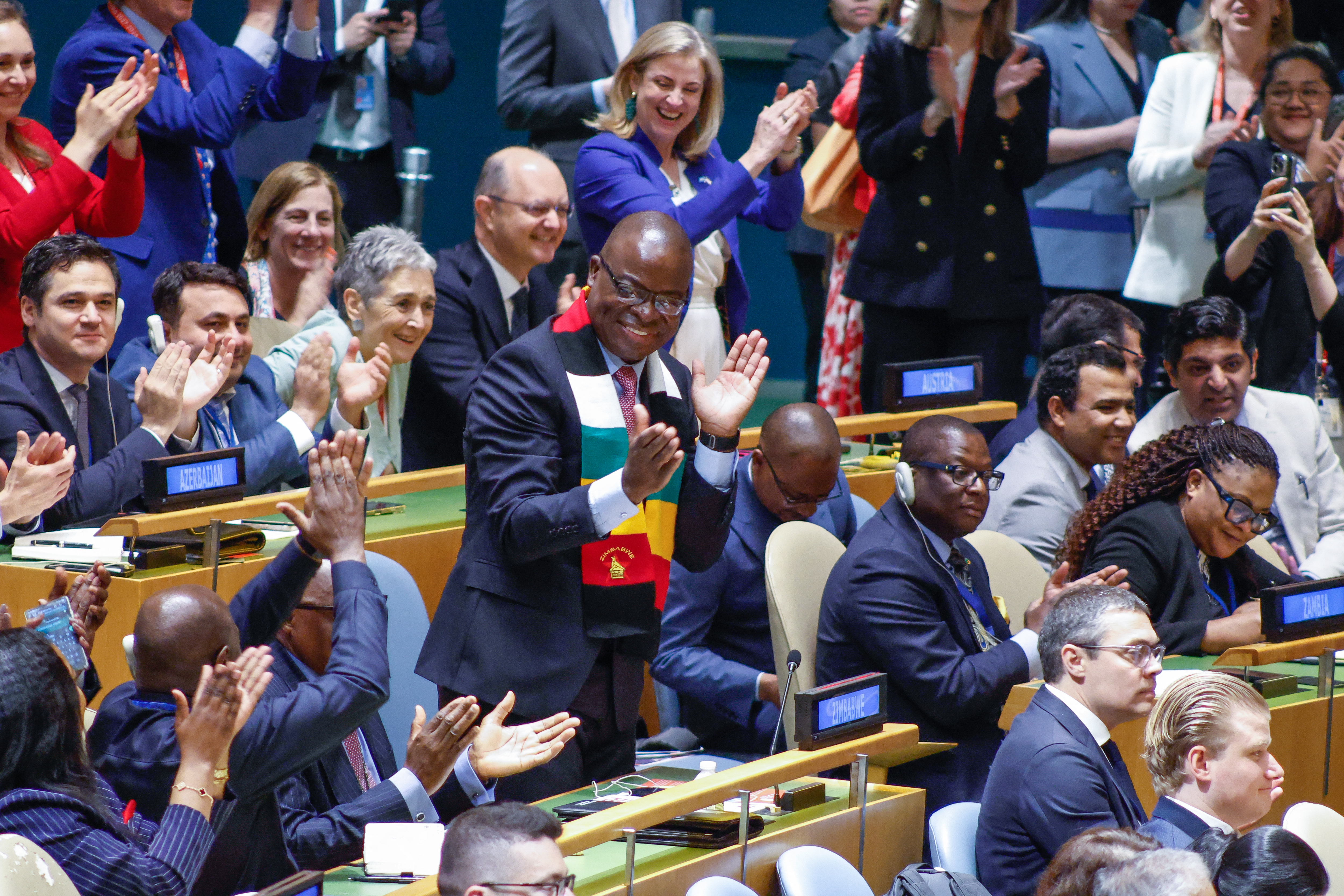
![Zimbabwe's Foreign Minister Amon Murwira (standing), Zimbabwe Ambassador to the UN Taonga Mushayavanhu (3L), and members of the delegation, gesture in celebration after Zimbabwe won a seat as a non-permanent member of the UN Security Council, during a UN General Assembly meeting at the UN headquarters in New York City on June 3, 2026. [Photo by Kena Betancur / AFP via Getty Images]](https://ocdn.eu/pulscms/MDA_/6311ee529799006e3279a8839086927c.jpg)
Zimbabwe has secured a coveted seat on the United Nations Security Council (UNSC), marking a major diplomatic milestone for the southern African nation as it seeks to expand its influence in global peace and security.
- Zimbabwe has been elected to the UN Security Council after securing 182 votes from 191 member states.
- The victory marks the country's third term on the council and reflects growing international support for its diplomatic re-engagement efforts.
- President Emmerson Mnangagwa said Zimbabwe would use the platform to promote peace, multilateral cooperation, and Africa's interests.
- Analysts say the seat gives both Zimbabwe and Africa a stronger voice in debates on security, climate risks, peacebuilding, and global governance reform.
The country won 182 of 191 votes cast during elections at the UN General Assembly on Wednesday, earning a non-permanent seat on the council for the 2027–2028 term.
The result represents one of the strongest endorsements received by any candidate in this year's vote and signals broad international support for Zimbabwe's recent diplomatic outreach efforts.
The victory gives Zimbabwe its third stint on the 15-member council, following previous terms in 1983–84 and 1991–92. It will join Austria, Portugal, and Trinidad and Tobago as newly elected members beginning January 2027.
President Emmerson Mnangagwa described the outcome as a vote of confidence in Zimbabwe's commitment to peace, multilateral cooperation, and a more balanced international system.
“As we assume our seat on the global stage, Zimbabwe is poised to contribute meaningfully to international peace, security, and multilateral cooperation while amplifying Africa's voice,” he said.
![Annalena Baerbock, President of the UN General Assembly and former Foreign Minister of Germany, is seen on monitors (r) at the United Nations General Assembly before the election of non-permanent members of the UN Security Council (UNSC). [Photo by Michael Kappeler/picture alliance via Getty Images]](https://ocdn.eu/pulscms/MDA_/1be0cffd58b87c4ad7454afeb1fbcd13.jpg)
The Security Council is the UN's most influential body, responsible for addressing conflicts, authorising peacekeeping missions, and imposing sanctions. Zimbabwe's election, therefore, places it at the centre of major global discussions on war, security, and diplomacy.
The win comes as Harare has stepped up its involvement in regional peace initiatives, climate diplomacy, and international peacekeeping efforts.
Analysts say the seat offers Zimbabwe and Africa a stronger platform to push for issues including conflict prevention, counter-terrorism, climate-related security risks, and long-standing calls for reforms to global institutions.
Zimbabwe will replace Somalia on the council at the end of 2026 and serve until December 2028.