Zimbabwe’s tobacco boom hits record highs as Chinese-backed smallholders reshape Africa’s biggest producer
Zimbabwe’s tobacco industry is on track for another record year, with production expected to exceed 360,000 tonnes, driven largely by smallholder farmers operating under contract agreements with Chinese companies.
 Black News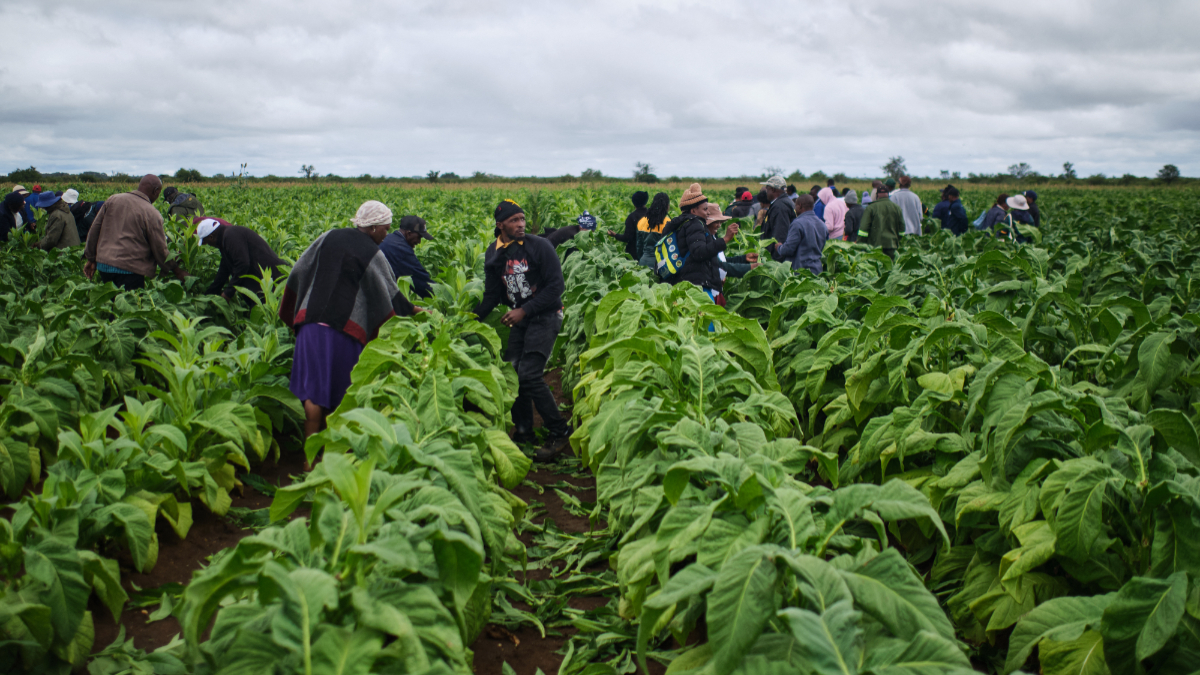
![Farmers work in the field during a tobacco field-day training at a farm outside Bulawayo on March 12, 2026. [Photo by Zinyange Auntony / AFP via Getty Images]](https://ocdn.eu/pulscms/MDA_/d67f9863049c82046ee8636c66b90404.jpg)
Zimbabwe’s tobacco industry is on track for another record year, with production expected to exceed 360,000 tonnes, driven largely by smallholder farmers operating under contract agreements with Chinese companies.
- Zimbabwe’s tobacco sector is heading for another record year, with output expected to exceed 360,000 tonnes.
- The boom is being driven by smallholder farmers operating under contract agreements with Chinese-backed companies.
- While the model has boosted exports and revived the industry, growers warn of mounting debt and shrinking profits.
- Officials are now seeking to diversify export markets and expand domestic cigarette production amid intensifying global scrutiny of tobacco farming.
The southern African nation, Africa’s largest producer of tobacco leaf, harvested 355,000 tonnes in 2025, up from 306,000 tonnes in 2024, according to the Tobacco Industry and Marketing Board (TIMB). Officials say planted acreage has increased by 15%, positioning the sector for further growth.
The rebound marks a sharp recovery from the industry’s collapse in 2008, when production fell to just 48,000 tonnes following Zimbabwe’s controversial land reform programme, which disrupted large-scale commercial farming.
Today, more than 127,000 farmers are registered tobacco growers in Zimbabwe, with around 95% operating as contracted smallholders. Those farmers account for roughly 85% of total output, according to TIMB data.
Much of the expansion has been fuelled by foreign contractors, particularly Chinese firms, which provide farmers with seeds, fertiliser and other inputs on credit in exchange for guaranteed access to harvested crops.
Farmers raise debt concerns
![A farmer arrives during a tobacco field-day training at a farm outside Bulawayo on March 12, 2026. [Photo by Zinyange Auntony / AFP via Getty Images]](https://ocdn.eu/pulscms/MDA_/96b1bfc9a679407b39d9e53e256035a4.jpg)
In Matabeleland, a region historically associated with maize rather than tobacco, farmers are increasingly turning to tobacco as a cash crop to earn higher incomes.
“Maize was not profitable as it was prone to disease,” farmer Read Sola, 64, told AFP, adding that he hoped for a “rewarding harvest”.
Sola is contracted to Atlas Agri, a United Arab Emirates-based agricultural company that is among Zimbabwe’s largest tobacco contractors.
However, while the contract farming model has boosted production, some growers and industry groups say it has also created long-term financial dependency.
Farmer Davis Tembo said he joined a Chinese-backed contract scheme in 2015 after struggling to finance production independently. Although contractors deliver farming inputs on time, poor weather and fluctuating yields can leave farmers unable to repay debts.
“Farmers are compelled to return to the field and stick with contract farming, hoping that they will at some point break even,” Tembo said.
Industry representatives argue that many farmers remain locked out of traditional bank financing because they lack formal land titles. Contractors typically offer financing rates below commercial lending rates, which industry insiders say exceed 15%.
George Seremwe, president of the Zimbabwe Tobacco Growers Association, said numerous deductions and fees continue to erode farmers’ profits.
“You have insurance charges, floor charges, and various other levies that make production unsustainable,” Seremwe said, accusing some contractors of keeping prices artificially low.
“Farmers are rendered mere labourers of the contracting companies and a number of them become trapped in debt,” he added.
China's dominance sparks scrutiny
![China's President Xi Jinping. [AI/Getty Images]](https://ocdn.eu/pulscms/MDA_/a0b06230e598a7114c0cf385c4d7da96.png)
Chinese companies now dominate Zimbabwe’s tobacco trade, accounting for around 60% of export value, according to TIMB chief executive Emmanuel Matsvaire. He said Chinese buyers represent between 30% and 40% of total export volumes.
Matsvaire said Chinese firms are expected to purchase roughly 10,000 tonnes less tobacco this season as Zimbabwe seeks to diversify its export markets and reduce dependence on China.
The country currently exports tobacco to about 60 markets worldwide. Matsvaire also confirmed that Philip Morris International plans to resume operations in Zimbabwe after decades away from the market.
Zimbabwe’s government is also pushing to expand domestic processing and manufacturing. Finance Minister Mthuli Ncube said in March that the country aims to triple local tobacco value addition, including cigarette production, which currently accounts for only 11% of output.
The expansion has drawn criticism from public health advocates and environmental groups. The World Health Organisation (WHO) says tobacco cultivation in Africa has increased even as global tobacco farming declines, raising concerns about food security and deforestation.