A Houston Mother Humiliated Her Son For Hurting A Cat. Then She Made The Internet Part Of The Abuse.
This looks less like discipline and more like an insecure parent turning punishment into theater, possibly reenacting the kind of more private humiliation once done to her .
 Black News
The video is hard to watch.
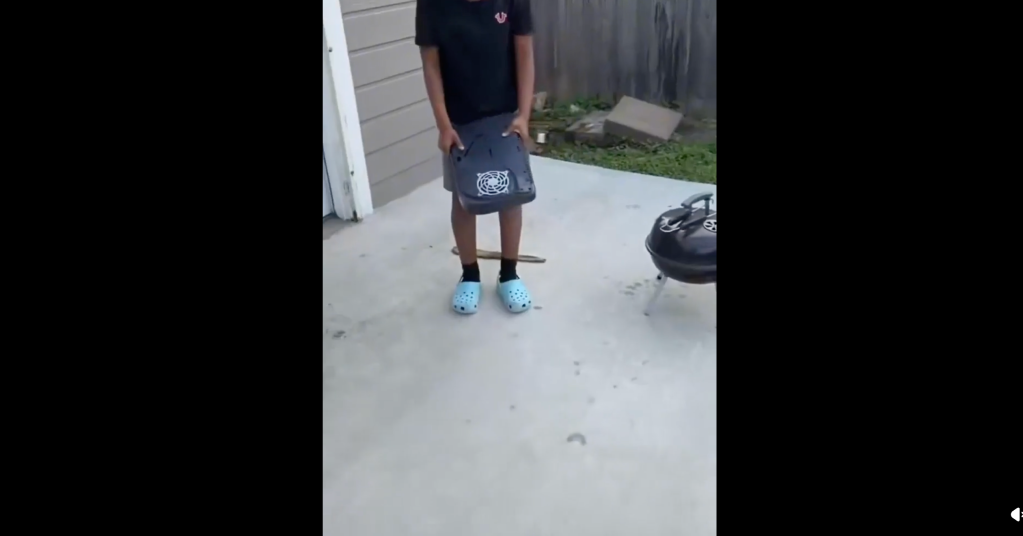
In a backyard in Houston, a boy stands there while his mother, Sivell “SunShine” Burton, orders him to slam his PlayStation 5 into the ground as punishment for allegedly hurting her four-month-old tabby kitten, Garfield.
Her voice is sharp, angry, relentless, and cussing at the child. It is not corrective, nor is it the voice of a parent trying to teach regulation, empathy, or the value of a life to a child accused of hurting an animal. She commands him to pick up the gaming console and slam it the way she says he picked up her cat and repeatedly slammed him. Then she starts directing the scene like her punishment has a script.
“Do it!”
He obeys.
Then she moves something out of the way so he can slam it harder, telling him, “Let me move this for you, baby.” She says this with a tenderness so twisted it makes the whole scene feel even more disturbing, “so you know it’s real,” she says.
That line is chilling because it reveals the point of the punishment. This is not about the cat anymore. This is about making the child feel powerless and making him perform humiliation on command. It is ritualistic. It has the cadence of an adult who needs a witness, and who needs the child’s humiliation to be seen, validated, and applauded so that she and the audience can bond over his suffering and their own.
That is the unspoken contract in so much viral punishment content. The adult offers up the child’s pain, and the audience brings its own. People clap because the scene feels familiar. They recognize the terror, obedience, forced remorse, brokenness, and the adult rage dressed up as love. But instead of grieving what was done to them, they defend it. Instead of calling it abuse, they call it discipline, and they applaud. Instead of protecting the child in front of them, they protect the wounded adult inside themselves.
“Pick it up and do it again!”
Again and again, she orders him to lift the console and smash it. She tells him to stand on his tiptoes and slam it as hard as he can.
The boy is crying through it. Not learning. Not reflecting. Crying. And while he cries, she keeps going. The cussing keeps coming. The orders keep coming. Pick it up. Do it again. Pick it up. Do it again.
Over and over and over.
And that is where the scene gets even uglier. Because this looks less like discipline and more like an insecure parent turning punishment into theater, possibly reenacting the kind of more private humiliation once done to her and now calling it parenting because the child gave her a reason to unleash it. The boy is not being taught empathy. He is being made into an offering for public consumption by millions of strangers.
His tears, obedience, and broken console become proof. Proof that she is in control. Proof that she is a “good mother.” Proof that the internet should clap for her. But children are not supposed to be the altar where dysregulated and wounded adults go to prove they still have power.
This is not a teaching moment. It is a forced reenactment. It is a child being made to perform destruction while an adult narrates his shame. His mother tells him he has anger issues while her own anger is on display. She says, “We gonna fix them today,” but nothing about what we are watching is fixing the anger. This is an adult taking a child’s alleged cruelty and answering it with her own.
And then, after the console is broken, after the crying, commands, all the cussing and humiliation, she tells him to pick it all up and throw it in the trash.
That is the scene people across social media are applauding. Not a child being guided toward empathy. Not an injured animal being centered. Not a parent helping a child understand the difference between a living body and an object. A child crying while an adult screams, cusses, records, and forces him to destroy something he loves.