A Life-Changing Phone Call: How One Woman Confronted Breast Cancer In Albany, Georgia
In smaller Southern cities like Albany, patients often face long waits for screenings, referrals, and specialist appointments. The post A Life-Changing Phone Call: How One Woman Confronted Breast Cancer In Albany, Georgia appeared first on MadameNoire.
 Black News
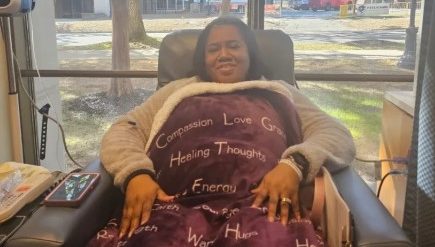
Kelly Washington was standing at the counter at work when the phone call came.
Just moments earlier, she had been juggling the usual demands of the day and the quiet rhythm of ordinary life. But as the doctor spoke on the other end of the line, everything around her seemed to slow.
Stage 2 breast cancer.
“I was floored,” Washington recalled. “I basically had to lean against the counter. I was somewhat prepared, but you never really expect to hear the word cancer about yourself.”
But amid the fear and uncertainty, Washington found herself surrounded by a network of support. Her husband began driving her to medical appointments and treatments. Her eldest son stepped in to help care for her youngest child. Friends and extended family members checked in constantly.
“Everybody has rallied around me,” she said. “The love and support have been incredible.”
Washington knows that in many ways she has been fortunate. After noticing a lump last summer, she was able to schedule a mammogram quickly and follow up with specialists without long delays. But she also knows that many people in her community do not have that same experience.
“Not everyone can get in that fast,” she said. “Some people have to wait months to see a doctor, then get referred to a surgeon or a breast center. By that time, the cancer could be growing.”
RELATED CONTENT: Why Black Women Face Higher Breast Cancer Mortality Risks & What’s Being Done
Washington’s story reflects a broader reality in Albany, Georgia, where access to timely cancer care can depend heavily on insurance coverage, hospital capacity, and the limited healthcare infrastructure serving much of Southwest Georgia. In smaller Southern cities like Albany, patients often face long waits for screenings, referrals, and specialist appointments.
To understand why Washington’s diagnosis raises deeper concerns about access to care, it helps to understand Albany’s recent history with healthcare crises.
The city of roughly 70,000 residents in Southwest Georgia became an early national symbol of how vulnerable Black communities can be during public health emergencies. In the spring of 2020, Albany emerged as one of the first major COVID-19 hotspots in the United States. Within weeks, hospitals were overwhelmed, and the city’s predominantly Black population experienced some of the highest infection and death rates in the country.
Much of the outbreak was traced to funerals and church gatherings that occurred before the scale of the virus was fully understood. As the virus spread rapidly through families and neighborhoods, Phoebe Putney Memorial Hospital, the region’s largest medical center, struggled to keep up with the surge of critically ill patients.
The crisis exposed long-standing weaknesses in the region’s healthcare infrastructure. Many residents lacked consistent access to primary care, preventative screenings, and insurance coverage. For patients living in rural areas surrounding Albany, traveling long distances to see specialists was already routine when seeking care.
Public health experts say those structural challenges did not disappear when the pandemic subsided.
“Albany’s healthcare system has been under strain for years,” said Monder Ponder, an assistant professor of Health Communication and Culture at Howard University who studies healthcare access in Southwest Georgia. “The pandemic simply made those disparities visible to the rest of the country.”
The post A Life-Changing Phone Call: How One Woman Confronted Breast Cancer In Albany, Georgia appeared first on MadameNoire.



:focal(0x0:2400x1445)/static.texastribune.org/media/files/db22dd3f1d63ab22cfeb1a6121dc3153/0618 Fort Worth NWS DR TT 01.JPG?#)