African Security and a Financial Architecture in Retreat
African security is conventionally analysed in terms of armed groups, peacekeeping, and counterterrorism. However, what increasingly shapes the political order African states can build is none of these. It is the rate at which states borrow money, in an architecture designed by their creditors. At a time when the multilateral peace and security architecture is losing support and credibility, the international financial architecture is emerging as a limiting factor for African sovereign autonomy. In the same way that the United Nations and its Security Council were designed when only four African states had achieved independence, the international financial architecture established […] The post African Security and a Financial Architecture in Retreat appeared first on African Arguments.
 Black News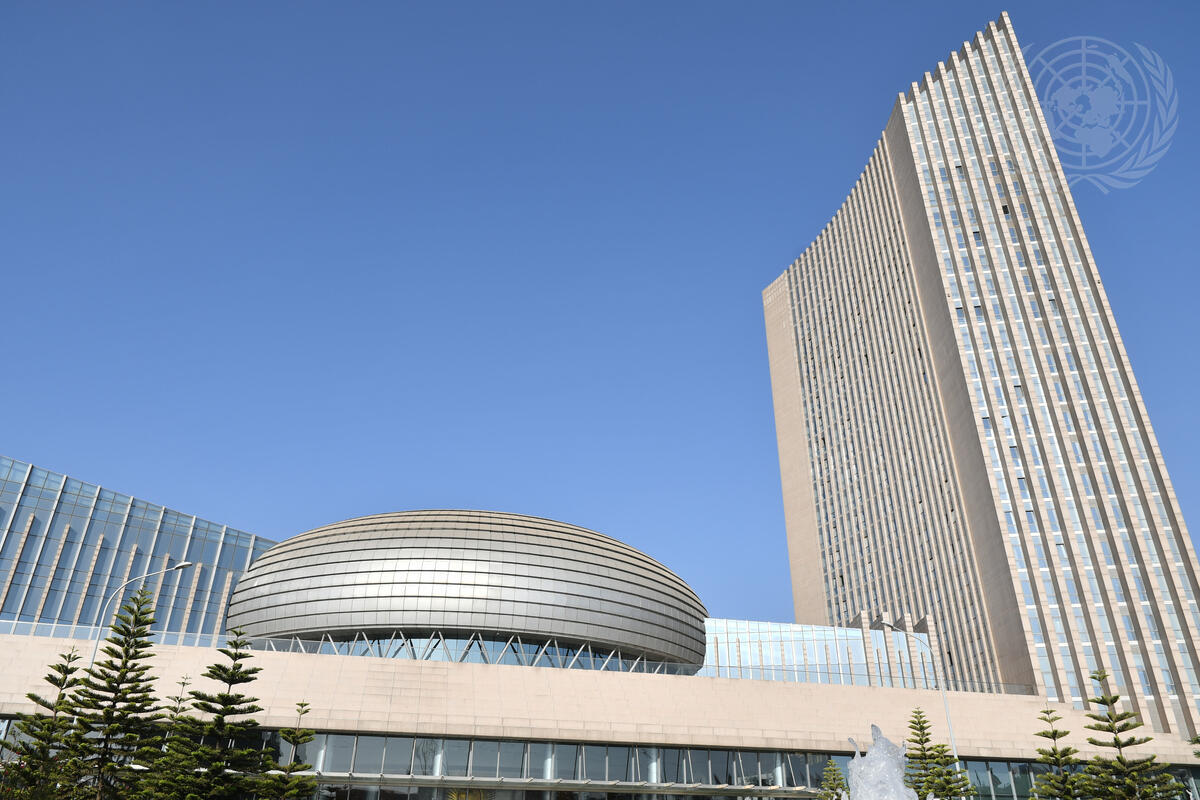

African security is conventionally analysed in terms of armed groups, peacekeeping, and counterterrorism. However, what increasingly shapes the political order African states can build is none of these. It is the rate at which states borrow money, in an architecture designed by their creditors.
At a time when the multilateral peace and security architecture is losing support and credibility, the international financial architecture is emerging as a limiting factor for African sovereign autonomy. In the same way that the United Nations and its Security Council were designed when only four African states had achieved independence, the international financial architecture established in 1945 at Bretton Woods continues to be dominated by the United States and its allies. Africa remains excluded from holding a permanent Security Council seat and the global financial system continues to be run by the US, UK, France, and the wider G7–OECD coalition.
African Union headquarters. As the global financial architecture established at Bretton Woods in 1944 is in retreat, what will be Africa’s place in a new economic order?
The borrowing premium paid by African states compared to the interest paid by states in Europe and North America is the price of that design: rules set by some, applied to all. Premium and conditionality consume the revenue the state needs to fund itself. The state recedes. Instability follows. The same coalition votes the peacekeeping mandates and deploys the counter-terrorism missions sent to manage it. Two architectures treated as separate, when they are one. Relationships between African states and Western donors are transitioning from paternalistic to transactional to functionally coercive.
The price African states pay to borrow is not purely based on objective risk assessments. African governments borrowing on international markets in recent years have paid interest rates around 10% or higher. Rich-country borrowers pay 1 to 3%. The difference isn’t explained by how the economies are actually performing. It is built into how risk is measured — and risk is measured by institutions that wealthy lending countries dominate. Their formulas put African economies into categories that penalise them for shocks they did not cause and cannot control, and treat their ordinary ups and downs as if they were deeper problems.
The architecture is not a single actor making coordinated decisions. It is a stack of institutions, rules, and risk formulas — the IMF and World Bank, the OECD–DAC, the FATF, and the three credit rating agencies (S&P, Moody’s, and Fitch) that produce 90 to 95 percent of African sovereign ratings — each tilted toward the states that built them. The parts do not have to coordinate to pull in the same direction.
Two long-term pressures have been acting in the financial space. Development aid from OECD–DAC countries is falling in real terms after being recategorised to cover things like refugee responses inside donor borders. Climate change — the deeper injustice — leaves a continent responsible for a small fraction of cumulative emissions bearing disproportionate consequences, while climate finance, including the Loss and Damage Fund created at COP27 for countries bearing damages they did not cause, remains chronically underfunded.
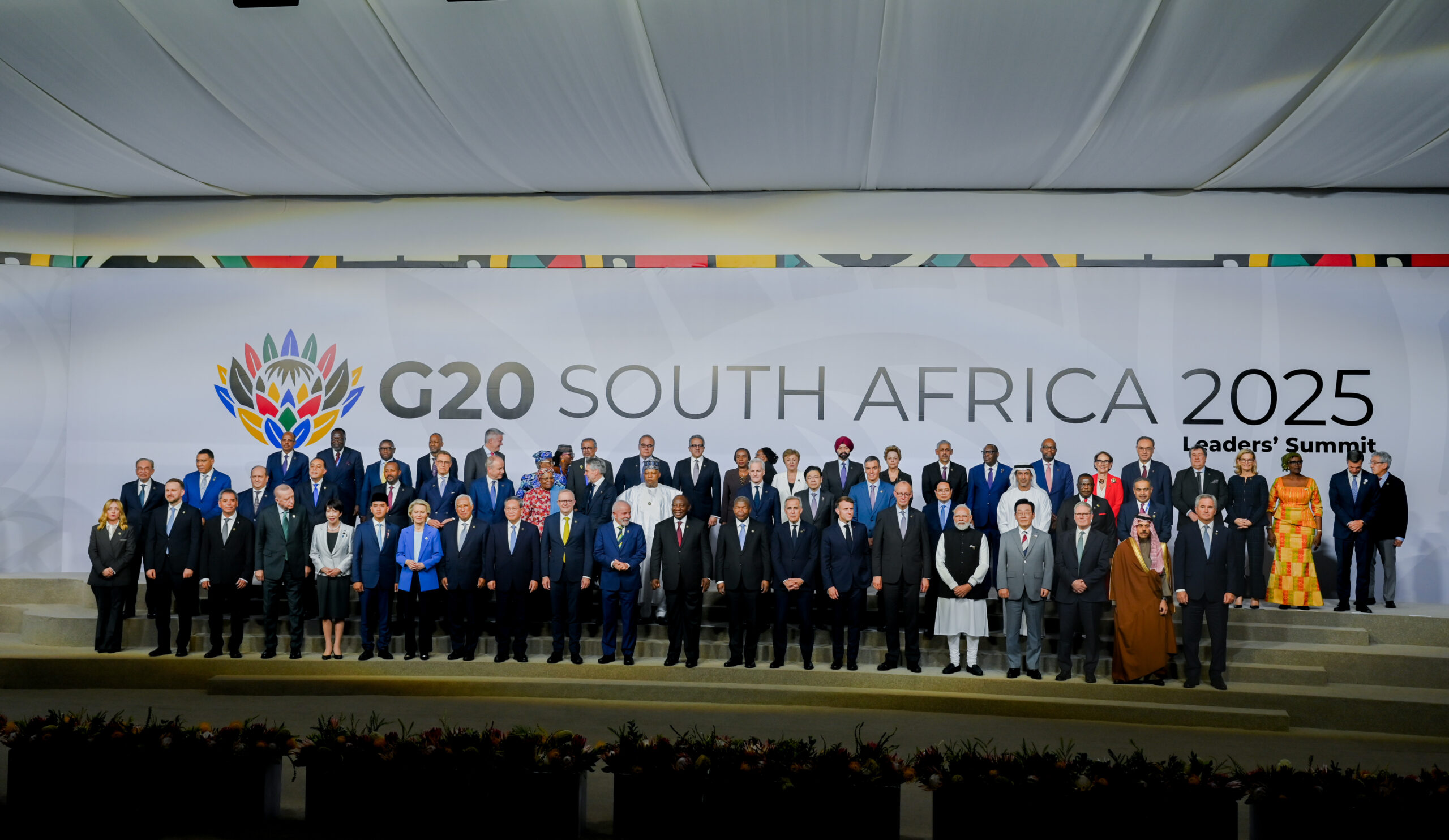
2025 saw the first G20 hosted in Africa. However, both the G7 and the G20 exclude the majority of the world’s nations from fora making decisions for the global economy.
Then the cascade. Lockdowns following Covid-19 collapsed revenue bases, but advanced economies accessed near-zero financing African states could not. They could borrow in their own currencies behind central banks that could backstop them — and even the multilateral relief tilted the same way: the IMF’s 2021 issue of Special Drawing Rights, worth about $650 billion, was allocated by quota, so the rich world took the bulk and Africa received only around $33 billion. The US Federal Reserve’s 2022 rate hikes, as economies overheated on the exit from the pandemic, drove up refinancing costs, locked several states out of capital markets, and triggered the sovereign debt distress now subject to the G20 Common Framework. That Framework has moved slowly — while the same creditor states mobilised hundreds of billions of euros within months for Greece, Ireland, Portugal, and Spain during the Eurozone debt crisis, when their own banks were exposed.
On top of this came external food shocks, distinct in origin: the 2020–21 East Africa locust crisis; Russia’s invasion of Ukraine disrupting the wheat exports much of Africa relies on; the disruption of Red Sea shipping by the Ansar Allah (Houthis) in Yemen opposing the war in Gaza, driving up the cost of the potash and nitrogen fertilisers African agriculture depends on; and the 2022–23 Horn of Africa drought, the worst in forty years. None of them caused the others. They compounded because they landed on the same already-constrained fiscal position.
For pastoralist communities whose livelihoods depend on seasonal mobility, the combination of drought, the fertiliser price shock, and underfunded relief produced precisely the dispossession armed groups exploit for recruitment. The line from a fertiliser shock in one capital to a recruitment surge for militia groups in another is the operational chain produced when state finances depend this heavily on external decisions and state presence is already thinnest.
A government spending 30 to 50% of revenue on debt service cannot fund what political order relies on — courts, local administration, public services, security in peripheral regions — nor the productive investments that build the social contract and reduce vulnerability to the next shock. The pattern is not Africa’s alone; some 3.4 billion people now live in countries spending more on debt interest than on health or education. But Africa carries it most sharply: in 2023, for the first time, African governments collectively spent more on interest than on education, and thirty of forty-nine countries with data spent more on interest than on public health. Around 2022, aid flowing into the poorest countries fell below the debt service flowing out, and the gap has held. The capitals in North America and Europe cutting the aid are, in large part, the capitals where that debt is held, priced, and adjudicated. This architecture is not the author of every failure of African choice. But it is narrowing the choices that remain.
That has not produced passivity. At the moment the international financial architecture is squeezing fiscal space and its principal architect, the United States, is stepping back, African political voice is rising. Pan-African discourse around Agenda 2063 and the African Continental Free Trade Area is strengthening, and the reparations agenda is gaining traction it has not held in decades. The old architecture is in retreat at exactly the moment the continent is in voice.
Voice on its own changes nothing; it has been raised before. What is different this time is that the costs are reaching the African elites who used to have ways around them — visa restrictions narrowing, dollar shortages, capital markets closing, public services in retreat. The wave of coups across the Sahel, now reaching coastal states, is the political expression of that pressure. As the exits narrow, the coalition for changing the system widens.
The structural alternative is not yet built. What it would require is partnerships at scale with the Gulf, Turkey, India, and Brazil, and with the Nordics, Canada, several EU states, and Australia — Western middle powers navigating an order no longer underwritten by those who built it. A continent with ten substantive partners is harder to coerce, harder to price, and harder to ignore than one with three.
These middle powers, both resource-rich and alliance-exposed, are not the prize in a great-power contest. They share with African states an interest in a world the great powers do not wholly govern — visible in the BRICS+ enlargement that drew in Saudi Arabia, the UAE, Egypt, and Ethiopia, and in Canadian Prime Minister Mark Carney’s Davos warning to middle powers: ‘if we’re not at the table, we’re on the menu.’ Together they could prevent the great-power contest from being the only frame for global politics, and broaden who shapes the architecture’s redesign.
The challenge is not only institutional. It is reaching the map of the world. The African Union’s ‘Correct The Map’ campaign, with Togo leading the diplomatic push at the UN, calls for replacing the Mercator projection with one that shows Africa at its true size — not a gesture but an intervention in what the world is taught to see, the same colonial frame that prices African economies higher than the data justifies.
The displacement is institutional, not only fiscal. Where the Paris Club of wealthy creditor countries once coordinated their approach to sovereign lending, bondholder committees and non-Paris Club lenders increasingly share the table; the BRICS bank, the AIIB and a widening field of Gulf and regional vehicles take their place alongside Bretton Woods; treaty frameworks give way to English-law bond contracts adjudicated in commercial courts. The postwar institutions are not being reformed. They are being displaced.
What makes reform conceivable now is not persuasion but fragmentation: the architecture is already being displaced by competing institutions and lenders. No single African state — and no middle power — can renegotiate it alone. The reform proposals already on the table, from Mia Mottley’s Bridgetown Initiative on debt and climate finance to the AU’s calls for restructuring the global financial system, are coalition-scale by design. The architecture’s successor is being shaped now: at the G20, where South Africa’s 2025 presidency placed financial architecture reform on the agenda; at the AU, where calls for restructuring have become institutional priority; in the bond markets, where the African Credit Rating Agency moves toward operation. Coordinated across all three, African states and middle powers could carry the political weight to shape this successor.
Africa holds more leverage in that redesign than current arrangements reflect, possessing tools such as the cobalt and lithium the energy transition runs on, a demographic weight that will make Africa the source of more than a third of the world’s young people by 2050, the carbon stored in the Congo Basin, a market of 1.4 billion people, and the coordination space of BRICS+ and the AfCFTA. The current global financial architecture was built for conditions that no longer hold. It is already changing. The question is whether those who bear its costs help shape what replaces it — or wait until what replaces it shapes them.
The post African Security and a Financial Architecture in Retreat appeared first on African Arguments.