Barrow lays foundation stone for neglected Choya–Dankunku Road
For thousands of residents, the moment marks the end of an era defined by struggle, isolation, and high transport costs. For decades, motorcyclists charged up to D250 per trip because vehicles rarely braved the road. Farmers trudged through mud and dust to reach their fields. Traders struggled to move goods, and ambulances fought to reach and transport patients on time. Residents say the new road will link CRR South and CRR North, ease trade, and allow ambulances from Dankunku to reach the main highway at Choya without delay. Farmers will finally access their farms and markets without suffering. The ceremony drew Gambians from the Diaspora who flew in to witness what many thought would never happen. For them, the event was about more than infrastructure — it was about dignity, progress, and belonging. Gambia’s kora maestro Jaliba Kuyateh, a native of Dankunku, performed at the ceremony and praised Barrow for delivering what past governments failed to provide. He recalled walking barefoot to school along the same treacherous road. “This road was a nightmare for us,” said Gellajo Jallow, Alkalo of Malick Kunda, speaking at a joint meeting of Niamina’s three districts. He noted that even opposition parties had campaigned on the issue, but now, with the foundation stone laid, “that nightmare will become a thing of the past.” Jallow thanked Barrow for progress in health and water, and urged support for batch-messengers’ salaries, tractors for women, and fencing for the youth football field. Momodou Jallow, speaking for the youth, praised the administration’s electrification drive. He said women no longer pound grain manually thanks to milling machines, and pledged “95% of the vote” for Barrow in the next election. Ngai Dampha, speaking for the district chief, assured Barrow of support across Niamina’s three districts. Women’s representative Oumie Ceesay captured the mood: “Barrow is the third president of the republic, and despite several appeals, it is Barrow who will construct the roads. Now almost everything we yearned for we have — electricity, water, and now roads.” She urged young people to increase their support for the government. Sulayman Sawaneh, chairman of Janjangbureh Area Council, contrasted past and present. “In 1968 and 1969, there were only two schools in Niamina. There were no feeder roads, and most of us walked barefoot,” he said. Hon. Samba Jallow, NAM for Niamina Dankunku, noted that residents from the Diaspora returned for the event. He reminded the crowd that the area gave Barrow 93% of votes last election and urged them to raise it to 99% in gratitude. “Today you can enter a house and see electricity, even fridges,” he said. Regional Governor Samba Bah recalled years of appeals that went unanswered for the road. He said delays were partly due to plans to connect wider communities, and urged locals to reject opposition “propaganda” now that electricity and roads are being delivered. NRA Managing Director Sulayman Sumareh Janneh reaffirmed the government’s commitment to closing rural infrastructure gaps in line with Barrow’s vision. President Barrow hailed the First Lady’s work at Bansang Hospital, where millions have been invested in healthcare. He called the foundation stone a “historic milestone” that would end decades of suffering. “Whatever the area lacked in the past 52 years, you will now have,” he pledged. “In less than ten years, we have developed the country and improved so many sectors.” For a community that walked barefoot on dusty paths and waited decades for change, the ceremony marked more than a road — it marked a new chapter.
 Black News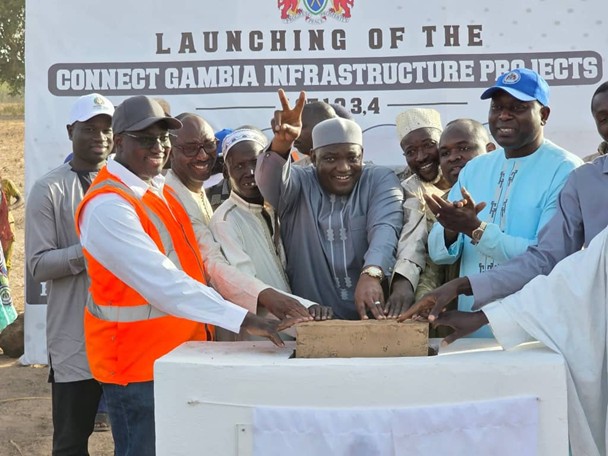
For thousands of residents, the moment marks the end of an era defined by struggle, isolation, and high transport costs. For decades, motorcyclists charged up to D250 per trip because vehicles rarely braved the road. Farmers trudged through mud and dust to reach their fields. Traders struggled to move goods, and ambulances fought to reach and transport patients on time.
Residents say the new road will link CRR South and CRR North, ease trade, and allow ambulances from Dankunku to reach the main highway at Choya without delay. Farmers will finally access their farms and markets without suffering.
The ceremony drew Gambians from the Diaspora who flew in to witness what many thought would never happen. For them, the event was about more than infrastructure — it was about dignity, progress, and belonging.
Gambia’s kora maestro Jaliba Kuyateh, a native of Dankunku, performed at the ceremony and praised Barrow for delivering what past governments failed to provide. He recalled walking barefoot to school along the same treacherous road.
“This road was a nightmare for us,” said Gellajo Jallow, Alkalo of Malick Kunda, speaking at a joint meeting of Niamina’s three districts. He noted that even opposition parties had campaigned on the issue, but now, with the foundation stone laid, “that nightmare will become a thing of the past.” Jallow thanked Barrow for progress in health and water, and urged support for batch-messengers’ salaries, tractors for women, and fencing for the youth football field.
Momodou Jallow, speaking for the youth, praised the administration’s electrification drive. He said women no longer pound grain manually thanks to milling machines, and pledged “95% of the vote” for Barrow in the next election.
Ngai Dampha, speaking for the district chief, assured Barrow of support across Niamina’s three districts. Women’s representative Oumie Ceesay captured the mood: “Barrow is the third president of the republic, and despite several appeals, it is Barrow who will construct the roads. Now almost everything we yearned for we have — electricity, water, and now roads.” She urged young people to increase their support for the government.
Sulayman Sawaneh, chairman of Janjangbureh Area Council, contrasted past and present. “In 1968 and 1969, there were only two schools in Niamina. There were no feeder roads, and most of us walked barefoot,” he said.
Hon. Samba Jallow, NAM for Niamina Dankunku, noted that residents from the Diaspora returned for the event. He reminded the crowd that the area gave Barrow 93% of votes last election and urged them to raise it to 99% in gratitude. “Today you can enter a house and see electricity, even fridges,” he said.
Regional Governor Samba Bah recalled years of appeals that went unanswered for the road. He said delays were partly due to plans to connect wider communities, and urged locals to reject opposition “propaganda” now that electricity and roads are being delivered.
NRA Managing Director Sulayman Sumareh Janneh reaffirmed the government’s commitment to closing rural infrastructure gaps in line with Barrow’s vision.
President Barrow hailed the First Lady’s work at Bansang Hospital, where millions have been invested in healthcare. He called the foundation stone a “historic milestone” that would end decades of suffering.
“Whatever the area lacked in the past 52 years, you will now have,” he pledged. “In less than ten years, we have developed the country and improved so many sectors.”
For a community that walked barefoot on dusty paths and waited decades for change, the ceremony marked more than a road — it marked a new chapter.