Beneath the Smile: Amanda Zhou Finds the Humanity in Joo Dee
In Netflix’s Avatar: The Last Airbender, Amanda Zhou transforms one of the franchise’s most unsettling characters into a heartbreaking study of devotion, conditioning, and the fight to remain yourself. There is something wrong with Joo Dee’s smile. It is too precise. Too persistent. Too perfectly placed upon the face of Ba Sing Se’s relentlessly pleasant […] The post Beneath the Smile: Amanda Zhou Finds the Humanity in Joo Dee appeared first on Perception Magazine.
 Black News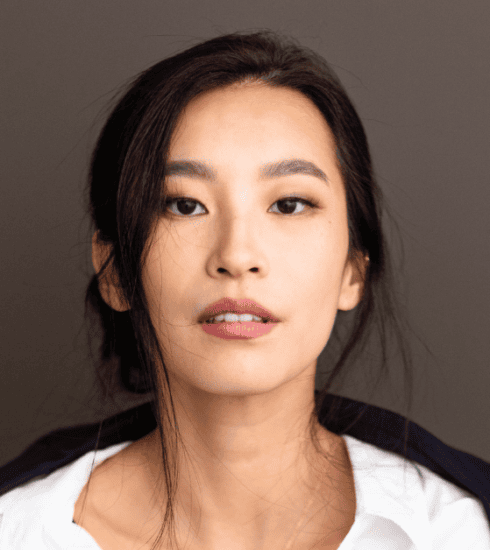
In Netflix’s Avatar: The Last Airbender, Amanda Zhou transforms one of the franchise’s most unsettling characters into a heartbreaking study of devotion, conditioning, and the fight to remain yourself.
There is something wrong with Joo Dee’s smile.
It is too precise. Too persistent. Too perfectly placed upon the face of Ba Sing Se’s relentlessly pleasant guide. She welcomes visitors warmly, speaks with practiced composure, and appears devoted to preserving the tranquility of the Earth Kingdom. Yet the longer we watch her, the more that smile begins to feel less like an expression and more like an instruction.
For Amanda Zhou, the Chinese Canadian actress bringing Joo Dee to life in the second season of Netflix’s Avatar: The Last Airbender, the character’s pleasantness was never simply a disguise. It began as something genuine.
“Since Joo Dee had probably only ever known Ba Sing Se, I imagined that serving the royal family was one of the greatest honors she could achieve,” Zhou explains. “That smile meant everything to her. It represented her pride, her love for her home, and her belief that she was doing something meaningful.”
That understanding changes how we see Joo Dee. She is not merely an unnerving representative of a city built upon secrets. She is someone whose loyalty, goodness, and desire to serve have been turned against her.
“That’s what makes the smile so heartbreaking,” Zhou says. “It wasn’t born out of deception. It began with genuine devotion and was gradually transformed into something she had been conditioned to wear.”
Quiet Work Before Visible Success
Joining one of Netflix’s biggest global franchises marks a significant moment for Zhou, previously known for playing Jenn Yu in Spinning Out, with additional appearances in The Last Frontier and Accused. From the outside, her career appears to be arriving at a pivotal point.
From where she stands, however, this moment feels less like a sudden ascent than the world finally noticing work that has been happening for years.
“It honestly feels more like the public is catching up,” she says. “This moment is incredibly meaningful, but it was not created overnight. It’s the result of years of auditions that didn’t lead anywhere, years of staying curious, and continuing to believe there was still a place for me even when there wasn’t much external evidence.”
That distinction matters. Entertainment loves the language of discovery—the breakout role, the overnight success, the actor who seemingly arrives fully formed. It rarely acknowledges how often careers are constructed in private, through auditions no one sees and disappointments that never become headlines.
“Careers are usually built quietly before they become visible,” Zhou says. “Even then, it’s not a straight line. There is a lot of back and forth before the momentum becomes consistent.”
Avatar may have opened new doors, but Zhou does not speak like someone declaring that she has arrived. She speaks like an actor who has finally received confirmation that the difficult, unseen years were leading somewhere.
“In many ways, I feel like I am at the beginning,” she says. “This experience has given me confidence, not because it tells me I’ve arrived, but because it reinforces that the work I’ve been doing all these years has been leading somewhere.”
Protecting the Self Without Closing the Heart
Remaining creatively open in an industry organized around evaluation requires its own kind of discipline. Every audition asks an actor to offer something vulnerable while accepting that the answer may still be no.
Zhou has learned that protecting herself does not have to mean becoming emotionally unavailable.
“I think I’ve learned to protect my sense of self rather than my openness,” she says. “If you become emotionally closed because you’re trying not to get hurt, you also close yourself off from the vulnerability that acting requires.”
Earlier in her career, rejection felt personal. She could leave an audition replaying the experience and wondering what she had done wrong. Time—and the perspective gained from both booking roles and losing many others—changed how she interpreted those moments.
“Rejection truly doesn’t necessarily mean you weren’t good enough,” she explains. “Often, it simply means you weren’t the right fit for that particular role.”
A fuller life has also made each professional disappointment feel less absolute. Her worth no longer rests on a single room, role, or decision made by someone else.
“It’s not about becoming indifferent,” Zhou says. “It’s about understanding that your worth isn’t determined by one audition. There will always be another opportunity, another project that’s a better fit, and a life outside of this industry that’s just as meaningful.”
That perspective has not made her less sensitive. It has given her the freedom to remain sensitive without being destroyed by every outcome.
The Woman Behind Joo Dee
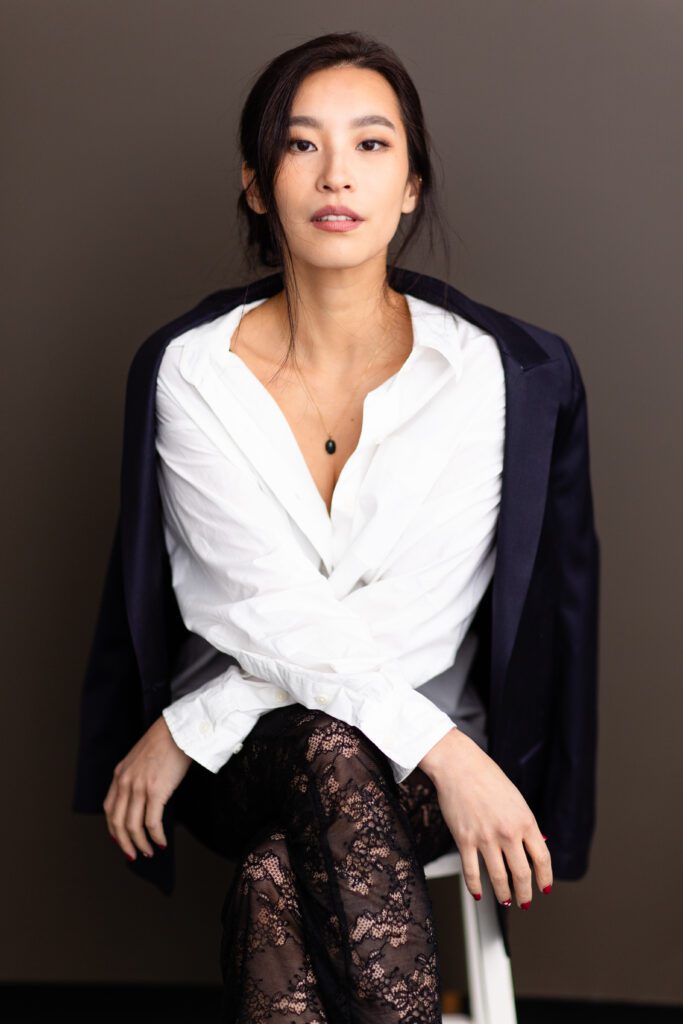
In the animated series, Joo Dee became instantly recognizable through her fixed smile, unnerving politeness, and insistence that all was well inside Ba Sing Se. The live-action adaptation gives Zhou the opportunity to search beneath those characteristics and ask who this woman might have been before obedience consumed her identity.
“What made her unsettling was also what made her tragic,” Zhou says. “The deeper I explored her as a real human being, the more I saw her innocence. She genuinely loved her kingdom and believed she was doing something honorable by serving it.”
Joo Dee’s tragedy is not that she knowingly chooses evil. It is that the qualities she values most—loyalty, dedication, service—make her vulnerable to exploitation.
“She never consciously chose that path. It happened gradually,” Zhou says. “By the time she realized something was wrong, she had already become trapped within the system.”
Zhou found a real-world parallel in abusive relationships, where control rarely announces itself at the beginning. It develops incrementally, distorting a person’s understanding of what is normal until leaving feels nearly impossible.
“It rarely begins with obvious harm,” she says. “It unfolds slowly, making it much harder to see and even harder to leave.”
Her performance depends upon contradictions: pride and fear, warmth and repression, hope and surrender. With Joo Dee’s words controlled by the system surrounding her, Zhou had to place the truth elsewhere—in the smallest changes in expression, posture, breath, and voice.
One moment captures that conflict with devastating clarity. When Aang attempts to free Joo Dee, she gives him away. It could be read as a simple betrayal, but Zhou was playing something more painful.
“For a brief moment, her mask drops,” she explains. “There’s a softness in her expression where she recognizes that Aang and his friends are good people, and that somewhere inside she knows she should leave with them.”
She does not leave.
“Ultimately, she chooses to stay and remain loyal to the only world she believes she has left,” Zhou says. “That hesitation—that tiny moment where hope and conditioning exist side by side—is one of the most truthful moments in Joo Dee’s entire journey.”
Part of Joo Dee is still fighting to hold on to herself. Another part has been punished into exhaustion.
“There comes a point where constant fear and punishment wear you down, and surrender begins to feel like the only way to survive,” Zhou says. “She hadn’t stopped wanting to be herself—she just no longer had the strength to keep fighting in the same way.”
When Fantasy Becomes Familiar
Ba Sing Se is a fantastical city, but the forces acting upon Joo Dee are disturbingly recognizable. What made the character stop feeling like fantasy for Zhou was not simply the external system controlling her. It was the way that system eventually teaches her to control and punish herself.
“What stopped feeling like fantasy for me was realizing that Joo Dee’s experience reflects something very human: shame and the way people can be conditioned to police themselves,” she says.
Most of us will never experience the machinery of Ba Sing Se, but we may recognize the instinct to suppress an uncomfortable truth, retreat into silence, or punish ourselves for disappointing others.
“We become our own harshest critics,” Zhou says. “The moment we feel we’ve failed, disappointed someone, or fallen short of our own values, it’s easy to spiral into self-punishment.”
Joo Dee’s compulsory pleasantness carries another layer for women taught to prioritize harmony, remain accommodating, and avoid creating discomfort.
“As a Chinese Canadian woman, there have been moments where I felt an additional pressure to be gracious, accommodating, and not create discomfort for others,” Zhou says. “Those qualities aren’t inherently negative. They can come from kindness, respect, and consideration, but like anything, they can become limiting if they prevent you from expressing your own truth.”
In Joo Dee, those expectations have reached a horrifying extreme. Politeness is no longer a social instinct; it is the architecture of her imprisonment.
“Her entire identity had been conditioned around maintaining an illusion,” Zhou says. “That made me reflect on the importance of finding your own voice while still treating people with compassion.”
Audience reactions suggest that viewers recognized the humanity she placed beneath that illusion. Fans described Joo Dee’s prison sequence as haunting, frightening, and heartbreaking—not because they were simply watching a brainwashed character, but because they could still see the person fighting to survive underneath.
Representation Without the Burden of Representing Everyone
Being part of Avatar’s predominantly Asian and Indigenous ensemble offered Zhou something beyond visibility: the freedom not to carry an entire community inside a single performance.
“There wasn’t a feeling that any one of us had to represent an entire community,” she says. “We simply got to be actors, each playing complex, flawed, and very different people.”
That cultural ease shifted the conversation back to the work itself—character, relationships, motivation, and story—rather than placing the weight of representation onto one actor’s shoulders.
“I hope audiences continue to see more productions where Asian actors are given the space to be complicated, surprising, funny, vulnerable, and everything in between,” Zhou says.
That desire also describes the future she imagines for herself. Joo Dee may have revealed the darker, more psychologically complex performer within her, but Zhou wants to venture further into uncomfortable territory.
“I’d love to go even darker, messier, and more morally complex,” she says. “Human beings are rarely all good or all bad, and I’m fascinated by characters who live in those uncomfortable gray areas.”
Perhaps a brilliant con artist. A hardened survivor. Someone whose silence communicates more than pages of dialogue. Yet she has no intention of abandoning the wit and playfulness she brought to Jenn Yu.
“I’d love the opportunity to lean into comedy again, but in a way that’s unexpected,” she says. “Characters who are sharp, mischievous, and perhaps a little chaotic rather than simply funny.”
Beyond First Perceptions
At first meeting, people often read Zhou as composed and serious. They are not entirely wrong—she takes the work seriously. What takes longer to discover is how much play, imagination, and occasional ridiculousness exist beneath that composure.
She is also fascinated by the distance between what a person does and why they do it.
“I love asking why someone became who they are instead of stopping at what they did,” she says. “That doesn’t mean I excuse harmful behavior, but I do think understanding someone is different from agreeing with them.”
It is an impulse that feels perfectly aligned with Perception: looking beyond the immediately visible and resisting the temptation to mistake presentation for truth.
Amanda Zhou did not approach Joo Dee as a creepy smile, a familiar fan reference, or a symbol of an oppressive system. She searched for the woman who once believed that smile meant she belonged. She found the devotion that existed before the manipulation, the hope that remained alongside the conditioning, and the identity still fighting to survive beneath a performance of perfection.
“I’m much more interested in the reasons behind a person’s choices than in judging them at first glance,” Zhou says.
Perhaps that is the real power of her portrayal. She does not ask us to fear Joo Dee.
She asks us to see her.
The post Beneath the Smile: Amanda Zhou Finds the Humanity in Joo Dee appeared first on Perception Magazine.