Museveni bets $300m on Uganda’s fuel security project
Uganda consumes about 240 million litres of fuel every month, and much of it depends on supply chains that stretch beyond its borders. A prolonged disruption can therefore quickly become a problem for motorists, businesses and an economy that depends on diesel and petrol to keep goods and people moving. The government is now preparing […] The post Museveni bets $300m on Uganda’s fuel security project appeared first on The Observer Media Ltd.
 Black News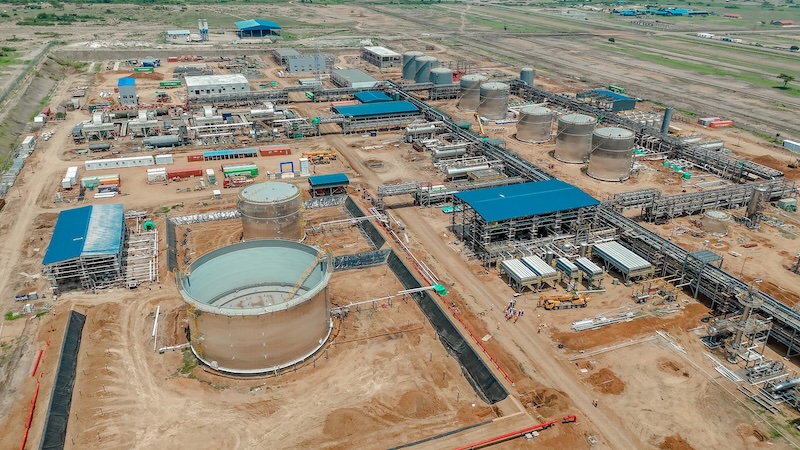

Uganda consumes about 240 million litres of fuel every month, and much of it depends on supply chains that stretch beyond its borders.
A prolonged disruption can therefore quickly become a problem for motorists, businesses and an economy that depends on diesel and petrol to keep goods and people moving. The government is now preparing a much larger buffer.
President Yoweri Museveni is expected to preside over the groundbreaking on Thursday, September 17, for the Kampala Storage Terminal, a $300 million fuel depot planned for Namwabula in Mpigi District, about 26 kilometres west of Kampala.
The terminal will have capacity to store 320 million litres of petroleum products on a 300-acre site. That is more than 10 times the capacity of the existing 30-million-litre Jinja Storage Terminal and exceeds Uganda’s current monthly fuel consumption.
The significance is not simply the size of the tanks. Uganda National Oil Company says the facility is intended to cushion the country against prolonged supply disruptions while eventually becoming part of a much larger domestic petroleum system.
It will receive imported fuel as well as products from Uganda’s planned refinery in Hoima, supply Kampala and the central region, hold government strategic reserves and provide storage space to oil marketing companies.
UNOC plans to retain a 51 per cent stake in the terminal and is seeking a joint-venture partner to build and operate it. That process has reached the request-for-proposals stage.
The project is also designed to connect with the planned 60,000-barrel-a-day refinery at Kabaale in Hoima District through a 211-kilometre pipeline. Museveni has long argued that refining Uganda’s crude domestically would reduce some of the costs associated with importing petroleum products.
“Our refinery will be one of the most profitable because, first of all, it’s far from the ocean and it does not have the transportation cost which imported oil has,” Museveni said during the naming of Uganda’s crude, Pearl Sweet, on September 2. “When we refine our oil here, you don’t pay transit charges.”
He said the petroleum industry should drive Uganda’s industrialization. The country has confirmed about 6.5 billion barrels of oil in the Lake Albert Basin, according to the source material. The storage project comes as Uganda moves closer to the other end of its oil business — selling crude internationally.
On September 7, UNOC selected global commodities trader Vitol to market Uganda’s first crude exports, which are expected to begin in early 2027. Pearl Sweet, produced from the Tilenga and Kingfisher fields, will travel through the East African Crude Oil Pipeline to the port of Tanga in Tanzania.
The two projects are expected to produce up to 230,000 barrels a day at peak. Kingfisher’s central processing facility reached mechanical completion this month, one of the final technical milestones before first oil.
Energy minister Dr Monica Musenero said Vitol’s international trading network would help Uganda find appropriate refiners and “maximize value” when exports begin. Kieran Gallagher, head of Vitol Asia, said Pearl Sweet suited Asian refineries and predicted strong buyer interest.
The groundbreaking will begin the physical construction of that ambition. The bigger test will come when Uganda has to connect its oil fields, refinery, pipelines and storage facilities into a petroleum system that reliably delivers fuel to the people and businesses that need it.
The post Museveni bets $300m on Uganda’s fuel security project appeared first on The Observer Media Ltd.