KOAFEC 2026: Korea-Africa AI Partnership Reshapes Digital Sovereignty
Africa’s digital transformation is entering a new phase. Artificial intelligence is no longer being discussed simply as a technology to be imported and consumed; increasingly, the conversation is about whether.
 Black News
Africa’s digital transformation is entering a new phase. Artificial intelligence is no longer being discussed simply as a technology to be imported and consumed; increasingly, the conversation is about whether African countries can build the infrastructure, skills, data systems and institutions needed to shape how AI is developed and deployed on the continent.
That ambition was at the heart of the 8th Korea-Africa Economic Cooperation (KOAFEC) Ministerial Conference, held in Seoul from September 8 to 11, 2026. Marking two decades of Korea-Africa economic cooperation, the conference placed artificial intelligence and digital infrastructure at the centre of a broader development agenda aimed at accelerating industrialisation, innovation and inclusive growth.
READ ALSO: Africa’s AI Moment: Building the Infrastructure for the Next Digital Economy
Held under the theme “Harnessing AI and Digital Infrastructure for Africa’s Transformation,” the conference brought together around 800 participants, including representatives from 45 African countries, Korean policymakers, development partners, investors, private-sector leaders and technology innovators. The meeting concluded with a Joint Declaration and a 2027–2028 Action Plan designed to move the partnership from dialogue towards implementation.
At its core, the new agenda recognises a fundamental reality: Africa’s ability to benefit from artificial intelligence will depend not only on software and applications but also on the physical and human infrastructure behind them.
African Development Bank President Dr Sidi Ould Tah captured the challenge when he noted that AI “does not develop based on aspirations alone”. Africa currently accounts for less than 2 per cent of global data-centre capacity, according to the AfDB, highlighting the scale of the infrastructure gap that must be addressed if African economies are to participate meaningfully in the AI economy.
The KOAFEC roadmap therefore adopts a comprehensive approach. Rather than treating AI as a standalone technology, Korea’s proposed Korean Artificial Intelligence Package, or K-AI Package, brings together data centres, energy infrastructure, digital connectivity and practical AI applications in sectors such as agriculture, healthcare, energy and transport.
Korean Deputy Prime Minister and Minister of Finance and Economy Koo Yun-cheol said the initiative would support African countries in developing AI according to their own priorities. That emphasis on locally defined priorities is significant: the objective is not simply to transfer technology, but to help countries develop the capacity to use and adapt it for their own economic and social needs.
For Africa, that distinction matters.
Digital sovereignty increasingly depends on who controls the infrastructure on which digital economies operate, who develops the skills required to manage it, where data is stored, and whether local institutions can govern emerging technologies effectively.
Equatorial Guinea’s Deputy Minister for Finance, Budget and National Planning, Milagrosa Obono Angüe, underscored the challenge during the conference, stating that “80 per cent of data in Africa is hosted abroad”. Her observation reflects a broader concern across the continent about dependence on external digital infrastructure and the costs associated with limited domestic computing and storage capacity.
The response emerging from KOAFEC is therefore centred on capacity as much as connectivity.
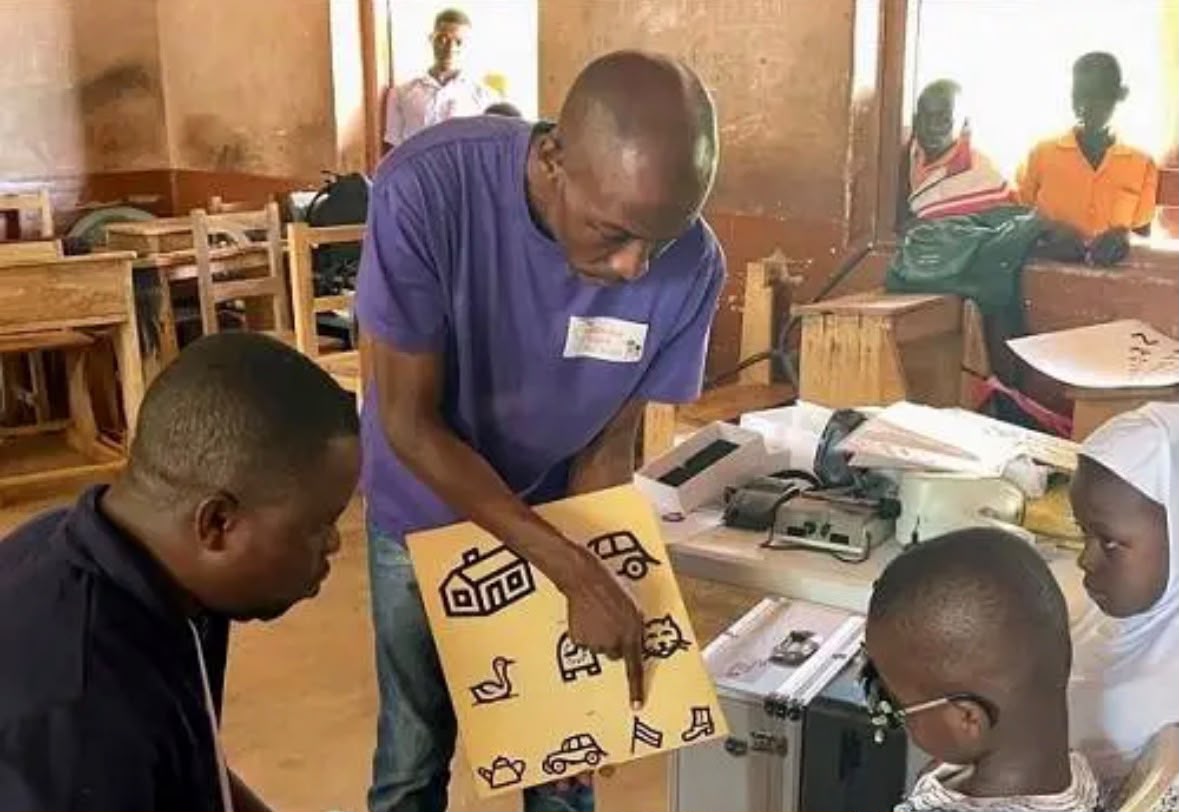
Among the first initiatives announced was the establishment of an advanced-technology training institute in Tanzania, which will develop specialists in artificial intelligence, robotics and data analysis. Korea also announced a K-AI Cloud Voucher initiative designed to give African start-ups access to cloud infrastructure and technology.
Together, these programmes address two of the continent’s most important constraints: access to computing resources and access to highly skilled people capable of developing African technological solutions.
The partnership is also expanding through institutional cooperation.
The African Development Bank and the Korea Advanced Institute of Science and Technology (KAIST) signed a three-year Letter of Intent during the conference to strengthen African capacity in AI, digital governance, research and knowledge transfer. The agreement includes cooperation on AI-related public policy and datasets, training for African public officials and researchers, and technical exchanges.
The AfDB also signed a Letter of Intent with Korea’s National Information Society Agency to explore cooperation in data governance, AI-ready datasets and digital public infrastructure. The arrangement is intended to support training and technical assistance for public-sector managers and engineers while helping African countries develop stronger digital systems.
These partnerships point to an important shift in the nature of Korea-Africa cooperation. The relationship is increasingly moving beyond traditional development assistance towards technology transfer, investment mobilisation, skills development and industrial collaboration.
That evolution is backed by financing.
The AfDB and Korea’s Export-Import Bank signed a new five-year memorandum of understanding to deepen co-financing for strategic projects across Africa. The areas identified include artificial intelligence and digital technologies, infrastructure, energy, critical minerals, transport and green development. Since its creation, the KOAFEC Trust Fund has supported project preparation and technical assistance that have helped generate a substantial pipeline of investment across the continent.
The economic potential of AI provides another reason for the urgency.
The African Development Bank estimates that artificial intelligence could contribute as much as $1 trillion to Africa’s GDP by 2035, provided the continent invests in the infrastructure, electricity, connectivity, data, skills, trust and financing needed to support the technology.
For Ould Tah, the opportunity must be matched by African ownership. He argued that Africa must not simply consume imported technologies but develop the capacity to “build, govern, adapt and deploy” its own solutions. He identified three priorities: establishing the necessary foundations, focusing on practical and high-impact applications, and regulating innovation responsibly.
That approach is particularly relevant as African governments increasingly explore AI in public services, agriculture, healthcare, education, financial systems and urban management.
The 2027–2028 KOAFEC Action Plan reflects this wider ambition. It includes initiatives ranging from modular data centres and AI models that reflect African languages and cultures to a regional Data Embassy project in Sierra Leone, AI computing support for African start-ups, a smart-city platform in Kigali, digital governance work in Kenya and an AI talent accelerator in The Gambia. Other initiatives cover telemedicine, digital agriculture, water management and electricity and digital infrastructure in countries including Zambia and Rwanda.
The significance of the KOAFEC partnership, therefore, lies not simply in the technology Korea can provide. It lies in whether the partnership can help Africa build an ecosystem capable of producing its own talent, infrastructure, applications and governance frameworks.
Africa’s young population and expanding digital markets create a substantial foundation for that ambition. But technology alone will not close the continent’s digital divide. Reliable electricity, affordable connectivity, investment, quality education, strong institutions and effective data governance will determine how widely the benefits of AI are distributed.
The Seoul conference also demonstrated that the relationship is becoming increasingly focused on implementation. Twenty years after KOAFEC was established, Korea and Africa are seeking to convert political dialogue into investment-ready projects, institutional partnerships and practical programmes.
For Africa, the opportunity is to ensure that this next phase of cooperation creates lasting local value. That means developing African expertise alongside imported technology, building infrastructure that can support domestic innovation, strengthening local research capacity and ensuring that digital systems respond to African priorities.
The ambition articulated in Seoul is therefore larger than simply bringing AI to Africa. It is about creating the conditions under which Africans can help shape the technology itself.
If the commitments made at KOAFEC 2026 translate into sustained investment, stronger institutions and locally driven innovation, the partnership could become an important component of Africa’s emerging digital economy. More importantly, it could help shift the continent’s position from technology consumer towards technology participant, developer and, increasingly, owner.
That is the deeper promise of Korea-Africa cooperation in the AI era: not merely importing the tools of the digital economy, but building the capacity to shape what comes next.