Exploring girlhood and land ancestry in Sudan’s cotton fields
Cotton Queen – A new feature debut from filmmaker Suzannah Mirghani explores the legacy of colonialism and the fight for self-determination through the tender eyes of a teenage girl.
 Black News
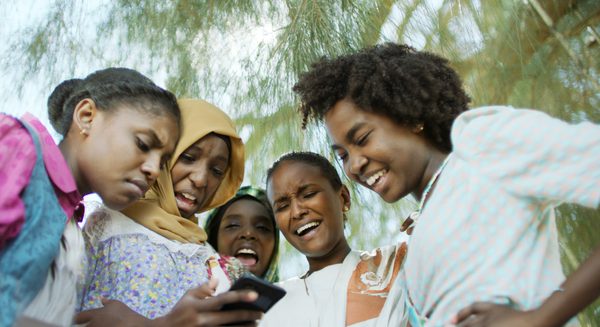
Cotton Queen – A new feature debut from filmmaker Suzannah Mirghani explores the legacy of colonialism and the fight for self-determination through the tender eyes of a teenage girl.
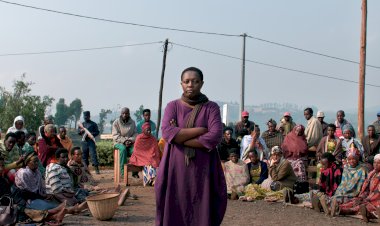
In a verdant green field at dusk, teenage girls pull at the ripe heads of cotton stalks, one tuft at a time. Between shots of laughing, singing, clapping and jointly cringing at a TikTok video, their joy is palpable. This opening scene from Cotton Queen, a new feature written and directed by Sudanese-Russian filmmaker Suzannah Mirghani and produced by Strange Bird, Maneki Films, and Philistine Films, is a portrait of universally recognised girlhood.
It’s through this lens of late adolescence that Mirghani chose to explore larger themes of colonialism, neocolonialism and women’s rights in Sudan. The story follows the earnestly romantic Nafisa, a 15-year-old girl living in a Sudanese cotton-farming village. Raised on stories from her grandmother and village matriarch, Al-Sit, of battling British colonisers, she eyes the arrival of a young businessman and his genetically modified cotton with suspicion.
The film is shot with natural light; the scenes are bright, vibrant, backed by humour and a soft streak of magical realism. Mirghani says the story is a collection of childhood memories from Sudan – she herself was a teenager when she and her family left, and there is a simmering nostalgia throughout the film as a consequence.
“You see a very kind of naive, childlike, magical story, and at the same time, there’s kind of an underlying history of violence that runs through the whole story,” says Mirghani. “And of course, my concern is always women. Sudanese women. I don't think there’s enough about Sudanese women, especially in fiction.”
Women, their resistance and resilience, sit front and centre of Mirghani’s film, but cotton is its running thread. The crop is woven into Sudan’s cultural heritage, modern industry and colonial past, and has formed generations of weavers – women who’ve transfigured it into thread and fabrics, gaining economic independence in their households as a result.
Despite being an ancient crop, since 2012, indigenous Sudanese cotton is no longer grown. In its place is a monoculture of genetically modified crops introduced from China, India and Brazil. The shift, she says, has severed the relationship between farmers, their land and the seeds they know, forcing them to purchase licensed alternatives.
Through Mirghani’s research on cotton, she came across a footnote about the “Cotton Queen” beauty pageant. A competition instigated in England’s northern mill towns in the 1930s to promote Britain’s colonial cotton industry, and then imported into Sudan. “I always found that to be a really good kind of parallel to have and then to put a Sudanese girl at the heart of industry and capitalism and all these major macro forces, and to then, kind of twist the title on its head; instead of beauty, let’s talk about how a queen has real power,” says Mirghani.

“There is a lot of singing, a lot of celebration of Sudanese culture and landscapes. The cotton fields are magical. They’re really, really beautiful. Of course, now, with the war going on, the film can be read differently.”
The filmmaker wrote the script between 2019 and 2021, a beautiful time in Sudanese history, she explains. After the 2019 people’s popular revolution, 30 years of authoritarian military regime collapsed. The years that came after were creatively rich and politically free. It explains the joy in the script and joy in the film, Mirghani says. “There is a lot of singing, a lot of celebration of Sudanese culture and Sudanese landscapes. The cotton fields are magical. They’re really, really beautiful. Of course, now, with the war going on, the film can be read differently.”
The war that broke out in April 2023 continues to rage and devastate over three years later. Mirghani had already scouted locations and assembled her cast when production in Sudan became impossible. The team was forced to relocate to Egypt – where the landscape was similar and where many had fled and continue to flee to, including members of the Cotton Queen cast.
“You’re always going to have production problems, but add to that a layer of emotional trauma. People had lost family members in the war and had seen some horrific things before they left. So more than the production problems was actually the psychological weight of the whole project. But when the Sudanese community gets together, there’s a joy in finding each other and helping each other to get through it.”
Sudan’s landscapes, culture and individual lives are rarely seen on screen outside the context of war. There are fewer than 10 Sudanese fiction films ever made and Mirghani herself is the first female Sudanese filmmaker to write and direct a fiction feature. For her, putting Sudan on screen was already a win. “Just being able to show what kind of people, what kind of lives, what kind of world Sudan is,” Mirghani says. “Through the women of Sudan, to see Sudan through their eyes.”
Cotton Queen releases in cinemas across the UK and Ireland on 2 October 2026.
Roxana Diba is a freelance journalist. Follow her on Instagram.
Buy your copy of Huck 83 here.
Enjoyed this article? Follow Huck on Instagram and join Club Huck’s mailing list for more from the cutting edge of sport, music and counterculture.