From Barriers to Breakthroughs: How ASIGMA and Heifer International Are Rewriting the Story of Youth Finance in Eastern Uganda
In the fertile but financially constrained landscapes of Eastern Uganda, agriculture has long been both a lifeline and a limitation. For decades, young people have tilled the land with ambition, but without access to capital, many have remained trapped in subsistence farming cycles that rarely yield more than survival. Dreams of commercial agriculture have often […] The post From Barriers to Breakthroughs: How ASIGMA and Heifer International Are Rewriting the Story of Youth Finance in Eastern Uganda appeared first on Daily Star.
 Black News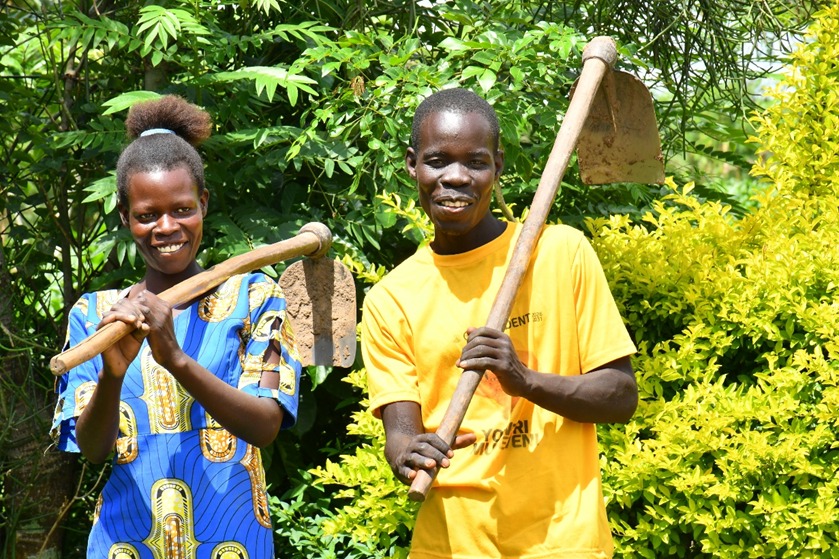
In the fertile but financially constrained landscapes of Eastern Uganda, agriculture has long been both a lifeline and a limitation. For decades, young people have tilled the land with ambition, but without access to capital, many have remained trapped in subsistence farming cycles that rarely yield more than survival. Dreams of commercial agriculture have often been deferred not by lack of will, but by the absence of financial systems that understand rural youth realities.
In districts such as Namayingo, however, that narrative is beginning to shift. A growing partnership between ASIGMA and Heifer International, working with consortium partners FSDU, FSME, and CURAD, is quietly reshaping how young people access and use finance through the SAYE Credit Fund. What is emerging is not just a credit programme, but a recalibration of rural opportunity itself.
At its core, SAYE is challenging a long standing assumption in rural finance: that young people are too risky to fund. Instead, it is proving that with the right structures, mentorship, and community based systems, youth can become some of the most dynamic drivers of agricultural transformation.
Rebuilding Finance from the Ground Up
Rather than operating as a distant lending scheme, the SAYE model embeds itself within Savings and Credit Cooperative Organisations, or SACCOs, strengthening them from within. ASIGMA works directly with these institutions to improve governance, tighten financial systems, and design loan products that reflect the realities of young farmers who rarely have collateral but often have strong enterprise potential.
The shift is subtle but powerful. SACCOs are no longer just financial intermediaries. They are becoming engines of behavioural change, teaching discipline, accountability, and business thinking in communities where farming has historically been informal and unstructured.
In this evolving ecosystem, credit is no longer simply money. It is entry into a system that demands planning, records, and ambition.
Harriet Nyadoi: From Subsistence to Strategy
For Nyadoi Harriet in Namayingo District, that system has been transformative.
A mother of six, Harriet once saw farming as a daily struggle dictated by land access and labour constraints. Like many women in rural Uganda, her agricultural work was confined to small plots that could barely sustain household needs, let alone generate income.
“Before joining the SAYE programme, I had no way of expanding. Even when I had ideas, I lacked capital and support to act on them,” she said.
Her turning point came in February 2026, when she accessed a UGX 500,000 loan through NAGRO SACCO under the SAYE Credit Fund. The amount, modest by urban standards, became a gateway to something larger: commercial farming.
With it, Harriet rented two acres of land, hired labour, and prepared for groundnut production at a scale she had never attempted before. For the first time, farming was no longer reactive. It was planned.
But perhaps the most profound shift was not in the field, but in her mindset.
Through financial literacy training provided under the programme, Harriet began to see herself not just as a farmer, but as an agribusiness operator.
“I used to farm without planning. Now I keep records, I budget, and I think about profit. Farming has become a business for me,” she said.
In her youth group of 25 members, 10 have already accessed financing, most of them women. The numbers reflect a deliberate design choice in the programme, one that prioritises inclusion where exclusion has long been the norm.
Yet for Harriet, the real measure of success is not statistics. It is stability.
“My priority is my children. I want to keep them in school and build a better home with my husband. That is what drives me every day,” she said.
Emmanuel Osemeki: When Farming Becomes Forward Planning
If Harriet’s story is about transformation from constraint, Emmanuel Osemeki’s is about transition from uncertainty to structure.
Before joining SAYE, Emmanuel describes his farming as reactive and inconsistent, driven more by necessity than strategy. Without capital or training, expansion was impossible.
“We were just surviving. You plant when you can, sell when you must, and hope for the best,” he said.
The SAYE programme changed that rhythm.
In February 2026, Emmanuel accessed a UGX 500,000 loan, which he used to rent 1.5 acres of land and expand into soybean and groundnut farming. But more importantly, he began to plan.
The change in discipline quickly translated into results. Building on earlier seed support, he expanded production and began generating income that was previously out of reach. With that income, he made a significant personal milestone, purchasing a motorcycle valued at UGX 8 million, partly financed through structured payments.
For Emmanuel, the motorcycle is not just a possession. It is evidence that farming, when structured, can create upward mobility.
“I now see farming differently. It is no longer just survival. It is growth,” he said.
A System, Not Just Support
Across Eastern Uganda, more than 700 young people have already been reached through the SAYE Credit Fund, following the onboarding of nine SACCOs and direct support to five others.
But programme leaders are quick to emphasise that the real innovation is not the loans themselves. It is the system behind them.
By linking finance with training, governance support, and community accountability, ASIGMA and Heifer International are attempting to solve a deeper problem: the fragmentation of rural opportunity.
In many rural economies, young people are not lacking ideas. They are lacking systems that convert ideas into viable enterprises. SAYE is attempting to close that gap.
The programme also directly confronts gender disparities that have long shaped access to land, finance, and opportunity. By deliberately increasing women’s participation, it is challenging long standing patterns of exclusion within rural economic structures.
From Access to Possibility
What is emerging in Namayingo and surrounding districts is a quiet but significant shift. Farming is no longer being seen solely as inheritance or survival. For an increasing number of young people, it is becoming a structured economic pathway.
Still, challenges remain. Access to larger capital, market stability, and climate risks continue to shape rural livelihoods. But the foundation being laid through SACCO strengthening and youth responsive finance is beginning to change what is possible.
For Harriet, Emmanuel, and hundreds like them, the transformation is already visible not only in income, but in identity. They are no longer just farmers responding to circumstances. They are planners, borrowers, and emerging entrepreneurs.
The post From Barriers to Breakthroughs: How ASIGMA and Heifer International Are Rewriting the Story of Youth Finance in Eastern Uganda appeared first on Daily Star.