From the Ghosts of Mississippi to the Ghosts of the U.S. Supreme Court Decision
*There are ghosts in America. Not the supernatural kind floating through abandoned buildings, but political ghosts — spirits of unfinished justice that continue haunting courtrooms, voting booths, legislatures, and the conscience of this nation. The ghost of Medgar Evers still walks in Mississippi and now the United States. The ghost of white rage still breathes […] The post From the Ghosts of Mississippi to the Ghosts of the U.S. Supreme Court Decision appeared first on EURweb | Black News, Culture, Entertainment & More.
 Black News
*There are ghosts in America.
Not the supernatural kind floating through abandoned buildings, but political ghosts — spirits of unfinished justice that continue haunting courtrooms, voting booths, legislatures, and the conscience of this nation.
The ghost of Medgar Evers still walks in Mississippi and now the United States.
The ghost of white rage still breathes through redistricting maps.
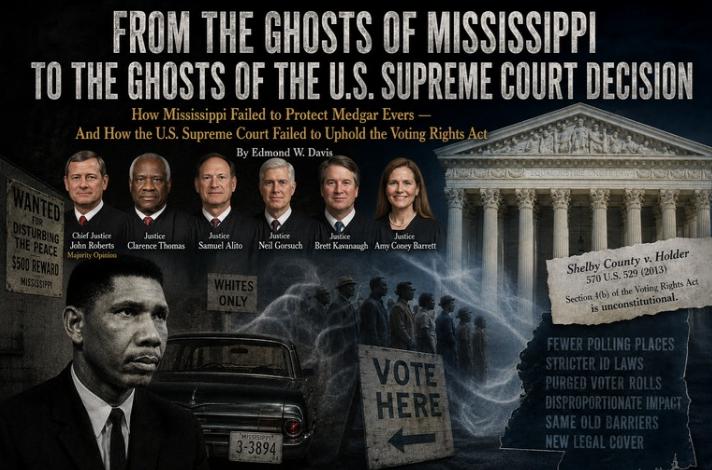
And the ghost of six U.S. Supreme Court justices now hangs over the fragile remains of the Voting Rights Act of 1965.
What changed from 1963 to 2026?
The methods.
Not always the mission.
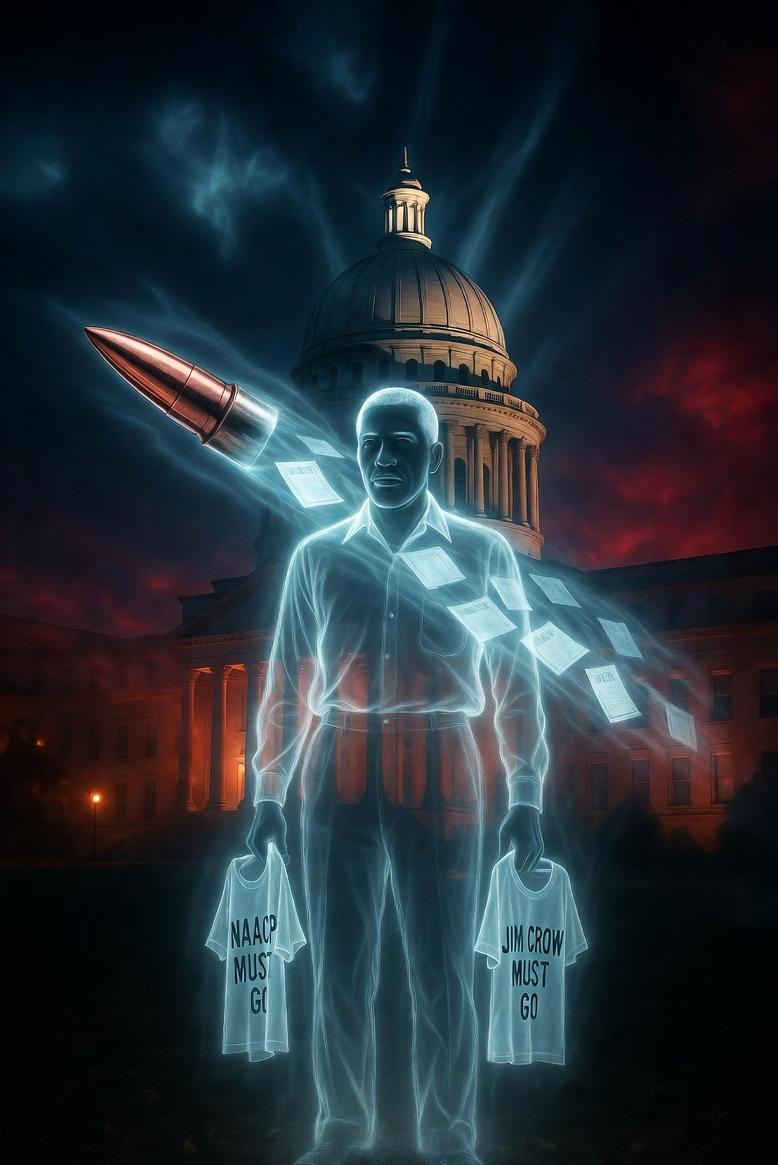
WHEN THE BULLET BECAME A BALLOT
In 1963, Mississippi could not protect Medgar Evers from a rifle bullet fired into his back while he carried NAACP shirts reading “Jim Crow Must Go.”
Today, many Black Americans ask a painful question:
Can the United States Supreme Court protect Black voting power from political bullets disguised as redistricting maps?
Or are we witnessing a more sophisticated form of the same old war?
Back then, white rage arrived with rifles, mobs, lynchings, church bombings, and burning crosses.
Today, it often arrives wearing judicial robes, legal language, and constitutional reinterpretations.
The violence has become less physical.
But the consequences remain deeply racial.
In the film Ghosts of Mississippi, Byron De La Beckwith symbolized the unapologetic face of white supremacy. He murdered Medgar Evers and depended on a system designed to protect him.
Today, many Black Americans see parallels in the Supreme Court’s weakening of the Voting Rights Act.
In this analogy, Byron De La Beckwith becomes symbolic of the six justices whose decisions weakened federal protections once designed to stop racial voter suppression.
Medgar Evers represents Black voting power itself. And Myrlie Evers and the Evers children?
They represent Black communities watching democracy bleed on the front steps of America while desperately trying to preserve what remains.
THE VOTING RIGHTS ACT WAS WRITTEN IN BLOOD
Too many Americans discuss voting rights as if they were theoretical political debates.
They are not.
The Voting Rights Act was born from bloodshed.
It emerged because Southern states — particularly states like Mississippi, Alabama, Louisiana, and Georgia — spent generations denying Black citizens access to the ballot through literacy tests, intimidation, poll taxes, violence, economic retaliation, and outright terror.
The preclearance provision of the Voting Rights Act existed for a reason.
Because America already knew the history. America already knew the patterns.
America already knew certain states could not be trusted to police themselves fairly regarding Black voting rights. That is why the Supreme Court’s dismantling of key portions of the Act shook so many civil rights advocates to the core.
The question becomes unavoidable:
If Mississippi once needed federal oversight to prevent racial injustice in voting, what suddenly changed? Did racism disappear? Did racial gerrymandering evaporate?
Did political power suddenly become colorblind? Or did America simply grow tired of hearing about race while Black communities continue living with its consequences?
WHITE RAGE WITHOUT WHITE HOODS (Non-Physical White Rage)
Modern white rage rarely announces itself openly anymore. It does not always wear white hoods.
It often wears policy.
Procedure.
Court opinions.
District maps.
Legal jargon.
And media gaslighting.
When congressional districts are redrawn in ways that weaken Black voting strength, the impact can be devastating.
Many civil rights scholars and advocates fear that dismantling federal oversight opens the door for aggressive racial redistricting across Southern states — states with long documented histories of suppressing Black political representation.
This is not paranoia. This is historical memory. Black Americans understand something many others refuse to confront:
Power rarely surrenders itself voluntarily.
The same fear that haunted white segregationists in 1963 still exists today — fear of Black political influence, Black demographic growth, and multiracial democratic coalitions.
The battlefield simply shifted from courthouse lawns to Supreme Court chambers.
From bullets to ballots. From mobs to maps.
“WE WRESTLE NOT AGAINST FLESH AND BLOOD”
Scripture reminds us in The Bible:
“For we wrestle not against flesh and blood, but against principalities, against powers…” — Ephesians 6:12
That verse feels painfully relevant today.
Because the struggle is no longer only against individual racists.
It is against systems.
Structures.
Institutions.
Policies.
And political machinery capable of reshaping democracy itself.
Another scripture warns:
“Woe unto them that decree unrighteous decrees…” — Isaiah 10:1
How should Americans interpret court decisions that weaken protections once designed to stop racial discrimination?
How should Black Americans respond when hard-fought civil rights victories become vulnerable once again?
And perhaps the most haunting question:
What would Medgar Evers say if he saw Black voting protections being weakened decades after his assassination?
MYRLIE EVERS: THE SYMBOL OF BLACK RESISTANCE
One reason the story of Myrlie Evers-Williams remains so powerful is because she refused to let America forget. She understood that delay is often the ally of injustice.
The state of Mississippi hoped time would bury the truth. Instead, Myrlie preserved it.
Protected it. Fought for it. And ultimately forced the state to confront it.
Black Americans today face a similar challenge regarding voting rights.
Will communities organize? Will young people vote consistently? Will history be taught honestly? Or will political exhaustion allow democracy itself to erode quietly?
Myrlie Evers teaches us that justice delayed does not have to become justice abandoned.
THE CHESS GAME OF AMERICAN POLITICS
Too many Americans still treat politics like entertainment. Meanwhile, others treat it like warfare. As some political strategists openly admit, redistricting is chess — not checkers. Maps determine power. Power determines policy. Policy determines resources, education, healthcare, policing, housing, and economic opportunity.
That is why voting rights matter so profoundly. When Black voting power weakens, representation weakens. When representation weakens, accountability weakens.
And when accountability weakens, democracy itself becomes fragile. Many Americans forget that Black congressional representation did not emerge accidentally. It emerged because generations bled, marched, organized, litigated, protested, and died. Including Medgar Evers.
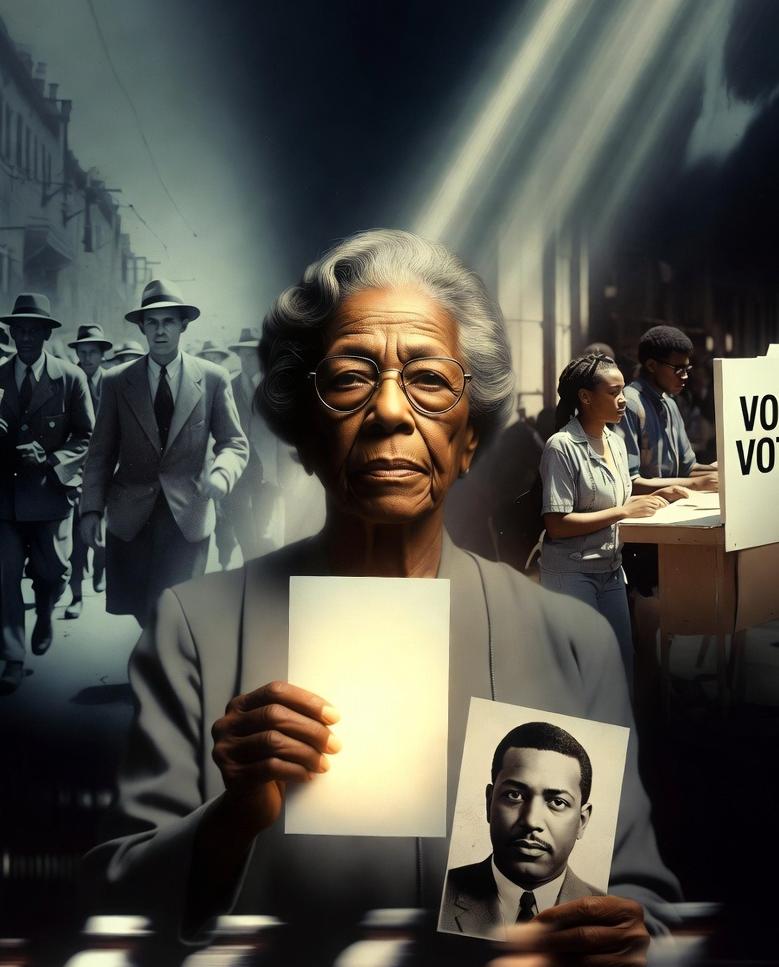
THE GHOSTS ARE STILL WATCHING
The ghosts of Mississippi never truly disappeared.
They evolved.
They adapted.
They entered boardrooms, legislatures, media ecosystems, and court systems and have entered AI and technology. Yet Black resilience evolved, too. That is the unfinished story of America.
The descendants of enslaved people, lynching survivors, civil rights marchers, and freedom fighters are still standing. Perhaps this is why racists are still baffled. Black Americans are:
Still organizing.
Still voting.
Still resisting.
Still believing democracy can become what it has always promised to be.
The Bible says in The Bible:
“And ye shall know the truth, and the truth shall make you free.” — John 8:32
But freedom requires truth first.
Truth about history.
Truth about race.
Truth about power.
Truth about the past repeating itself in modern forms.
From the ghost of Mississippi to the ghost of Supreme Court decisions, America faces a defining moral question:
Will this nation protect democracy for everyone?
Or only for those historically most comfortable controlling it?
That answer may determine whether the sacrifices of Medgar Evers — and so many others — were honored…
Or merely remembered.
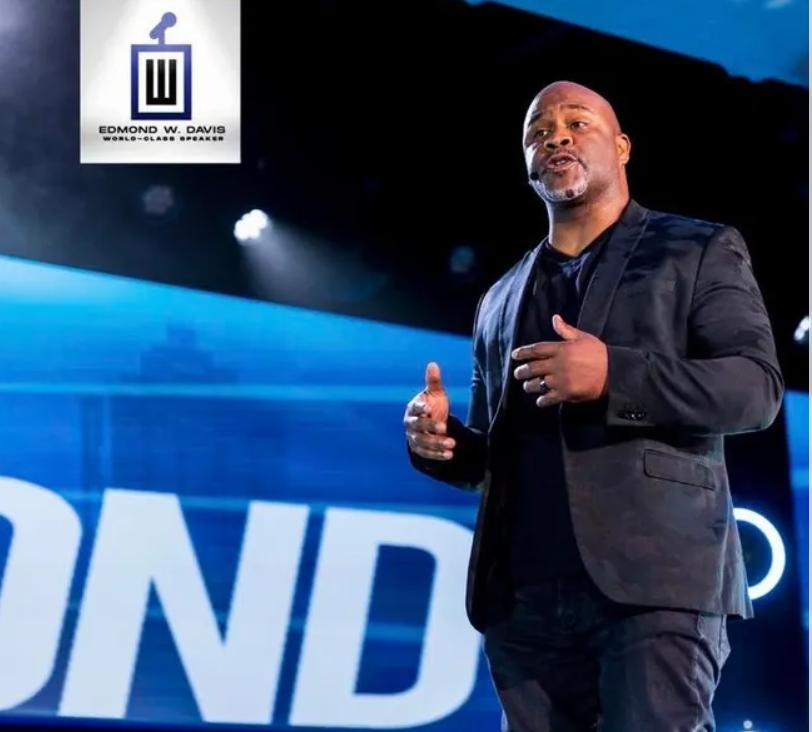
ABOUT THE AUTHOR
Edmond W. Davis is an American social historian, international speaker, and Amazon #1 bestselling author. He is a global authority on the Tuskegee Airmen and serves as the founder and executive director of the National HBCU Black Wall Street Career Fest. A native of Philadelphia, PA, and current resident of Little Rock, AR, Davis is committed to cultural empowerment and educational equity through storytelling and civic engagement. Davis is a grand marshal at the 38th Annual African American History Month Celebration Parade.
(If You Like/Appreciate This EURweb Story, Please SHARE it!)
MORE NEWS ON EURWEB.COM: Supreme Court Limits Voting Rights Act in Louisiana Map Case – Obama and Trump Respond | VIDEO
We Publish Breaking News 24/7. Don’t Miss Out! Sign up for our Free daily newsletter HERE.
The post From the Ghosts of Mississippi to the Ghosts of the U.S. Supreme Court Decision appeared first on EURweb | Black News, Culture, Entertainment & More.