Iván Cepeda concedes election defeat, Petro begins transition to De la Espriella government
Colombian leftist senator Iván Cepeda formally conceded defeat on Wednesday, acknowledging conservative lawyer Abelardo de la Espriella as the country’s president-elect after electoral authorities confirmed that the official vote count closely matched the preliminary tally. The concession, coupled with outgoing President Gustavo Petro’s announcement that he would begin the formal transition of power, marked a […]
 Black News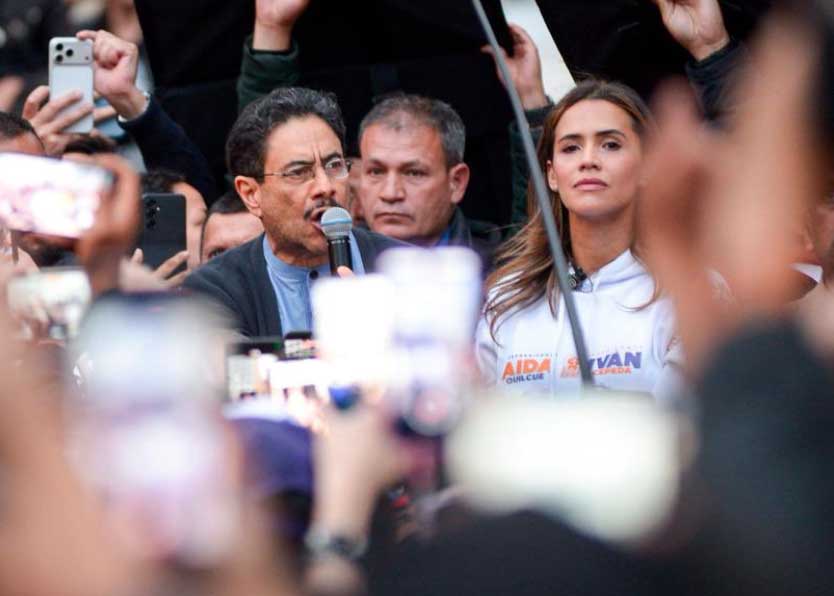
Colombian leftist senator Iván Cepeda formally conceded defeat on Wednesday, acknowledging conservative lawyer Abelardo de la Espriella as the country’s president-elect after electoral authorities confirmed that the official vote count closely matched the preliminary tally.
The concession, coupled with outgoing President Gustavo Petro’s announcement that he would begin the formal transition of power, marked a decisive step toward an orderly transfer of government following one of Colombia’s most closely watched presidential elections.
One day after Colombia’s National Civil Registry said the official scrutiny of ballots matched the preliminary count by 99.997%, dispelling allegations of counting errors, Cepeda accepted the outcome while vowing to continue raising concerns over what he described as irregularities during the campaign.
“I have decided to accept the result that emerges from this process, which indicates that Abelardo de la Espriella is the new president of the Republic,” Cepeda said in a public statement.
“The time has come to affirm that we assume, with serenity, responsibility and complete determination, the role that circumstances now demand of us,” he added.
Cepeda’s concession follows several days of uncertainty after his campaign questioned aspects of the vote count, although election authorities consistently maintained that the preliminary results accurately reflected the ballots cast.
While recognizing De la Espriella’s victory, Cepeda insisted that accepting the election outcome did not mean abandoning allegations concerning the conduct of the campaign.
“Accepting the electoral result does not mean renouncing the truth or remaining silent in the face of facts that we consider serious and that marked this presidential campaign,” he said.
The senator also called for democratic guarantees for the opposition during the incoming administration, urging respect for Colombia’s constitutional institutions as political power changes hands.
The concession removes one of the final obstacles to the transition following Sunday’s runoff election, in which De la Espriella secured the presidency on a platform centered on restoring security, strengthening institutions and reviving economic growth.
Outgoing President Gustavo Petro also acknowledged the election result, announcing that his administration would begin the formal handover process while suggesting that his political movement could continue mobilizing after he leaves office.
“The transition will begin, and so will my withdrawal, and perhaps peaceful resistance,” Petro wrote in a lengthy message published late Monday on the social media platform X.
Petro’s statement blended reflections on international affairs, Colombia’s armed conflict and his own political legacy before reaffirming his commitment to a peaceful transfer of power.
“I swore an oath to peace, and I will not lead my people into violence,” the outgoing president wrote.
The departing leader also referred to U.S. President Donald Trump, saying the two leaders had effectively “drawn” politically in Peru and Colombia while expressing support for Trump’s stated efforts to end ongoing international conflicts.
Petro argued that relations between Colombia and the United States should be rebuilt through what he described as a new agreement capable of bringing greater regional stability.
He also reiterated long-held views on narcotics policy, arguing that coca cultivation in Colombia stems largely from historic land dispossession during decades of armed conflict. Petro said approximately 300,000 rural farmers had been killed during the violence and maintained that criminal organizations had replaced the guerrilla groups that once dominated the conflict.
Despite criticizing both Trump and president-elect De la Espriella elsewhere in his message, Petro emphasized that Colombia’s democratic institutions would be respected during the transition.
The remarks signal that Colombia’s first left-wing president intends to oversee a constitutional transfer of power after four years in office, even as his supporters prepare to move into opposition.
De la Espriella, a lawyer known for his hardline positions on crime and security, will assume office on Aug. 7 following the completion of the transition process.
The president-elect has pledged to restore public security, confront armed criminal groups and rebuild investor confidence while seeking closer relations with the United States and regional allies.
The acceptance of the election results by both Cepeda and Petro is likely to reduce political polarization after a fiercely contested campaign that highlighted deep ideological divisions over security, the economy and Colombia’s future direction.
The country’s electoral authorities have maintained throughout the process that Colombia’s voting system functioned normally and that the official scrutiny confirmed the accuracy of the preliminary count.