Russia and China Side With Africa on Slavery Justice, But the US, Israel and Europe Say No
The applause erupted before the final tally was even announced. When the gavel fell on Wednesday in the United Nations General Assembly Hall, diplomats cheered, some wept, and Ghana’s President John Dramani Mahama — the architect of a resolution four centuries in the making — called it a route to healing for an entire civilization. [...]
 Black News
The applause erupted before the final tally was even announced. When the gavel fell on Wednesday in the United Nations General Assembly Hall, diplomats cheered, some wept, and Ghana’s President John Dramani Mahama — the architect of a resolution four centuries in the making — called it a route to healing for an entire civilization.
| UN General Assembly — Resolution A/80/L.48 — Final Vote | ||
|---|---|---|
| In Favor | Against | Abstained |
| 123 Africa, China, Russia, Latin America, Asia | 3 United States, Israel, Argentina | 52 All 27 EU members, UK, Japan, Australia |
ALSO READ: 10 Times African Leaders Shook the UN General Assembly
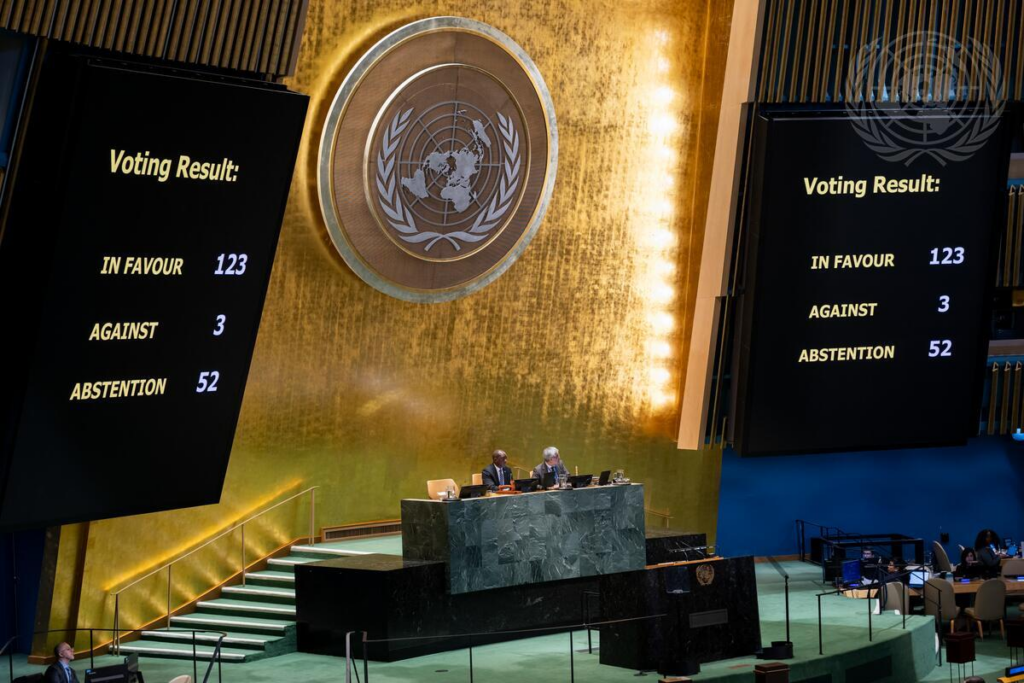
The resolution, spearheaded by Ghana and backed by the 54-nation African Group, declared the transatlantic slave trade and the trafficking of enslaved Africans “the gravest crime against humanity.” It passed 123 to 3, with 52 abstentions. The three nations that voted no — the United States, Israel, and Argentina — found themselves in one of the most conspicuous minorities in recent UN history, isolated on the wrong side of what supporters called a moral reckoning long overdue.
The abstentions told their own story. The United Kingdom and all 27 members of the European Union declined to vote either way — a position that, depending on who is asked, reflects principled legal caution or a failure of moral courage.
“There are spirits of the victims of slavery present in this room at this moment, and they are listening for one word only: justice.”— UN Special Rapporteur, addressing the General Assembly
What the Resolution Actually Says
The resolution emphasized the trafficking and enslavement of Africans as the gravest crime against humanity “by reason of the definitive break in world history, scale, duration, systemic nature, brutality and enduring consequences that continue to structure the lives of all people through racialized regimes of labour, property and capital.” It also called for reparatory justice and the prompt return of cultural items — artworks, monuments, museum pieces, documents and national archives — to their countries of origin.
The timing was deliberate. The vote took place on the International Day of Remembrance of the Victims of Slavery and the Transatlantic Slave Trade, honoring the memory of approximately 13 million African men, women and children enslaved over several centuries. The day before, Mahama laid a wreath at Manhattan’s African Burial Ground, one of the oldest and largest known burial grounds for enslaved and free Africans in North America.
In his address, Mahama challenged the very language used to describe the victims of the trade. “There was no such thing as a ‘slave,'” he asserted, insisting that the 18 million men, women, and children stolen from the continent were human beings who were trafficked and then systematically enslaved. It was a distinction — between a noun that defines a person and a verb that describes what was done to them — that drew sustained applause from the hall.
Why the US, Israel, and Argentina Voted No
The United States’ opposition was swift and precise in its legal reasoning. Deputy Ambassador Dan Negrea confirmed that while Washington opposes the historic wrongs of the slave trade, the US does not recognize a legal right to reparations for historical wrongs that were not illegal under international law at the time they occurred.
The US also objected strenuously to the resolution’s attempt to rank crimes against humanity in a hierarchy, arguing that asserting some crimes against humanity are less severe than others objectively diminishes the suffering of countless victims of other atrocities. “This is not a competition,” the US statement read.
Israel and Argentina offered no separate explanation of vote. Their alignment with Washington placed them in what became the loneliest no in recent UN memory — three nations facing 123.
Europe’s Careful Distance
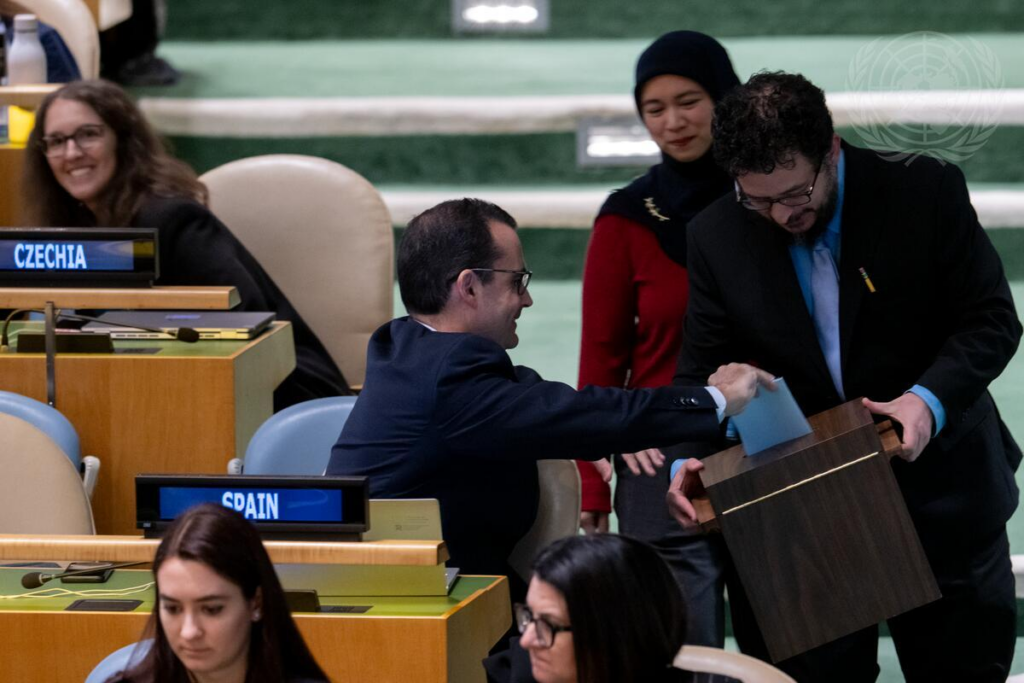
Europe’s abstention was harder to explain and, for many in the hall, harder to forgive. The EU — whose member states include the Netherlands, Portugal, France, Spain, and Britain, nations that built vast colonial empires partly on the labor of enslaved Africans — declined to vote yes.
The EU cited concerns about “the use of superlatives” in the context of crimes against humanity, arguing that no legal hierarchy between such crimes exists and that the language risked undermining the harm suffered by victims of other atrocities. The bloc also raised objections to what it called selective and unbalanced interpretations of historical events within the resolution’s text.
The UK offered a similar rationale, noting that the prohibitions on slavery and crimes against humanity had not yet been established in international law at the time of the transatlantic slave trade. Britain, which transported more than three million enslaved Africans across the Atlantic before abolishing the trade in 1807, said it remained committed to addressing the legacies of slavery through “concrete domestic and international action.”
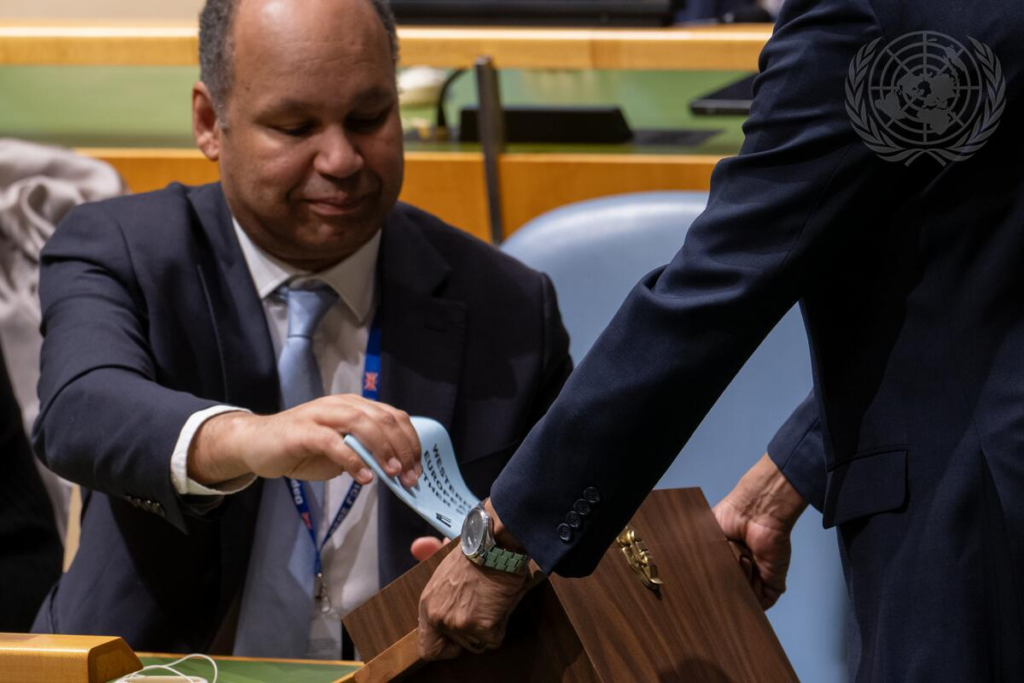
Why Each Bloc Voted the Way It Did
- US, Israel, Argentina (No): Rejected retroactive application of international law; opposed a hierarchy among atrocity crimes; disputed binding reparations language.
- EU + UK (Abstain): Acknowledged the horror of slavery but cited legal inaccuracies and “superlative” language implying a ranking not recognized in international law.
- Africa, Caribbean, Latin America (Yes): Backed by the 54-member African Union; argued the trade’s scale, duration, and enduring consequences are unmatched in recorded history.
- Russia, China (Yes): Voted in solidarity with the Global South; neither country bears significant historical liability for the transatlantic slave trade.
The Geopolitical Dimension
The spectacle of Russia and China standing with Africa, the Caribbean, and the Global South against the United States and Europe was not lost on observers in the hall or in capitals around the world. Neither Moscow nor Beijing bears meaningful historical liability for the transatlantic slave trade — making their yes vote costless in material terms, but rich in diplomatic symbolism.
The 123-to-3 margin was a stark illustration of a shift in global alignment that has been building for years: a growing coalition of nations in the Global South asserting their collective voice in multilateral institutions, often in direct opposition to Western consensus. On Wednesday, that coalition achieved something historic.
What Happens Next
The resolution is not legally binding but carries significant political weight. It shifts the global conversation from acknowledgment to accountability — from whether slavery was wrong, a question no serious person contests, to who owes what to whom, and how such a debt could ever be calculated or repaid.
The resolution calls on member nations to engage in talks on reparatory justice, including formal apologies, restitution, compensation, rehabilitation, and changes to laws, programs and services to address systemic discrimination.
The African Union had already declared 2026–2036 a Decade of Reparations in July 2025. Wednesday’s vote gave that declaration the weight of a UN General Assembly resolution — non-binding in law, but undeniable in history.
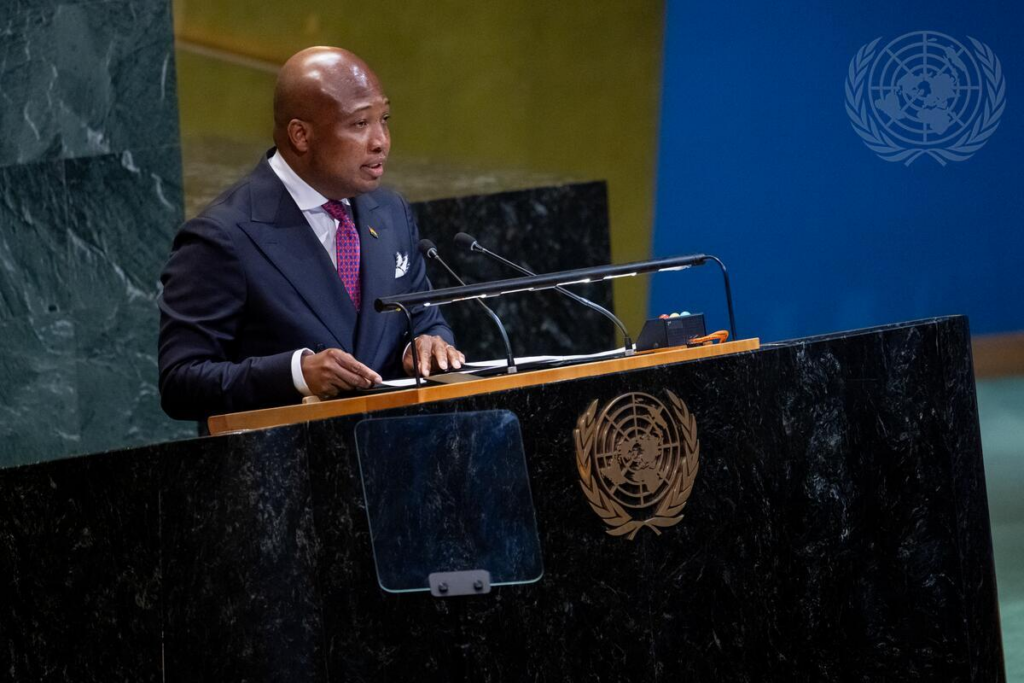
“History does not disappear when ignored. Truth does not weaken when delayed. Crime does not rot. And justice does not expire with time.”— Samuel Ablakwa, Ghana’s Foreign Minister
The hall erupted again. The vote was over. The argument — about what is owed, by whom, and whether any court or body on earth has the standing to compel it — had barely begun.