The Applause Tax
When Ghanaian-British designers show at London Fashion Week and Senegalese-French graduates of Central Saint Martins build international profiles, the continent celebrates their success. The question that rarely follows the applause is a precise one: who, exactly, is this work for, and who benefits from the claim? Tolu Coker AW26, ‘Survivor’s Remorse,’ London Fashion Week, February […]
 Black News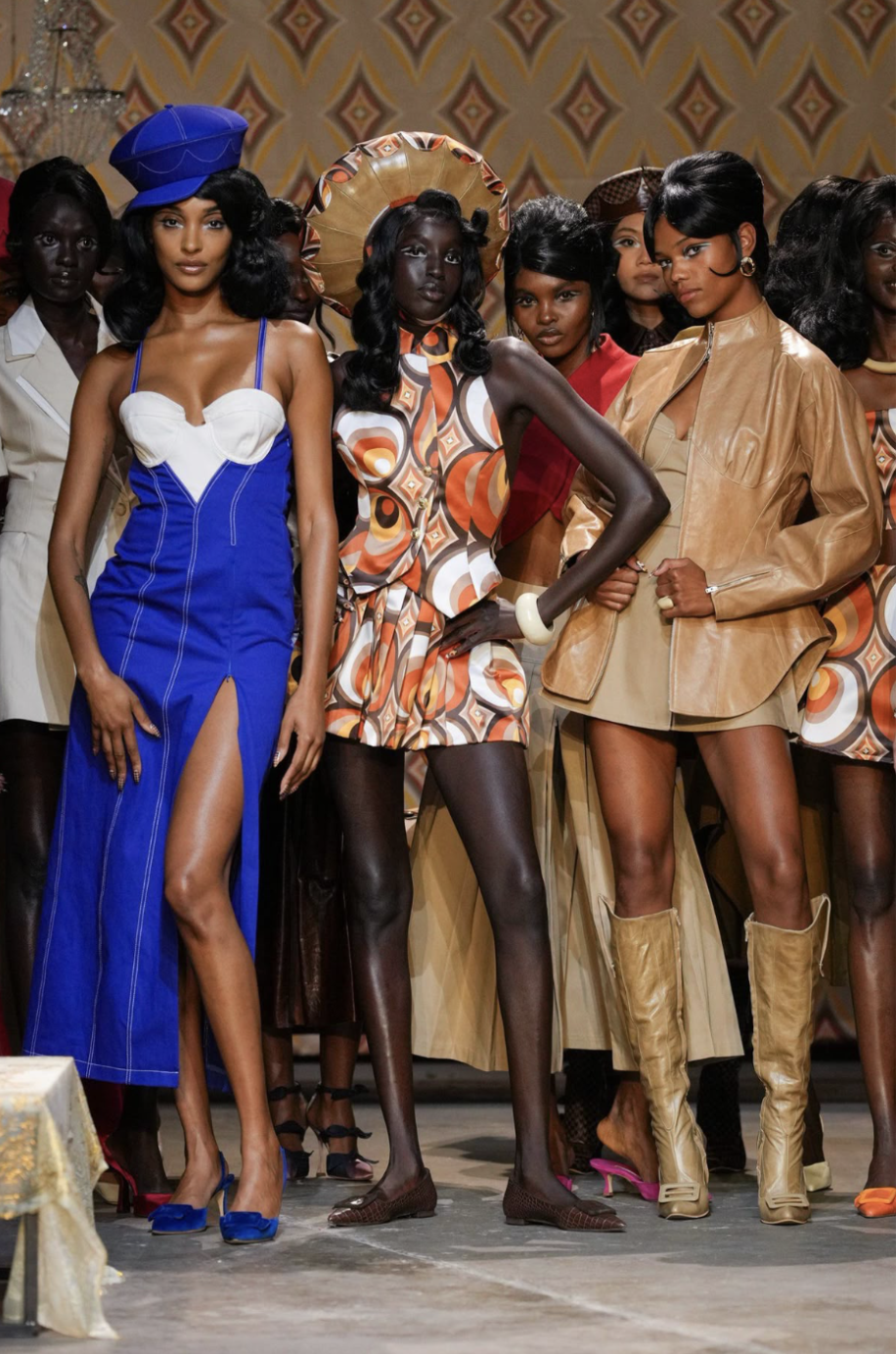
When Ghanaian-British designers show at London Fashion Week and Senegalese-French graduates of Central Saint Martins build international profiles, the continent celebrates their success. The question that rarely follows the applause is a precise one: who, exactly, is this work for, and who benefits from the claim?
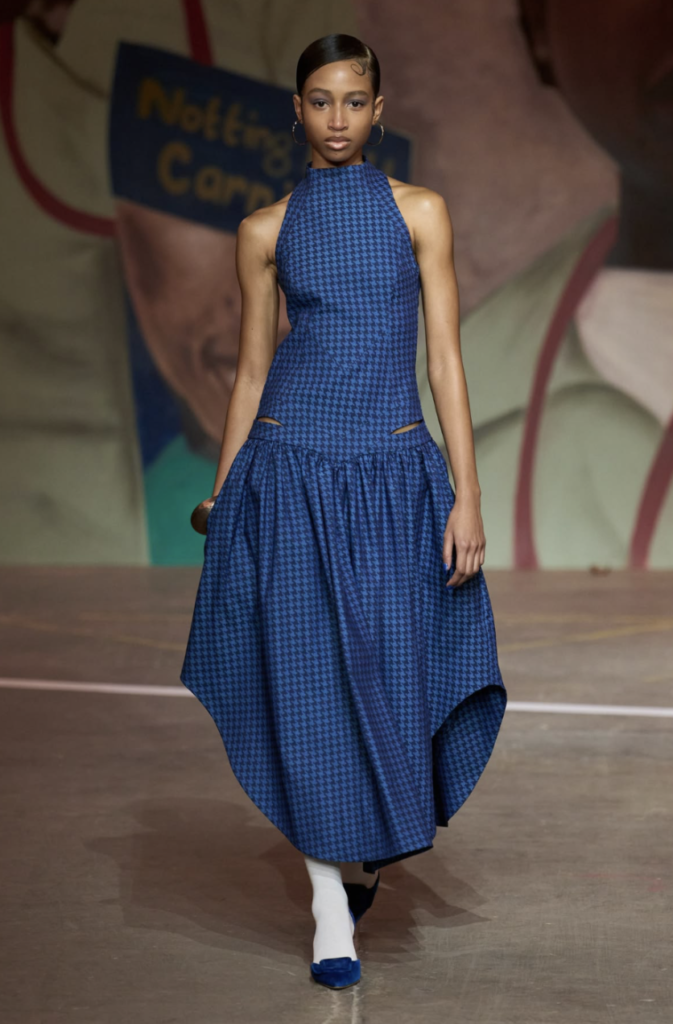
reimagined tartan, and Yoruba colour language at the NEWGEN Show Space at 180 Strand.
When Tolu Coker staged her autumn-winter 2024 show at London Fashion Week, she turned the venue into a West African street market with the kind of specificity that told you immediately whether you were inside the reference or outside it: kente cloth on the walls, plantains arranged in the set design, Afrobeats traffic noise that she had recorded herself and threaded through the sound so that the room felt like a street she had actually walked rather than a street she had imagined for an audience who had not.
The press coverage was warm and wide, using words like “immersive” and “joyful,” with fashion writers describing it with the authority of people who had spent significant time in Lagos, because the show gave them enough to work with that they felt they could. The clothes moved through press appointments in London, Paris, and New York, confirming what the industry had been slowly accepting: that African heritage was good for fashion and that Tolu Coker was the designer through whom to understand that.
The question the coverage did not ask was a structural one. Coker graduated from Central Saint Martins in 2017, worked at JW Anderson, Céline, and Maison Margiela before launching her eponymous brand officially in 2021, and has been part of the British Fashion Council’s NEWGEN programme since May 2023, completing her sixth and final NEWGEN season at her AW26 show ‘Survivor’s Remorse’ in February 2026, which King Charles III attended from the front row. The press ecosystem, the buyers, the retail relationships, the calendar position at London Fashion Week: all of it was built by and for the UK fashion industry. When the coverage calls her an African designer, it is claiming something real about her heritage and something imprecise about her economic position in the fashion system.
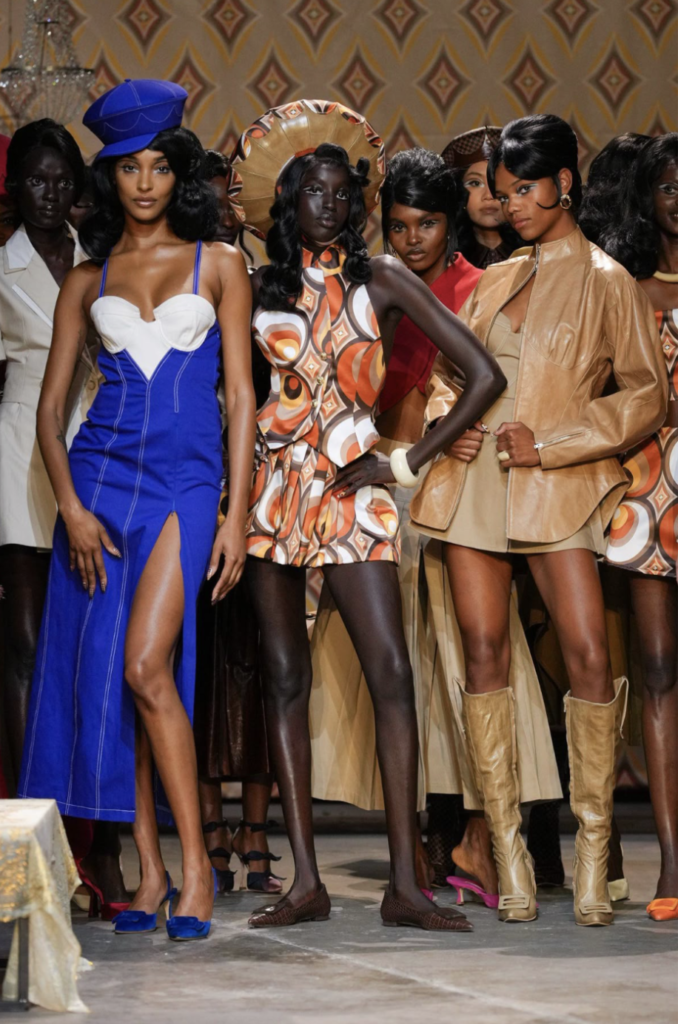
Africa exports the aesthetic, and yet the infrastructure that turns that aesthetic into revenue, the buyers, the press, the retail relationships, the calendar positions, sits somewhere else entirely.
This is the tension at the centre of what has become, in the last five years, a genuinely significant movement. London Fashion Week has been shaped by designers who carry African heritage into their work with real depth and seriousness: Coker, whose ‘Survivor’s Remorse’ was described by critics as historiographic, each collection a sustained argument about memory, migration and the social cost of making it out; Priya Ahluwalia, whose label draws on her Nigerian and Indian heritage and has built a reputation for sustainable menswear with genuine cultural texture; Grace Wales Bonner, born in South London to a Jamaican father, whose tailoring has become one of the most discussed bodies of work in contemporary fashion; and Foday Dumbuya of Labrum London, who designed the official Sierra Leone Olympic kit for Paris 2024 in partnership with Adidas, with the cowrie shell as its central motif.
In Paris, Africa Fashion Up, backed by Balenciaga, Galeries Lafayette, and HEC Paris since its founding in 2021, reached a record 300 applications in its 2025 edition, bringing African designers to the Galeries Lafayette Haussmann and to the Africa Now pop-up that ran June to July 2025. The continent celebrates each of these moments, and there is something genuinely worth celebrating, because the work being made is serious and the cultural reach is real.
But the celebration tends to move past the structural question the continent’s creative industry cannot afford to keep deferring. The designers receiving the most sustained international coverage are based overwhelmingly in European cities, trained at European institutions, funded by European systems. When the Ghanaian brand Boyedoe reached the semi-finals of the LVMH Prize in 2025, the achievement was real. It was also a measure of how few pathways to global scale exist that do not pass through a judging process held in Paris.
The question is not whether diaspora designers are African. Of course they are. The question is whether the industry is honest about who gets the infrastructure and who gets the aesthetic.
Meanwhile, designers like Selly Raby Kane and Adama Paris in Dakar, and IAMISIGO’s Bubu Ogisi in Lagos, are building work that does not require a European institutional framework to exist or to matter. Their collections are shown to audiences who understand the references without a press note, made from materials sourced within the continent, and constructed around creative authority that belongs entirely to where it comes from. That is a categorically different position in the fashion system, and conflating it with the position of a British-Nigerian designer showing at London Fashion Week does a disservice to both.
The argument this piece is making is not against diaspora designers. The argument is for precision: about what the industry is doing when it reaches for African heritage as a category, about who gets to be called an African designer and under what conditions, and about whether the rooms where that creativity gets turned into capital are being built anywhere near the continent that produced the creativity in the first place.
African fashion is global and has been for thousands of years, because the continent’s relationship to cloth, dye, cut, and ceremony predates any European fashion week by millennia, and has never needed European infrastructure to be extraordinary. What is genuinely new is not the creativity. What is new is the question of whether the systems being built around that creativity, the prizes, the accelerators, the runway slots, the press relationships, belong to the people whose work is at the centre of them, or to the institutions that are currently holding the keys.