Trump’s USAID shutdown linked to rising violence in Africa, new study finds
A new study has linked the abrupt dismantling of the United States Agency for International Development (USAID) under U.S. President Donald Trump to a rise in violence across some of Africa’s most fragile regions.
 Black News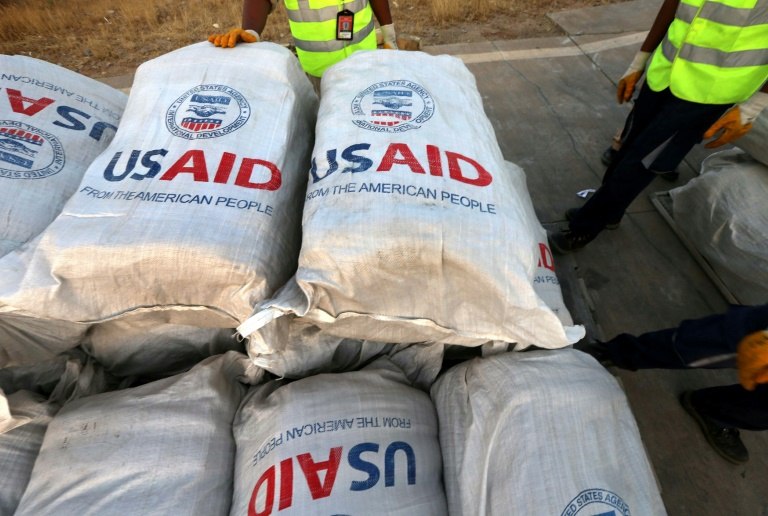
A new study has linked the abrupt dismantling of the United States Agency for International Development (USAID) under U.S. President Donald Trump to a rise in violence across some of Africa’s most fragile regions.
- A new study linked USAID cuts under Donald Trump to rising violence in fragile parts of Africa.
- Researchers found conflict increased in regions that relied heavily on U.S. aid support.
- The study said sudden aid withdrawals can worsen instability in vulnerable communities.
- The findings come as jihadist attacks continue to rise across Africa.
The study, published on Thursday in the journal Science, found that areas that had historically depended heavily on USAID support recorded a significant and sustained increase in conflict after the agency’s operations were abruptly halted.
DON'T MISS THIS: U.S. seals USAID’s fate as State Department takes over foreign aid — what it means for Africa
The researchers, drawn from universities in Europe and the United States, stopped short of saying the aid cuts directly caused the violence.
However, they warned that sudden disruptions to large-scale humanitarian and development assistance could destabilise already fragile communities.
“The abrupt withdrawal of USAID led to a significant and sustained increase in conflict across Africa’s most USAID-dependent regions,” the study said.
The Trump administration last year moved to dissolve USAID, ending more than 90 per cent of its foreign aid contracts and cutting an estimated $60 billion in global assistance.
The decision disrupted aid operations, staffing, procurement systems and humanitarian programmes across several countries.
For decades, USAID had been one of the largest sources of humanitarian and development funding in Africa, supporting governments, non-governmental organisations and relief agencies responding to insurgencies, displacement crises, hunger and weak public services.
In Nigeria, USAID funding supported humanitarian operations in areas devastated by the Boko Haram insurgency, including food assistance, healthcare and support for displaced persons in the northeast.
In Ethiopia, the agency played a key role in relief efforts in the conflict-scarred Tigray region, where reconstruction has remained slow following a brutal civil war that killed hundreds of thousands of people.
USAID also invested heavily in northern Côte d’Ivoire, where authorities and international partners have tried to contain the spread of extremist groups linked to al-Qaeda and the Islamic State from the Sahel region.
DON'T MISS THIS: USAID shutdown triggers crisis for NGOs, healthcare workers across Africa
The study comes as Africa faces worsening insecurity from militant Islamist groups.
Data released this week by the Armed Conflict Location & Event Data Project (ACLED) showed jihadist groups were increasingly active across the continent and had intensified attacks on civilians over the last four years.
Researchers said they found a strong correlation between the withdrawal of USAID assistance and rising violence in aid-dependent regions, though they cautioned that the findings should not be interpreted as proof that aid alone prevents conflict.
Instead, they argued the results highlighted the dangers of suddenly removing critical support systems in vulnerable environments already struggling with insecurity, poverty and weak institutions.
Nathaniel Raymond, executive director of the Humanitarian Research Lab at the Yale School of Public Health, said the damage caused by the shutdown could outlast any future attempts to restore funding.
“The lasting problem with the shuttering of USAID is likely going to be that for much of its conflict prevention work, even if you put back all the money, the experience is gone,” he said.
Ladd Serwat, senior Africa analyst at ACLED, said some USAID-backed programmes may have helped communities resist militant infiltration and violence before they were discontinued.
“We now see increasing insurgency and spillover, so some of those programmes may have supported these communities from insurgent threats, and now they are no longer active,” he said.