U.S. launches $13 million Ebola response in DR Congo and Uganda amid travel restrictions
The United States has launched a $13 million emergency response and imposed new travel restrictions after confirmed Ebola cases emerged in the Democratic Republic of Congo (DRC) and Uganda, raising fears of another regional health crisis in East Africa.
 Black News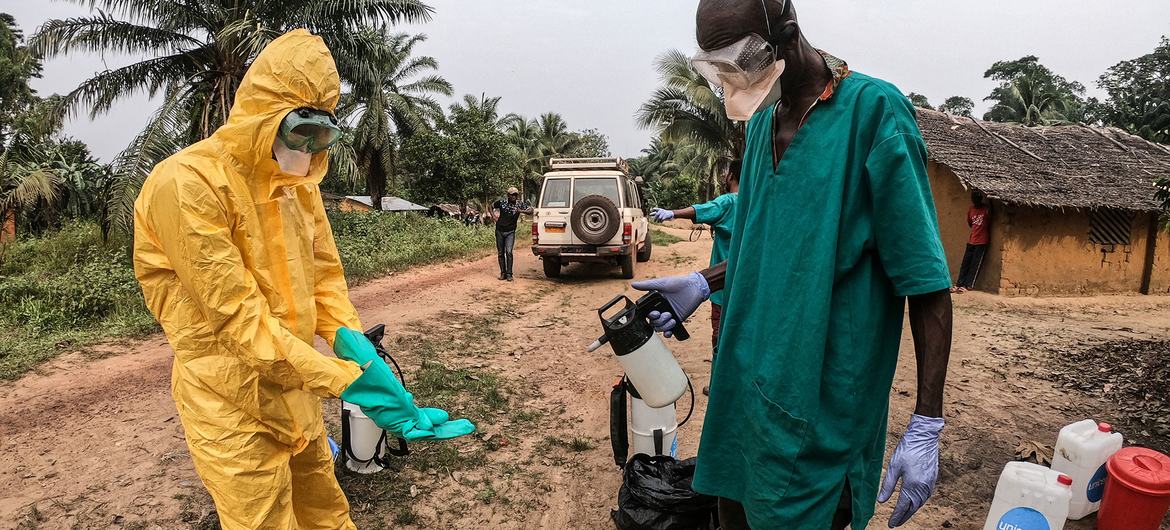

The United States has launched a $13 million emergency response and imposed new travel restrictions after confirmed Ebola cases emerged in the Democratic Republic of Congo (DRC) and Uganda, raising fears of another regional health crisis in East Africa.
- The United States has activated an emergency Ebola response after confirmed cases emerged in the Democratic Republic of Congo and Uganda.
- Washington announced new travel restrictions, emergency funding, and coordinated regional monitoring efforts.
- The outbreak has revived concerns over cross-border transmission in East Africa, a region that has suffered repeated Ebola crises.
- Health officials say rapid containment efforts will be critical to preventing wider international spread.
In a statement published by the U.S. Department of State on Tuesday, Washington said it activated an interagency coordination system within 24 hours of learning about the confirmed cases, bringing together diplomatic, health, humanitarian, and security agencies to support containment efforts.
DON'T MISS THIS: 80 lives lost as Africa faces new Ebola threat - regional trade, travel at risk
The U.S. said its embassies in the DRC, Uganda, Rwanda, and South Sudan have established monitoring teams to track developments and communicate with American citizens in the region.
The State Department added that daily leadership-level meetings are now being held to coordinate the response.
One of the strongest measures announced so far is a new Title 42 order issued by the U.S. Centers for Disease Control and Prevention (CDC) on May 18.
The order bars entry into the United States for foreign nationals who have visited the DRC, Uganda, or South Sudan within the previous 21 days.
Washington said it is also working with the Department of Homeland Security and the U.S. military on quarantine procedures and possible evacuation plans for affected Americans if necessary.
Within 48 hours of activating its response system, the U.S. government said it had mobilised an initial $13 million in emergency foreign assistance to support surveillance, laboratory testing, risk communication, safe burials, border screening, and treatment operations in affected countries.
The outbreak has revived memories of previous Ebola epidemics that devastated parts of Africa and strained already fragile healthcare systems.
The DRC has recorded more Ebola outbreaks than any other country since the virus was first identified near the Ebola River in 1976. Its 2018-2020 outbreak in eastern Congo became the world’s second-deadliest Ebola epidemic after the West African crisis of 2014-2016, killing nearly 2,300 people.
That West African outbreak, which spread across Guinea, Liberia, and Sierra Leone, killed more than 11,000 people and caused severe economic disruption across the region, according to World Health Organization data.
The epidemic also triggered global panic after isolated cases appeared in Europe and the United States.
Uganda has also faced repeated Ebola outbreaks in recent years, including a deadly Sudan strain outbreak in 2022 that killed dozens of people and prompted regional health alerts.
Unlike the Zaire strain, the Sudan strain has no fully approved vaccine, making containment more difficult for health authorities.
The latest outbreak comes at a sensitive time for East Africa, where porous borders, population displacement, and insecurity in eastern Congo continue to complicate disease surveillance and emergency response efforts.
U.S. officials said additional bilateral funding for outbreak response and humanitarian assistance is being prepared as authorities assess the scale of the crisis.
Washington said the latest support builds on existing health cooperation agreements signed with both the DRC and Uganda under its America First Global Health Strategy.
Beyond direct health support, the U.S. said it is coordinating closely with the United Nations, the European Union, the United Kingdom, and other international partners to avoid gaps in the emergency response.
Part of the broader support package includes funding through the UN Office for the Coordination of Humanitarian Affairs (OCHA).
The U.S. recently announced $1.8 billion in additional funding for OCHA pooled funds globally, including $250 million earmarked for the DRC and Uganda.
While officials say the outbreak remains under active monitoring, health experts warn that Ebola outbreaks can escalate rapidly when early detection, isolation, and community engagement measures are delayed.
The U.S. State Department said American leadership remains “indispensable” in confronting global health threats and pledged continued support for affected communities and international containment efforts.