Why Dangote chose Kenya for proposed $17billion East Africa refinery
Africa’s richest businessman, Aliko Dangote, is leaning towards Kenya for a proposed $15 billion-$17 billion refinery project after technical assessments ranked the country ahead of rival East African locations because of its strategic access to crude supplies, deep-water port infrastructure and regional fuel market reach.
 Black News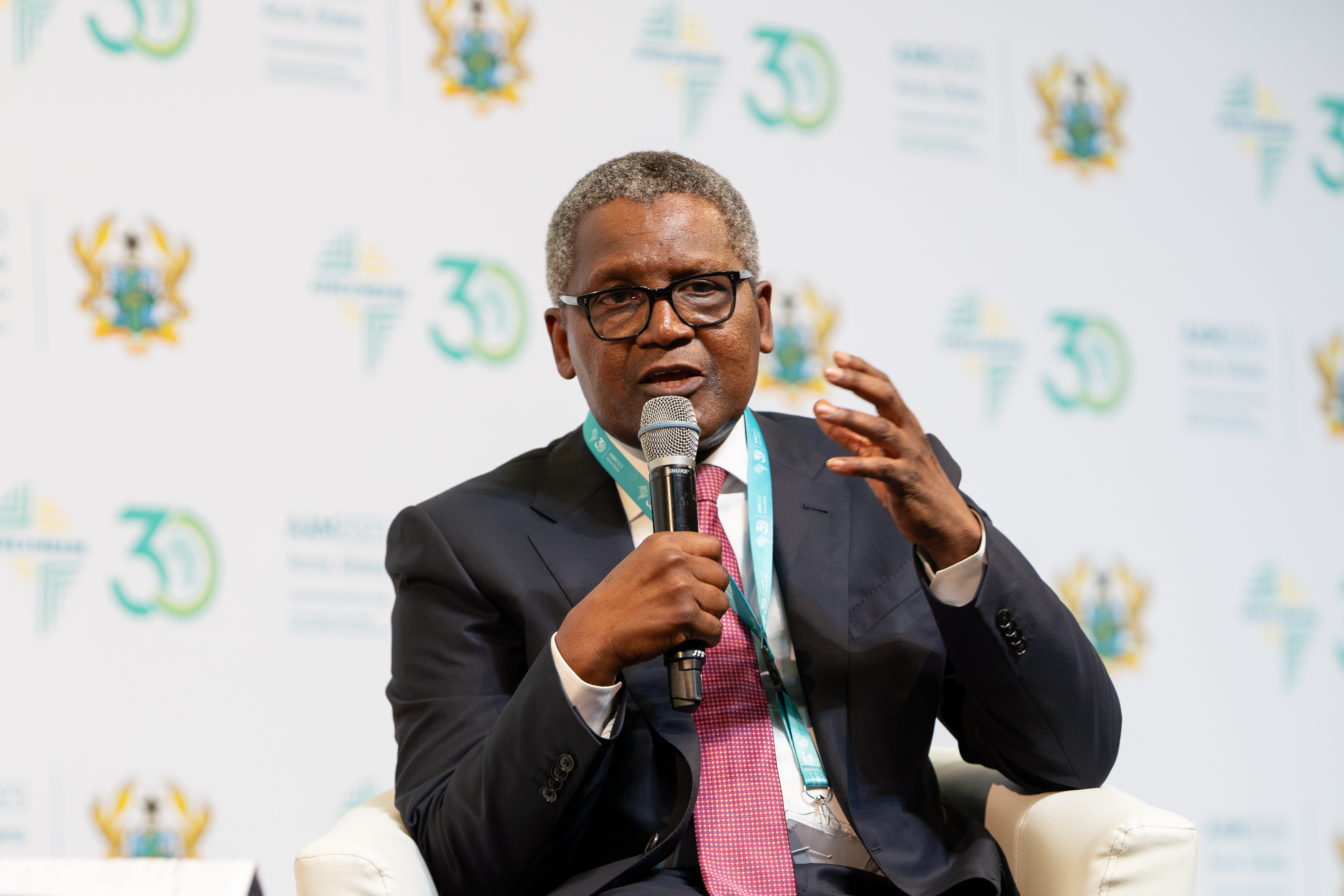
![Aliko Dangote said Kenya’s Mombasa port offers stronger logistics and market advantages for a proposed East African refinery project. [Photo by Noushad Thekkayil/NurPhoto via Getty Images]](https://ocdn.eu/pulscms/MDA_/77a3e398556d218665691f96c6eda4f8.jpg)
Africa’s richest businessman, Aliko Dangote, is leaning towards Kenya for a proposed $15 billion-$17 billion refinery project after technical assessments ranked the country ahead of rival East African locations because of its strategic access to crude supplies, deep-water port infrastructure and regional fuel market reach.
- Aliko Dangote is leaning towards Kenya for a proposed $15billion-$17billion East African refinery project.
- A source said technical assessments ranked Kenya ahead of Tanzania and Mozambique.
- Mombasa’s deep-water port and access to regional crude supplies were key factors.
- The refinery could reshape fuel trade and energy security across East Africa.
A source familiar with the discussions told Business Insider Africa that the proposed refinery location was selected primarily on economic and technical considerations rather than politics, following an assessment of several coastal locations across East Africa.
The evaluation reportedly covered sites in Kenya, Tanzania, Uganda, Mozambique and Zanzibar, with Kenya emerging as the most commercially viable option.
“Tanzania came third while Mozambique was second. Kenya ranked first in the technical assessment,” the source said.
According to the source, the proposed Kenyan location was considered strategically attractive because it would allow the refinery to source crude oil from multiple producers across the region, including Uganda, South Sudan and Tanzania, while also making imports from international suppliers easier.
“Now it’s not free, and the refinery must be in a location that it will be very easy to receive crude from anywhere,” the source said.
“If we can buy crude from UAE, it will just sail in there easily.”
The source said technical and locational surveys conducted on the shortlisted sites favoured Kenya because of its maritime access, logistics and ability to support large-scale refining operations.
“So the survey, technical survey and locational issue, so it’s not political, it’s not social, it’s purely technical and economic justification,” the source added.
Dangote disclosed in an interview with the Financial Times that he preferred Kenya’s coastal city of Mombasa over Tanzania’s Tanga port because Mombasa has “a much larger, deeper port” and stronger fuel demand.
The billionaire businessman said Kenya also offered a larger economy and consumption base, factors analysts say are critical for the commercial success of a refinery expected to process about 650,000 barrels of crude oil per day.
Mombasa is already East Africa’s main petroleum gateway, serving as a fuel import and distribution hub for countries including Uganda, Rwanda, Burundi, South Sudan and parts of the Democratic Republic of Congo.
Its location along major Indian Ocean shipping routes, combined with existing oil handling infrastructure and pipeline connectivity, gives Kenya an advantage in supplying both domestic and regional fuel markets.
Industry analysts say deep-water port access is particularly important for mega-refinery projects because it allows larger crude vessels and refined product tankers to dock more efficiently, reducing shipping costs and improving supply reliability.
The project also comes at a time when East African countries remain heavily dependent on imported refined petroleum products, exposing the region to external supply shocks and volatile global fuel prices.
Recent tensions in the Middle East and disruptions across global shipping routes have renewed pressure across Africa for stronger domestic refining capacity and reduced dependence on imported fuel.
Dangote’s refinery in Lagos has increasingly emerged as an alternative supply source for African buyers during periods of market disruption, reinforcing the billionaire’s growing influence in Africa’s downstream oil market.
The East African refinery discussions first gained public attention in April when Kenyan President William Ruto said regional governments were discussing plans for a joint refinery project involving Kenya, Uganda, Tanzania, South Sudan and the Democratic Republic of Congo.
Earlier reports had suggested Tanzania’s Tanga port was under consideration because of its connection to the East African Crude Oil Pipeline project transporting Ugandan crude to the Tanzanian coast.
However, Dangote’s latest comments and the technical assessment cited by the source suggest Kenya may now be emerging as the preferred location.
If completed, the refinery would rank among the largest in Africa and could significantly reshape fuel supply chains across East Africa, where countries still rely heavily on imported petroleum products.