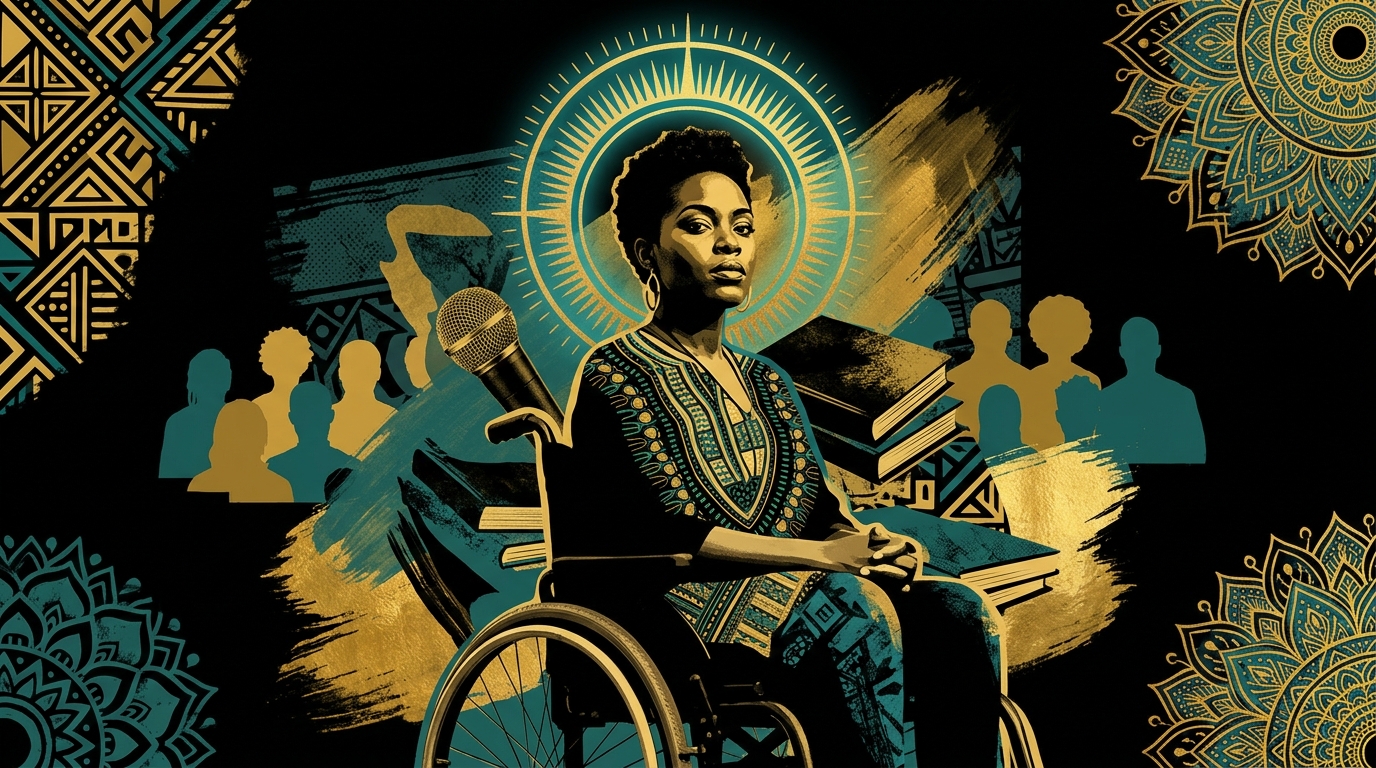
Afro-Krip Consciousness is a concept emerging from Krip-Hop Theory that describes a political, cultural, and intellectual awareness rooted in the lived experiences of Black disabled people across the African diaspora. It is both a critique of oppression and a framework for liberation.
Afro-Krip Consciousness recognizes that Black disabled people experience racism, ableism, colonialism, capitalism, and other systems of domination simultaneously, and therefore require forms of knowledge, resistance, and community that address these interconnected realities.
Drawing from the work of Frantz Fanon, Afro-Krip Consciousness can be understood as a process of decolonization. Fanon (1963) argued that colonialism shapes how oppressed people understand themselves and their place in society. Krip-Hop Theory extends this insight by examining how ableism operates within Black communities, social movements, educational institutions, and cultural spaces. Afro-Krip Consciousness therefore challenges what Krip-Hop Theory identifies as Black ableism—the internalization of ableist values that marginalize disabled Black people even within struggles for Black liberation.
Afro-Krip Consciousness also builds upon the Black Radical Tradition theorized by Cedric J. Robinson (1983). Robinson demonstrated how Black resistance developed through historical struggles against racial capitalism. Afro-Krip Consciousness expands this tradition by insisting that disability has always been present within Black histories of resistance. From enslaved Africans who survived physical and psychological violence, to Blues musicians with disabilities, to contemporary disabled Hip-Hop artists, Black disabled people have contributed to freedom struggles while often remaining invisible within dominant historical narratives.
Within Krip-Hop Theory, Afro-Krip Consciousness is not simply an identity. It is a way of seeing the world. It asks Black communities to understand disability not as individual tragedy or personal deficit but as a social, political, and cultural reality shaped by racial capitalism, segregation, poverty, environmental racism, police violence, war, inadequate healthcare, and educational exclusion. It recognizes that many disabilities within Black communities are produced and intensified by structural conditions rather than individual failings.
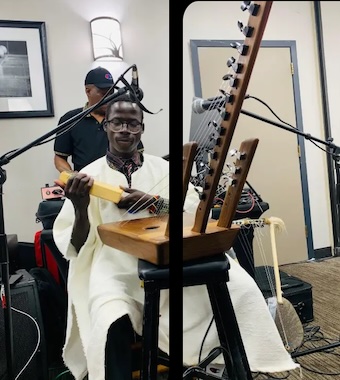
Afro-Krip Consciousness is also expressed through culture. Hip-Hop, spoken word, dance, visual art, community storytelling, and oral histories become sites where Black disabled people create knowledge about their lives. Through practices such as kripping, artists reclaim disability language, challenge stereotypes, and transform disability from a source of stigma into a source of creativity, resistance, and collective identity. Kripping becomes a cultural and political act that exposes ableist assumptions while imagining new possibilities for Black disabled futures.
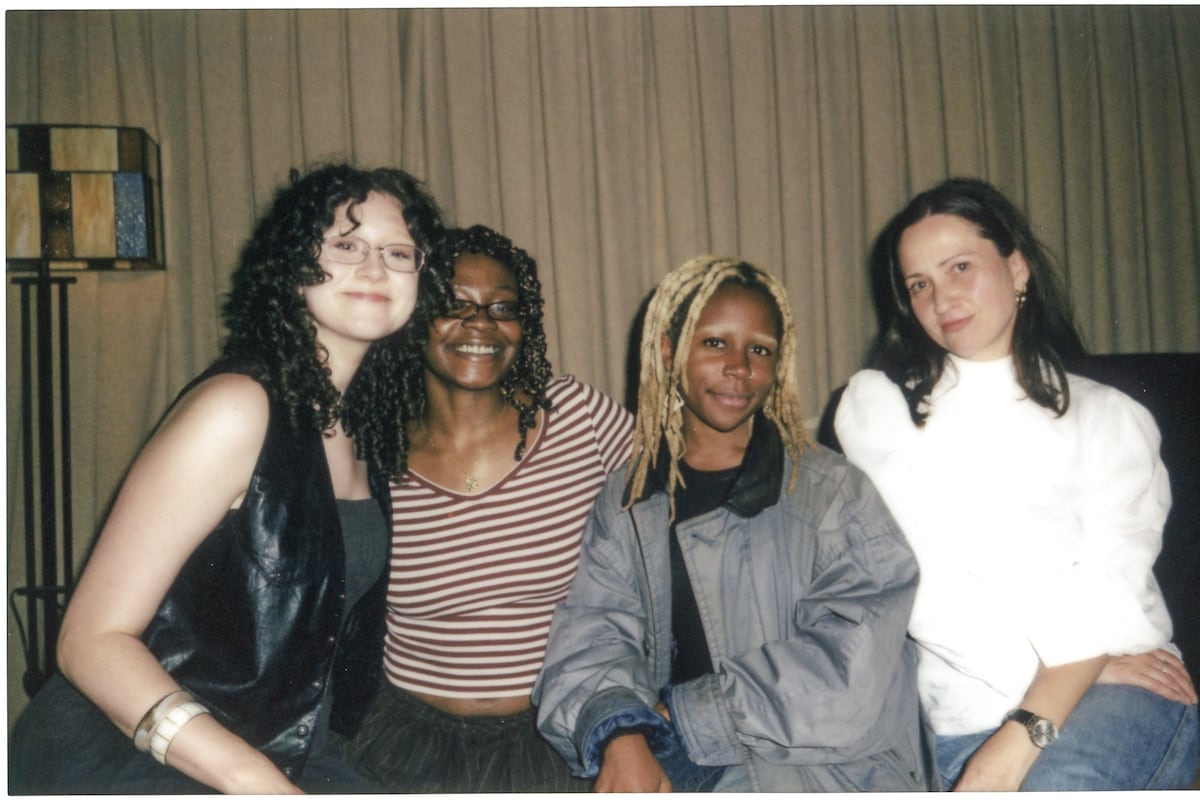
Community building is central to Afro-Krip Consciousness. Inspired by traditions such as Ubuntu, the work of John Langston Gwaltney (1980), and the Poverty Scholarship of POOR Magazine, Afro-Krip Consciousness values knowledge produced by everyday Black disabled people. It rejects the idea that expertise belongs only to universities or professional researchers. Instead, it centers the wisdom of artists, activists, families, and communities who navigate disability and racism daily. This approach aligns with Black ethnographic traditions that privilege the voices and experiences of ordinary Black people as theorists of their own lives (Gwaltney, 1980).
Ultimately, Afro-Krip Consciousness is the development of a Black disabled political awareness that moves from invisibility to recognition, from internalized ableism to self-determination, and from exclusion to collective liberation. It is the consciousness that emerges when Black disabled people understand themselves not as marginal to Black history, culture, and freedom struggles, but as essential participants in shaping them. Through Afro-Krip Consciousness, Krip-Hop Theory argues that there can be no complete Black liberation without disability justice, and no disability justice without confronting ableism, racism, colonialism, and racial capitalism.
References
- Bell, C. M. (2006). Introducing White Disability Studies: A modest proposal. In L. J. Davis (Ed.), The disability studies reader (2nd ed., pp. 275–282). Routledge.
- Fanon, F. (1963). The Wretched of The Earth (C. Farrington, Trans.). Grove Press.
- Gwaltney, J. L. (1980). Drylongso: A Self-Portrait of Black America. Random House.
- Moore, Leroy (2026). Krip-Hop Terminology/Concepts on Krip-Hop website.
- Robinson, C. J. (2000). Black Marxism: The Making of the Black Radical Tradition (2nd ed.). University of North Carolina Press.


 Black News