After Court Defeat, Mnangagwa Orders Publication Of State Land Inquiry Report
President Emmerson Mnangagwa has ordered the publication of the Commission of Inquiry Report into the Sale of State Land, complying with a High Court directive. The order was published on 1 May 2026 through General Notice by Chief Secretary to the President and Cabinet, Martin Rushwaya. The inquiry covers the sale of state land in
 Black News
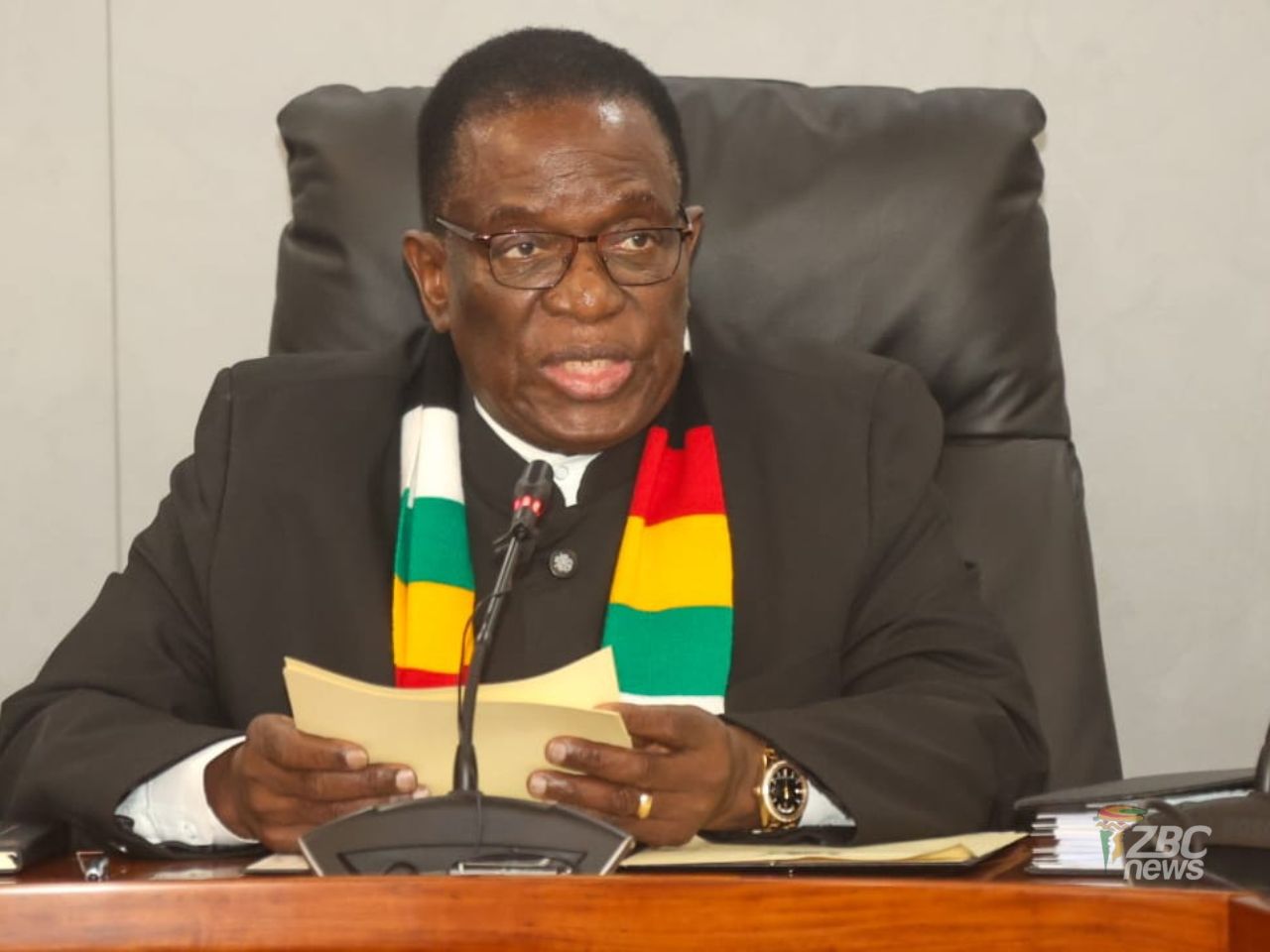
President Emmerson Mnangagwa has ordered the publication of the Commission of Inquiry Report into the Sale of State Land, complying with a High Court directive.
The order was published on 1 May 2026 through General Notice by Chief Secretary to the President and Cabinet, Martin Rushwaya.
The inquiry covers the sale of state land in and around urban areas across Zimbabwe’s 10 provinces since 2005.
On 24 December 2025, Justice Maxwell Takuva ordered Mnangagwa to publish the report within 90 days, citing constitutional violations.
According to the Zimbabwe Lawyers for Human Rights (ZLHR), former legislator Allan Norman Markham sued Mnangagwa and the Attorney-General in September 2023 for withholding the report, arguing it breached section 62 of the Constitution on access to information.
The Zimbabwe Lawyers for Human Rights said: “PRESIDENT Emmerson Mnangagwa has ordered his lieutenant to publish the findings of a Commission of Inquiry Report into the matter of Sale of State Land, which was compiled more than six years ago, thereby complying with a High Court order, which compelled him to do so recently, following an upsurge in illegal land transactions and unregulated urban settlements by land developers and cooperatives, commonly referred to as land barons, who were accused of selling state land without authority.
“President Mnangagwa issued the order in a General Notice published in a Government Gazette published on 1 May 2026 by Martin Rushwaya, the Chief Secretary to the President and Cabinet, wherein he directed the publication of the report of the Commission of Inquiry into the matter of Sale of State land in and around urban areas located in the country’s 10 provinces since 2005.
“The decision by President Mnangagwa is in compliance with a High Court order granted by Justice Maxwell Takuva, who on 24 December 2025, ordered President Mnangagwa to publish and make accessible to the public, the findings of a Commission of Inquiry Report into the matter of Sale of State Land, within 90 days of the date of the handing down of the judgment.
“President Mnangagwa was sued together with the Attorney-General (AG) in September 2023 by Allan Norman Markham, a former legislator, who filed an application at the Harare High Court, arguing that the failure by President Mnangagwa to release the Commission of Inquiry Report into the matter of sale of State land in and around urban areas that was acquired and allocated to the Ministry of Local Government, Public Works and National Housing for urban development since 2005, violates section 62 of the Constitution, which guarantees the right to access any information held by the state or by any institution or agency of government in so far as the information is required in the interest of public accountability.
“The former legislator, who was represented by Alec Muchadehama and Andrew Makoni of Zimbabwe Lawyers for Human Rights, argued that the failure to release the Commission of Inquiry Report also violates the founding values and principles of the Republic of Zimbabwe enshrined in section 3(2)(g) of the Constitution, namely transparency, justice, accountability and responsiveness.
“Markham averred that the Commission of Inquiry Report contains damning findings regarding the large-scale illegal sale and development of state land, financial prejudice to the state amounting to approximately US$2.97 billion and the role of individuals and institutions.
“The former legislator contended that the withholding of the report undermines public accountability and prevents citizens from understanding the extent of corruption, maladministration, and loss of public resources.
“Markham stated that prior to filing his court application at the High Court, he had, since 2019, persistently sought the publication of the Commission of Inquiry Report through parliamentary questions, petitions, and formal correspondence to President Mnangagwa and relevant ministers, all of which had gone unanswered.
“He argued that the continued non-disclosure of the Commission of Inquiry report violates the public’s constitutional right to access information held by the state as guaranteed under section 62(1) of the Constitution, as well as the founding values and principles of transparency, justice, accountability, and responsiveness enshrined in section 3(2)(g) of the Constitution.
“In response, President Mnangagwa and the AG opposed Markham’s application and argued that the blanket publication of the Commission of Inquiry Report may result in a violation of other people’s rights.
“The appointment of the Justice Tendai Uchena-led Commission of Inquiry followed the mushrooming of some illegal settlements in most urban areas, most of which were reportedly established from the illegal sale of state land by unscrupulous land developers commonly referred to as land barons.
“The land developments lacked basic facilities such as water and sewer reticulation and other infrastructure such as roads, electricity, schools and clinics.
“This came after many people were losing money to the so-called land barons, who were involved in double sales of properties while some houses, which were built illegally or on state land were being destroyed to the prejudice of innocent purchasers.
“Most people had welcomed the set-up of the Commission of Inquiry as they were optimistic that the implementation of the recommendations of the probe team would bring sanity to the chaotic and unregulated land development.
“In a judgment handed down on 24 December 2025, Justice Maxwell Takuva ruled that the continued withholding of the Commission of Inquiry Report constitutes a violation of the constitutional right to access information as the right guaranteed under section 62 of the Constitution is not discretionary but is a direct and enforceable entitlement that binds all state institutions.
“Justice Takuva ruled that the failure to make public a report of such national importance conveys opacity rather than transparency and secrecy rather than accountability, and silence rather than responsiveness.
“The High Court Judge stated that the non-disclosure of the Commission of Inquiry Report is inconsistent with section 3(2)(g) of the Constitution and offends the principles of good governance that underpin the Republic of Zimbabwe.
“Justice Takuva ordered and directed President Mnangagwa to publish and make accessible to the public the Commission of Inquiry Report into the sale of state land in and around urban areas since 2005 within 90 days of the date of the handing down of the judgment.”