Climate inaction could cost Gambia heavy price: CCDR
Vice President Muhammad B.S. Jallow, speaking on behalf of President Adama Barrow, said climate change “is already shaping The Gambia’s economic future” and warned that “the cost of inaction is simply too high.” The CCDR finds that more than 60% of Gambians live in coastal and urban areas highly exposed to climate risk. Flooding alone causes annual damage equal to 3.8% of GDP. The greater Banjul area, which holds $2.1 billion in assets nearly 100% of national GDP is described in the report as facing a “very real threat of submersion” by the end of the century. Franklin mutahakana World Bank group Resident representative said the CCDR shows targeted investments can significantly reduce risks. “The cost of inaction is high,” she said. “But investments in heat resilience and coastal protection offer some of the strongest economic returns available to the economy.” He added that the biggest challenge is now implementation: “Planning and policy ambition must turn into bankable projects with measurable results.” World Bank’s Practice Manager Ellysar Baroudy said the report shows the country contributes very little to global emissions but remains among the most exposed to climate risk. “If there’s one message I’d like to leave you with, it’s this: Any decision going forward for investments or policy make it climate informed,” she said. Finance Minister Hon. Seedy M K Keita called climate change a “macroeconomic and fiscal risk” that threatens agriculture, tourism, and infrastructure. “Climate resilience and economic transformation must go hand in hand,” he said. Officials stressed that public funds will not be enough. The CCDR projects 25% of financing must come from private investment, but only 15% of small and medium enterprises currently access formal finance The government identified five key areas for action protecting Banjul through coastal defenses and drainage, transforming agriculture with climate smart practices, expanding renewable energy, strengthening urban flood management, and mobilizing climate finance. Environment Minister Rohey John Manjang called the CCDR a “scientific guide” to inform decisions. “If we diversify economic opportunities inland, away from vulnerable coastal zones, we can position The Gambia to thrive,” she noted. The Gambia contributes less than 0.01% of global greenhouse gas emissions but is ranked among the world’s most climate vulnerable countries. The CCDR is the first of its kind for the nation.
 Black News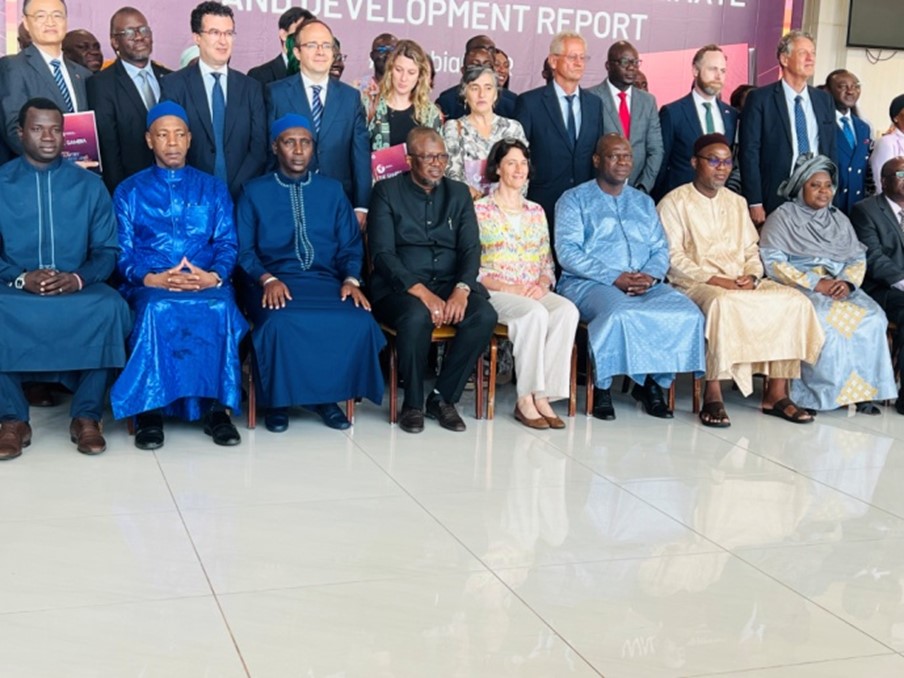
Vice President Muhammad B.S. Jallow, speaking on behalf of President Adama Barrow, said climate change “is already shaping The Gambia’s economic future” and warned that “the cost of inaction is simply too high.”
The CCDR finds that more than 60% of Gambians live in coastal and urban areas highly exposed to climate risk. Flooding alone causes annual damage equal to 3.8% of GDP.
The greater Banjul area, which holds $2.1 billion in assets nearly 100% of national GDP is described in the report as facing a “very real threat of submersion” by the end of the century.
Franklin mutahakana World Bank group Resident representative said the CCDR shows targeted investments can significantly reduce risks. “The cost of inaction is high,” she said. “But investments in heat resilience and coastal protection offer some of the strongest economic returns available to the economy.”
He added that the biggest challenge is now implementation: “Planning and policy ambition must turn into bankable projects with measurable results.”
World Bank’s Practice Manager Ellysar Baroudy said the report shows the country contributes very little to global emissions but remains among the most exposed to climate risk. “If there’s one message I’d like to leave you with, it’s this: Any decision going forward for investments or policy make it climate informed,” she said.
Finance Minister Hon. Seedy M K Keita called climate change a “macroeconomic and fiscal risk” that threatens agriculture, tourism, and infrastructure. “Climate resilience and economic transformation must go hand in hand,” he said.
Officials stressed that public funds will not be enough. The CCDR projects 25% of financing must come from private investment, but only 15% of small and medium enterprises currently access formal finance
The government identified five key areas for action protecting Banjul through coastal defenses and drainage, transforming agriculture with climate smart practices, expanding renewable energy, strengthening urban flood management, and mobilizing climate finance.
Environment Minister Rohey John Manjang called the CCDR a “scientific guide” to inform decisions. “If we diversify economic opportunities inland, away from vulnerable coastal zones, we can position The Gambia to thrive,” she noted.
The Gambia contributes less than 0.01% of global greenhouse gas emissions but is ranked among the world’s most climate vulnerable countries. The CCDR is the first of its kind for the nation.